
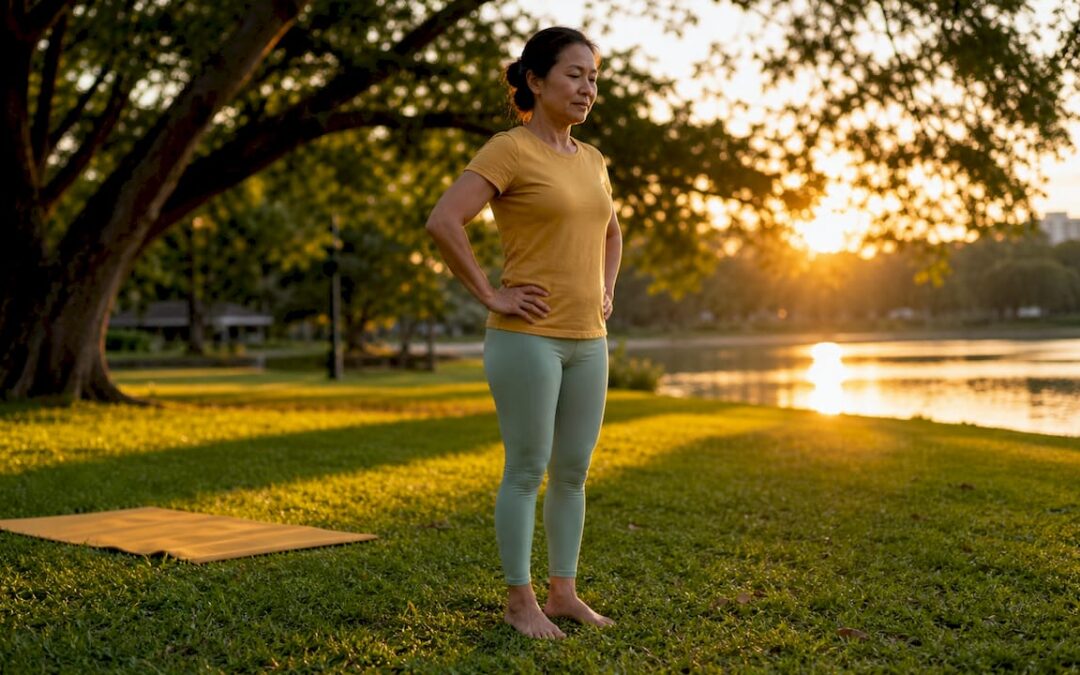
Osteoporosis exercise guidelines are clinically prescribed protocols of weight-bearing, resistance, and balance activities proven to strengthen bones and reduce fracture risk in people with low bone density. The American Academy of Orthopaedic Surgeons (AAOS) and recent 2026 meta-analyses both confirm that the right exercise program can measurably improve bone mineral density (BMD) and cut fall-related fracture rates. These guidelines are not one-size-fits-all. They require matching exercise type and intensity to your current bone health, medical history, and physical ability.
What are the most effective osteoporosis exercise guidelines?
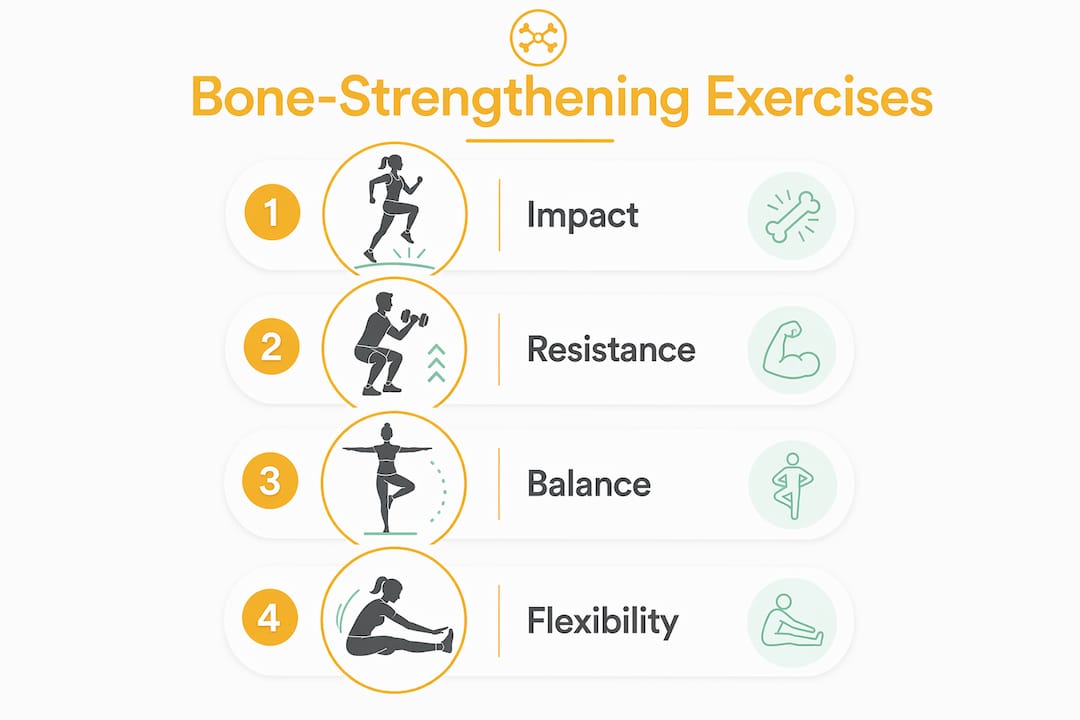
The core of any bone-strengthening program rests on three exercise categories: impact loading, resistance training, and balance work. Each targets a different piece of the fracture-prevention puzzle. Skipping any one of them leaves a gap.
Impact and weight-bearing exercises
Impact exercises generate ground-reaction forces that trigger bone remodeling. This is the mechanical signal your skeleton needs to build new tissue. Walking, stair climbing, heel drops, and light jogging all qualify. Swimming and cycling, while excellent for cardiovascular health, do not produce this force and therefore do not improve bone density.
Heel drops are worth highlighting because most people overlook them. Stand flat-footed, rise onto your toes, then let your heels drop firmly to the floor. Ten repetitions, twice daily, delivers a meaningful loading stimulus with minimal joint stress.
Strength and resistance training
High-intensity resistance training at ≥70% of your one-rep max, performed at least three times per week, significantly improves lumbar spine BMD in postmenopausal women. Studies show measurable gains with programs lasting 48 weeks or longer. That is a long commitment, but the payoff is structural bone change, not just muscle tone.
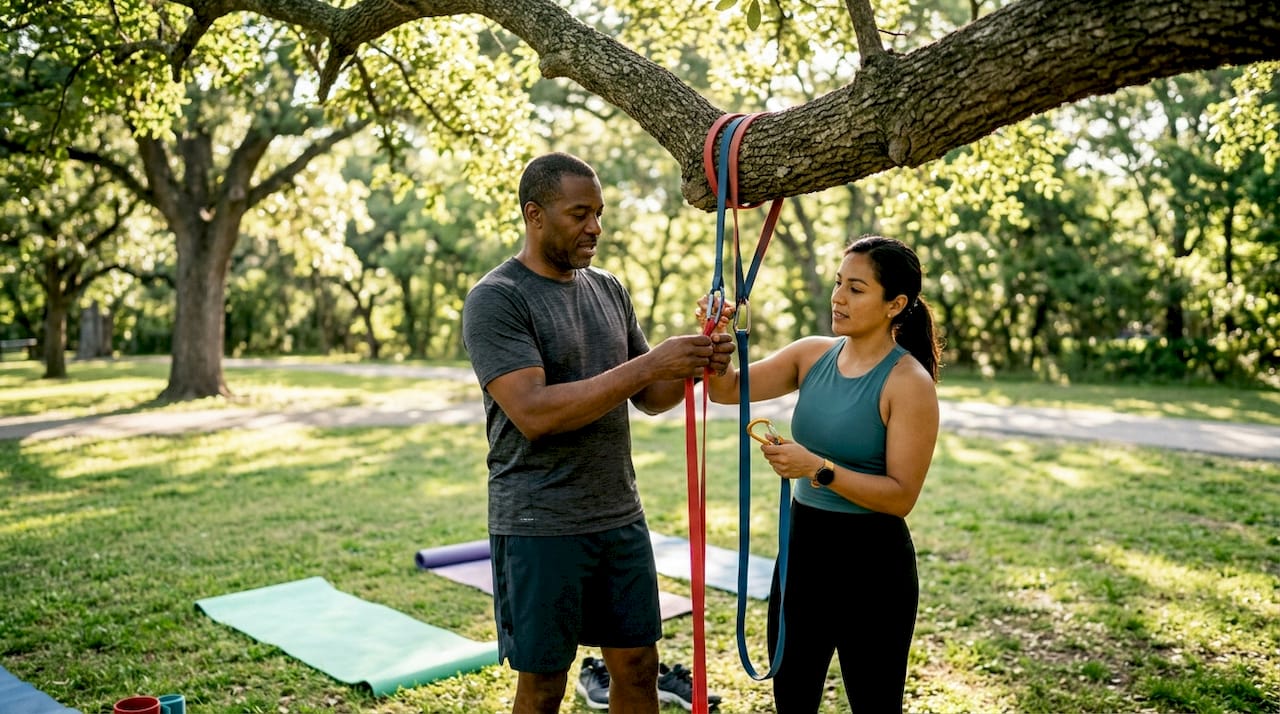
Practical examples include bodyweight squats, resistance band rows, and light dumbbell presses. Progressive bodyweight and band exercises are often safer than heavy barbell lifts because they allow careful technique control and reduce the risk of vertebral fractures from poor form.
Balance and flexibility training
Tai Chi and similar balance-focused activities are equally important as strength training for fracture prevention. They do not directly increase BMD, but they dramatically reduce fall risk. A fall is the most common trigger for a fracture in someone with osteoporosis, so preventing the fall prevents the break.
Yoga can be modified effectively for osteoporosis. The key is avoiding deep forward folds and aggressive spinal twists. Focus on poses that build stability and spinal control rather than flexibility depth.
Exercises to avoid with osteoporosis
Some movements carry real fracture risk and should be removed from your routine:
- Rapid spinal twisting (golf swings, certain dance moves)
- Deep forward bends (touching toes, full sit-ups, many yoga forward folds)
- High-impact jumping without medical clearance in severe osteoporosis
- Heavy overhead lifting beyond what your spine can safely handle
Pro Tip: If a movement causes you to round your lower back or compress your spine forward, stop and find a modified version with a physical therapist.
How often should you exercise for bone density gains?
Frequency and intensity are where most people either underdo it or overdo it. Both errors slow progress.
-
Resistance training: 2–3 sessions per week. At least two sessions weekly build bone strength, and three sessions per week further reduce fall risk. Rest days between sessions allow bone tissue to consolidate gains.
-
Weight-bearing activity: daily or near-daily. The AAOS recommends 20–30 minutes of daily weight-bearing activity for bone maintenance. This does not have to be a formal workout. A brisk walk, stair use, or marching in place all count.
-
Periodized training blocks. A periodized approach alternates high-loading phases with lower-intensity recovery phases. This structure prevents overuse injury and keeps your body adapting rather than plateauing. Think of it as cycling between “build” weeks and “consolidate” weeks.
-
Gradual progression. Start with postural and stability work before adding impact or heavy resistance. Consistency in early phases prevents fatigue and supports long-term adherence better than aggressive early loading.
-
Impact loading introduction. Heel drops and light jogging can be introduced once you have built a base of strength and balance. Never add impact loading before your stabilizing muscles are ready to protect your joints and spine.
Pro Tip: Track your sessions on a simple calendar. Seeing a consistent streak is one of the most effective motivators for people managing a chronic condition.
What precautions keep exercise safe with osteoporosis?
Safety modifications are not optional extras. They are the difference between a program that helps and one that causes a fracture.
- Limit standing arm weights to 10–20 pounds in severe osteoporosis. Heavier loads create excessive spinal compression and increase vertebral fracture risk during standing exercises.
- Avoid spinal bending and twisting under load. This includes exercises like weighted Russian twists, full sit-ups, and any movement that rounds the thoracic or lumbar spine against resistance.
- Use professional supervision when learning new movements. A physical therapist or certified trainer with osteoporosis experience can spot technique errors before they become injuries.
- Prioritize balance training every session. Even five minutes of single-leg standing or tandem walking at the end of a workout builds the proprioceptive awareness that prevents falls.
- Choose floor-based core work over crunches. Exercises like dead bugs, bird dogs, and modified planks strengthen the core without compressing the spine.
- Consult your physician before starting. If you have been diagnosed with osteoporosis or osteopenia, get medical clearance and a baseline DEXA scan result before designing your program.
Yoga modifications for osteoporosis should emphasize spinal neutrality. Poses like warrior one, chair pose, and supported bridge are generally safe. Deep forward folds and spinal twists increase vertebral fracture risk and should be avoided or significantly modified.
How can you fit bone-strengthening exercise into daily life?
Adherence is the single biggest predictor of long-term bone health outcomes. A perfect program you do three times and quit is worthless. A modest program you follow for two years changes your skeleton.
The most effective strategy is to layer bone-loading activity into what you already do. Marching in place and stair use provide a baseline mechanical stimulus that rivals formal exercise sessions in daily cumulative effect. Carrying groceries, walking to a neighbor’s house, or taking the stairs instead of the elevator all count.
Practical ways to build consistency:
- Pair resistance bands with TV time. Keep a band near your couch and do seated rows or standing hip extensions during commercials.
- Walk after meals. A 10-minute post-meal walk adds up to 30 minutes of weight-bearing activity daily without a single trip to the gym.
- Join a Tai Chi class. Community centers in the Granite Bay area often offer low-cost group classes. The social element significantly improves long-term attendance.
- Use a step stool deliberately. Controlled step-ups onto a low, stable surface are a simple impact exercise you can do in your kitchen.
- Combine exercise with errands. Park farther away, take stairs, and carry bags rather than using a cart when safe to do so.
Resistance training complements pharmacological treatment but does not replace it. If your physician has prescribed medication for osteoporosis, exercise works alongside that treatment to maximize BMD improvement. Neither alone is as effective as both together.
Key Takeaways
The most effective approach to osteoporosis exercise combines high-intensity resistance training, daily weight-bearing activity, and balance work, all tailored to your fracture risk and progressed gradually under professional guidance.
| Point | Details |
|---|---|
| Impact loading builds bone | Walking, heel drops, and stair climbing generate the ground-reaction forces needed for bone remodeling. |
| Resistance training intensity matters | Training at ≥70% of your one-rep max, at least 3 times per week, produces measurable BMD gains. |
| Balance training prevents fractures | Tai Chi and proprioceptive exercises reduce fall risk as effectively as strength work. |
| Avoid high-risk movements | Spinal twisting, deep forward bends, and heavy overhead loads increase vertebral fracture risk. |
| Consistency beats intensity | Daily moderate activity over months outperforms sporadic intense sessions for long-term bone health. |
What I’ve learned from watching people get this wrong
Most people with osteoporosis come to exercise with one of two fears. Either they are terrified that any movement will break a bone, or they assume they need to lift heavy weights at the gym to make a difference. Both beliefs lead to poor outcomes.
The fear of movement is the more dangerous one. Inactivity accelerates bone loss faster than almost any exercise mistake. I have seen people with osteopenia avoid stairs, stop carrying their own groceries, and give up walking because they were afraid. Within a year, their bone density had dropped further than it would have with a carefully supervised program.
The heavy-lifting myth is also worth addressing directly. Balance and coordination exercises like Tai Chi are equally vital for fracture prevention as resistance training. A person who can deadlift their bodyweight but stumbles on an uneven sidewalk is still at high fracture risk. The fall is what breaks the bone.
What actually works is less dramatic than most people expect. Small, consistent movements done correctly over months and years change the structure of your skeleton. A 20-minute walk, a set of heel drops, a few resistance band exercises, and five minutes of balance work done five days a week will outperform any sporadic gym session. The Osteostrong approach to osteogenic loading is built on exactly this principle: precise, consistent mechanical stimulus applied safely and regularly.
Seek professional guidance before you start. Get your DEXA scan results. Know your T-score. Then build a program that matches where you are today, not where you wish you were.
— Aaron
Osteostrong’s approach to bone health in Granite Bay
Osteostrong offers a science-backed approach to bone density improvement that fits directly within the exercise framework described here. Each session uses osteogenic loading, a method that applies brief, high-force mechanical stimulus to the skeleton to trigger bone growth, without the joint stress of traditional heavy lifting.
Beyond osteogenic loading, Osteostrong locations offer red light therapy, PEMF mats, vibration plates, and the BioCharger, all of which support recovery and overall bone health. Sessions take about 15 minutes, once per week, making adherence straightforward even for busy schedules. If you are in the Granite Bay area and want a structured, supervised program built around your bone health goals, find your nearest center and schedule a session.
FAQ
What exercises are best for osteoporosis?
Weight-bearing activities like walking, heel drops, and stair climbing combined with resistance training and balance exercises like Tai Chi form the most effective program for bone strength and fracture prevention.
How often should I do strength training for osteoporosis?
At least two resistance sessions per week build bone strength, and three sessions per week further reduce fall risk, with rest days between sessions to allow bone consolidation.
What exercises should I avoid with osteoporosis?
Avoid rapid spinal twisting, deep forward bends, full sit-ups, and standing overhead lifts beyond 10–20 pounds, as these movements increase the risk of vertebral fractures.
Does swimming help with osteoporosis?
Swimming improves cardiovascular health and muscle endurance but does not improve bone density because it produces no ground-reaction force, which is the mechanical signal required for bone remodeling.
Can exercise replace medication for osteoporosis?
No. Resistance training complements medication and maximizes BMD improvements, but it does not replace pharmacological treatment prescribed by your physician.
Trackbacks/Pingbacks