
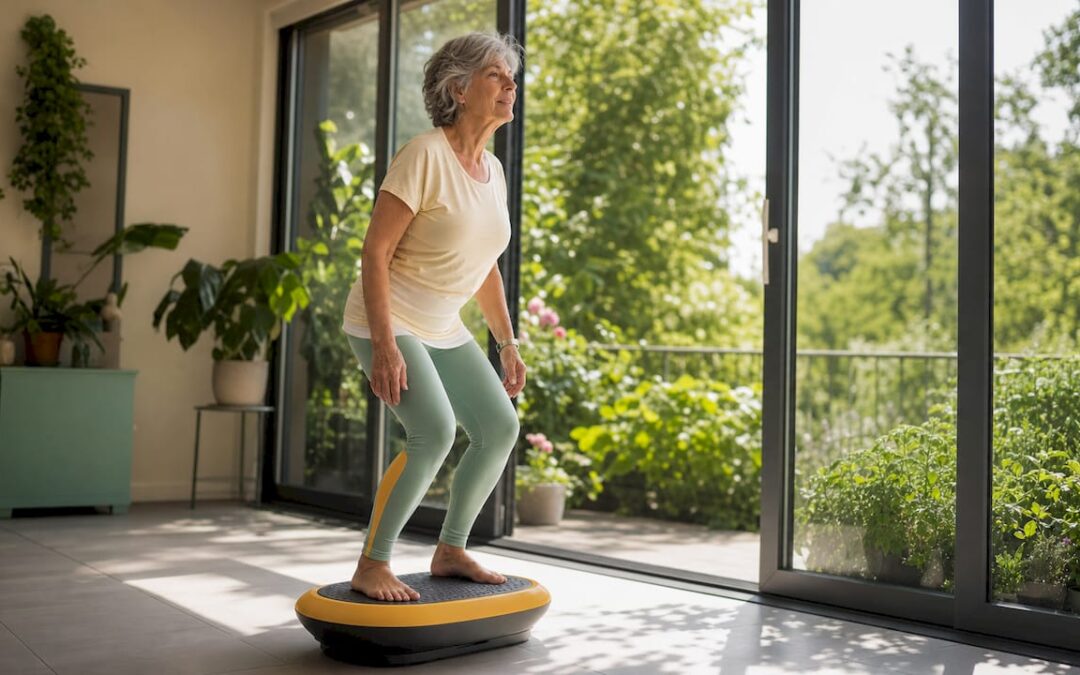
Vibration plate therapy is defined as a form of whole-body vibration training that delivers mechanical stimuli through a oscillating platform to stimulate bone remodeling and improve bone mineral density (BMD). For people managing osteoporosis or osteopenia in Granite Bay and beyond, this technology has moved well past fitness trend status. A 2026 meta-analysis of 1,447 participants confirmed significant BMD improvements at key skeletal sites including Ward’s triangle and the greater trochanter. The evidence now supports vibration plate osteoporosis therapy as a legitimate adjunct to standard care, not a replacement for it.
How does a vibration plate improve bone mineral density?
Bone responds to mechanical load. When you stand on a vibrating platform, your muscles contract rapidly to stabilize your body, and those contractions transmit force directly into your skeleton. This process activates osteocytes, the cells embedded in bone tissue that sense mechanical stress and signal the body to build more bone.
The biology goes deeper than simple muscle activation. Vibration therapy influences bone remodeling by increasing the OPG/RANKL ratio, a key marker in bone metabolism. A higher OPG/RANKL ratio suppresses osteoclast activity, meaning less bone is broken down. At the same time, osteoblast activity increases, so more new bone is built. The net result is a shift toward bone formation.
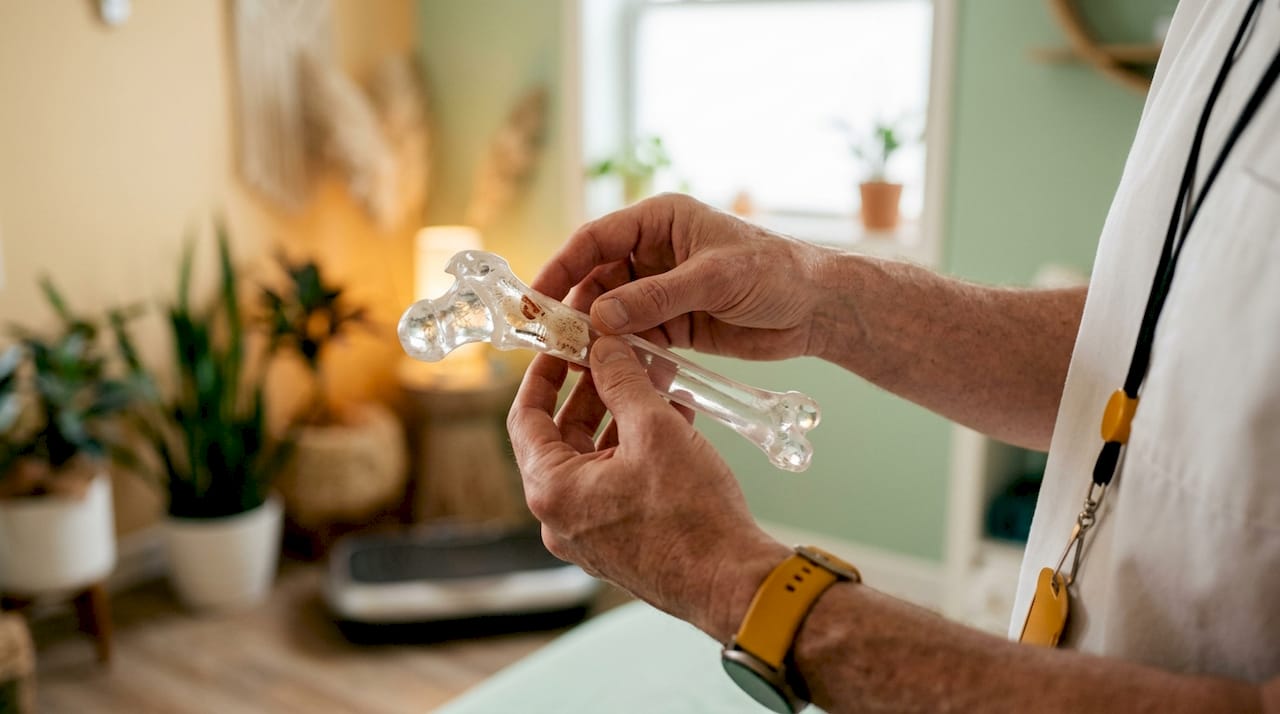
The pathway does not stop at the skeleton. Whole-body vibration engages integrative proprioceptive-endocrine-immune pathways, linking the mechanical stimulus to systemic changes in hormone and immune function. This explains why a 6-month whole-body vibration program increased femoral BMD by 1.56% in postmenopausal women with osteoporosis. A 1.56% gain sounds modest, but in a population where annual bone loss is the norm, it represents a meaningful reversal.
Key biological effects of vibration therapy on bone include:
- Activation of osteocytes through mechanical loading
- Suppression of bone resorption via the OPG/RANKL pathway
- Stimulation of osteoblast activity and new bone formation
- Modulation of endocrine and immune system responses that support osteogenesis
Pro Tip: Standing with slightly bent knees during vibration sessions increases the mechanical load transmitted to your femoral neck and hip, the sites most vulnerable to fracture in osteoporosis.
What evidence supports vibration plates for osteoporosis?
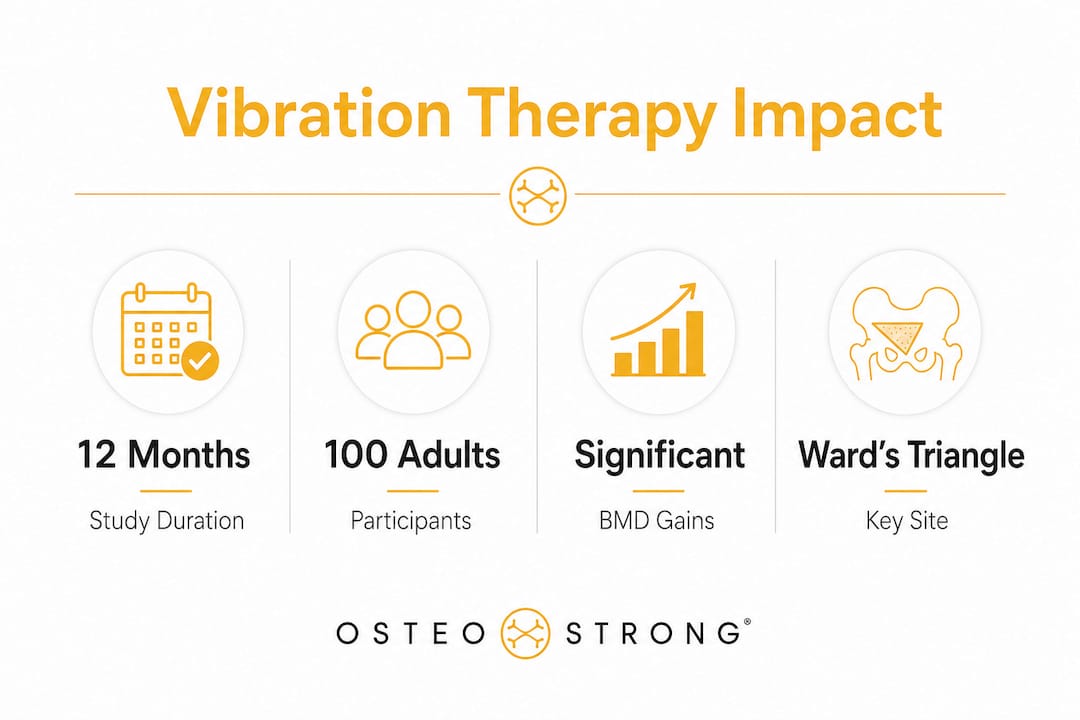
The clinical evidence for whole body vibration osteoporosis therapy has grown substantially. The strongest signal comes from a meta-analysis of 14 studies with 1,447 participants, which found significant BMD improvements at Ward’s triangle and the greater trochanter in older adults. These are both high-fracture-risk zones in the hip, so gains here carry real clinical weight.
A separate 12-month prospective cohort study of 100 adults aged 60 and older with osteoporosis produced striking results. The intervention group, which received adjunct tendon vibration alongside standard care, showed a median BMD T-score improvement of 0.90 units. The control group, receiving standard care alone, showed a change of just -0.10 units. The difference was statistically significant at p < 0.001. That gap illustrates how much vibration therapy can add when layered onto existing treatment.
The evidence is not uniformly strong across all skeletal sites. The table below summarizes where the research shows the clearest effects.
| Skeletal site | Evidence strength | Notes |
|---|---|---|
| Ward’s triangle | Strong | Significant BMD gains in meta-analysis |
| Greater trochanter | Strong | Significant BMD gains in meta-analysis |
| Femoral neck | Moderate | Positive trend, not always significant |
| Lumbar spine L2-L4 | Moderate | Some studies show benefit |
| Total hip and L1-L4 | Weak | No significant improvement in meta-analysis |
One honest limitation of the research is adherence. Studies that show the best results involve consistent participation over 6 to 12 months. Real-world dropout rates reduce the average effect size seen in clinical trials. The therapy works when people show up for it, week after week.
How to safely use vibration plates for osteoporosis
Safe use of vibration therapy for osteoporosis depends on getting the parameters right. Frequency at or below 20 Hz combined with amplitude greater than 2 mm produces the most significant BMD improvements at the femoral neck and hip. Higher frequencies without adequate amplitude do not deliver the same bone-loading benefit.
A practical protocol for people with osteoporosis or osteopenia looks like this:
- Start at low intensity. Begin with short sessions of 5 to 10 minutes at low amplitude. Your body needs time to adapt to the mechanical stimulus.
- Progress gradually. Increase session length and amplitude over several weeks, not days. Rushing progression raises injury risk.
- Aim for 3 sessions per week. Most study protocols that showed significant BMD gains used vibration therapy 3 times per week.
- Commit to at least 6 months. BMD improvements are gradual, typically requiring 6 to 12 months of consistent use before significant biomarker changes appear.
- Adjust your stance. Slightly bent knees target the hip and femoral neck. A wider stance distributes load differently. Work with a professional to match your posture to your bone health goals.
Contraindications matter. Medical experts caution that vibration plates carry elevated risk for people with severe osteoporosis, acute spinal injuries, cardiovascular conditions, or significant balance impairment. These groups should not use vibration platforms without direct professional supervision.
“Starting whole-body vibration training at low intensity and progressing gradually is critical. Vibration therapy is unsafe for those with severe osteoporosis or acute spinal injuries without professional oversight.” — University of Rochester Medicine orthopedic experts
Additional precautions to keep in mind:
- Always consult your physician or orthopedic specialist before starting vibration therapy
- Avoid vibration platforms if you have a pacemaker or implanted metal hardware near the spine
- Use handrails or a stable support structure if your balance is compromised
- Never use vibration therapy as a substitute for prescribed osteoporosis medication
Pro Tip: Ask your doctor for a DEXA scan before starting vibration therapy and again at 12 months. Objective BMD data tells you whether the protocol is working for your specific skeleton.
Can vibration plates replace traditional osteoporosis treatments?
Vibration therapy is an adjunct, not a substitute. Orthopedic experts and clinical research consistently caution against using vibration plates as a standalone treatment for osteoporosis. Medications like bisphosphonates, adequate calcium and vitamin D intake, and weight-bearing exercise each address bone health through different mechanisms. Vibration therapy adds to that stack. It does not replace any layer of it.
Where vibration therapy earns its place is in filling a gap that conventional exercise often cannot. Many people with osteoporosis or osteopenia cannot safely perform high-impact activities like jogging or jumping. Whole-body vibration provides a low-impact alternative that delivers mechanical bone stimulus without the joint stress or fall risk of traditional exercise. For older adults in Granite Bay managing multiple health conditions, that distinction matters.
The benefits of adding vibration therapy to a bone health plan include:
- Measurable BMD gains at high-fracture-risk hip sites
- Improved muscle strength and neuromuscular coordination
- Better balance, which directly reduces fall risk
- A low-impact option accessible to people with mobility limitations
- Potential to enhance the effects of standard osteoporosis medications
The most effective approach combines vibration therapy with nutrition, prescribed medication, and low-impact bone-loading exercise under professional guidance. No single intervention produces optimal results in isolation. Bone health is a system, and vibration therapy is one well-supported component of that system.
Key Takeaways
Vibration plate therapy produces measurable BMD gains at critical fracture sites when used consistently at the right parameters alongside standard osteoporosis care.
| Point | Details |
|---|---|
| Proven BMD gains | Significant improvements at Ward’s triangle and greater trochanter confirmed in a 1,447-participant meta-analysis. |
| Optimal parameters | Use frequency at or below 20 Hz with amplitude above 2 mm for the strongest bone density response. |
| Time commitment required | Expect 6 to 12 months of consistent sessions before significant BMD changes appear in clinical markers. |
| Adjunct role only | Vibration therapy adds to medication, nutrition, and exercise. It does not replace any of them. |
| Safety screening first | Severe osteoporosis, spinal injuries, and balance impairment require professional supervision before starting. |
What I’ve learned from watching vibration therapy work in practice
People often come to Osteostrong expecting vibration plates to be either a miracle or a gimmick. The truth sits firmly in the middle, and that middle ground is actually quite useful.
What I find most compelling about the research is the OPG/RANKL mechanism. Most people think of bone as static, but it is constantly being broken down and rebuilt. Vibration therapy shifts that balance toward building. That is not a small thing for someone whose skeleton has been losing ground for years.
The patients who see the best results share one trait: they treat vibration sessions the way they treat medication. They show up consistently, they do not skip weeks, and they pair the therapy with everything else their doctor recommends. The people who treat it as an occasional add-on see occasional results.
My honest caution is this: do not start vibration therapy without a baseline DEXA scan and a conversation with your physician. The therapy is safe for most people with osteopenia or mild-to-moderate osteoporosis when parameters are set correctly. For those with severe bone loss or spinal fragility, professional supervision is not optional. The safety-first approach is what separates therapeutic benefit from injury risk.
Vibration plates are a real, evidence-backed tool. Use them as part of a plan, not instead of one.
— Aaron
Osteostrong’s approach to vibration therapy and bone health
Osteostrong centers offer vibration plates as part of a broader bone health program that includes osteogenic loading, red light therapy, PEMF mats, BioCharger, PureWave VEMI lounge, compression therapy, and hydromassage lounges. Each session is guided by staff trained to match protocols to your specific bone health status.
Vibration therapy at Osteostrong is not a standalone offering. It fits into a weekly program designed to stimulate bone growth through multiple complementary pathways. Members visit once per week for osteogenic loading and use additional modalities like vibration plates to support their progress between sessions. If you are managing osteoporosis or osteopenia and want a structured, evidence-informed program, find an Osteostrong center near Granite Bay to schedule a consultation and see what a complete bone health plan looks like in practice.
FAQ
Does a vibration plate actually help with osteoporosis?
Yes. A meta-analysis of 1,447 participants found significant BMD improvements at Ward’s triangle and the greater trochanter, two high-fracture-risk hip sites, in older adults using whole-body vibration training.
How long does vibration therapy take to improve bone density?
BMD improvements typically require 6 to 12 months of consistent vibration therapy before significant changes appear in clinical biomarkers. Shorter programs produce smaller or inconsistent results.
What vibration settings work best for bone density?
Frequency at or below 20 Hz with amplitude above 2 mm produces the strongest BMD response at the femoral neck and hip. These parameters should be confirmed with a professional before starting.
Is vibration therapy safe for severe osteoporosis?
Medical experts caution that people with severe osteoporosis, acute spinal injuries, or significant balance impairment should only use vibration platforms under direct professional supervision due to elevated fracture risk.
Can vibration therapy replace osteoporosis medication?
No. Vibration therapy is an adjunct to standard osteoporosis care, not a replacement. Orthopedic experts recommend combining it with prescribed medication, adequate nutrition, and weight-bearing exercise for the best outcomes.