
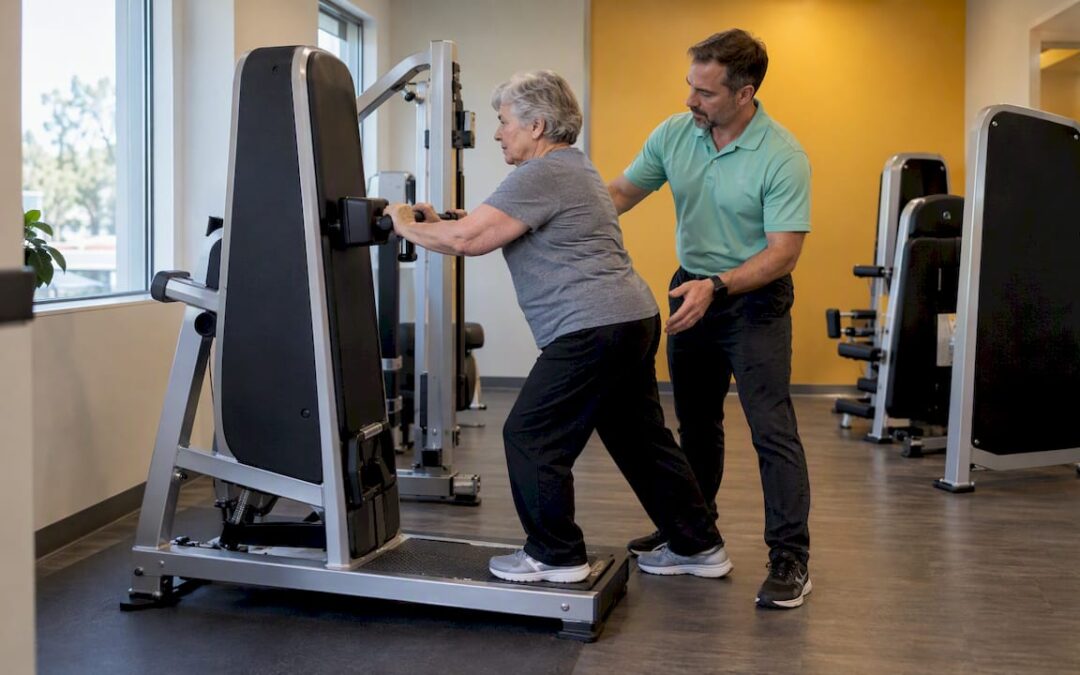
To lower your chance of a broken hip or other serious fracture, get assessed if you’re eligible, start strength and balance training, fix obvious fall hazards at home, correct a vitamin D or calcium shortfall, and, if you’re at high risk or have already fractured, talk with your clinician about proven osteoporosis medicines. The USPSTF, the Bone Health and Osteoporosis Foundation, and the CDC all back these steps, and clinic-based programs can support the exercise piece once the medical basics are covered.
TL;DR:
- Screening reduces fracture risk mainly in high-risk individuals, with about 5 fewer hip fractures per 1,000 screened adults, and treatment effectiveness varies by risk level.
- Exercise combining weight-bearing, resistance, and balance training significantly lowers fracture odds, especially when paired with proper nutrition and gradual progression.
- Fall prevention strategies like medication review, home hazard modifications, and supportive footwear can substantially decrease the chances of falls and related fractures.
- Medications such as bisphosphonates and denosumab are effective for high-risk patients, but stopping denosumab without a plan can cause rebound fractures, requiring careful management.
- Focus on early post-fracture intervention through fracture liaison services, which improve treatment adherence and substantially cut recurrent fracture rates.
Table of Contents
- What the strongest evidence says about reducing fractures
- Lifestyle steps that actually lower your fracture risk
- Stopping the fall before it happens
- Screening, FRAX, and the medicines that change outcomes
- Why the first year after a fracture matters most
- Where supervised osteogenic loading fits into the picture
- A clinician’s priority order for the next six months
- Supporting your bone health plan with OsteoStrong
- Sources
- FAQ
What the strongest evidence says about reducing fractures
Screening alone does not prevent fractures. It identifies who needs treatment, and treatment is what moves the numbers. Three pragmatic randomized trials pooled by the USPSTF found that screening older women for osteoporosis reduced hip fractures with a pooled relative risk of 0.83 and major osteoporotic fractures with a pooled relative risk of 0.94.
About 5 fewer hip fractures occurred per 1,000 people screened, according to the USPSTF evidence review. That is a modest absolute number, but it reflects a population already at relatively low per-person risk. The benefit grows sharply for people identified as high risk, because that is where treatment does its real work.
Most of this trial evidence comes from older, postmenopausal women, so the applicability to men is less certain and guidelines are more cautious about recommending routine screening for them.
On the treatment side, the picture is clearer. Bisphosphonates and denosumab reduce hip and vertebral fracture rates in people with low bone density, and anabolic agents such as teriparatide or romosozumab produce a bigger jump in vertebral and nonvertebral protection for patients at very high risk, those who have already fractured or have severely low bone density. The Prolia prescribing information reports relative risk reductions in new vertebral fractures of up to 68% in clinical trials, with hip fracture reductions also observed over three years.
None of this works as a one-size-fits-all prescription. A 68-year-old with a single risk factor and normal bone density needs a different plan than a 75-year-old who just broke a wrist falling off a curb. That second scenario carries what clinicians call imminent fracture risk: the period right after a first fragility fracture when the odds of a second one spike. Evidence-based prevention treats that window as urgent, not routine, which is why secondary prevention gets its own section further down.
Lifestyle steps that actually lower your fracture risk
Exercise is not optional background advice here. It is one of the few interventions that works on both sides of the fracture equation: it strengthens bone directly and it reduces the falls that break it. The Bone Health and Osteoporosis Foundation recommends weight-bearing exercise and resistance training to stimulate bone formation, paired with balance work such as tai chi to cut fall risk.

A sensible starting point looks like two to three resistance sessions a week, brisk walking or other weight-bearing activity most days, and balance practice woven in daily, even if it is just standing on one foot while brushing your teeth. Progression should be gradual. Someone who has not lifted anything heavier than groceries in a decade should not start with a loaded barbell, and a supervised program or physical therapist referral is the safer route into resistance training for anyone with existing fractures or severe osteoporosis.
Nutrition matters, but it is a supporting actor, not the lead. Calcium from food is preferable to supplements when you can get there through diet. Vitamin D deficiency is common enough in older adults that testing is worth asking for, and supplementing when levels are low is a reasonable next step. Protein intake deserves more attention than it usually gets, since muscle mass and bone strength move together, and malabsorption issues or disordered eating can quietly undercut both.
- Smoking accelerates bone loss and should be a priority to quit regardless of fracture risk.
- Heavy alcohol use raises both fall risk and fracture risk, so moderation matters.
- Certain medications, including some steroids and anticonvulsants, can weaken bone over time, which is worth reviewing with a clinician or pharmacist.
- Being significantly underweight raises fracture risk independent of bone density itself.
The WHO fragility fractures fact sheet frames these as modifiable risk factors, meaning they respond to action rather than being fixed traits you simply live with.
Pro Tip: Pair any new strength program with a balance component from week one. Strength without balance still leaves you vulnerable to the fall that causes the fracture.
For people who want structured, supervised loading without designing their own program, a clinic-based option can fill that gap, a point worth returning to once the basics are in place.
Stopping the fall before it happens
Most fractures in older adults start with a fall, not a sudden bone failure, which makes fall prevention one of the highest-leverage moves available. The CDC links roughly 300,000 hip fracture hospitalizations a year to falls, and its prevention guidance centers on a short list of concrete actions rather than vague caution.
- Ask a doctor or pharmacist to review every medication, since sedatives, blood pressure drugs, and some sleep aids are common contributors to dizziness and falls.
- Clear obvious trip hazards: loose rugs, clutter in walkways, and cords stretched across floors.
- Add nightlights along the path to the bathroom and install grab bars where falls are most common, inside the shower and beside the toilet, placed where a reaching hand naturally lands rather than purely by code.
- Schedule annual vision and hearing checks, and get a dedicated pair of glasses for outdoor walking if your regular lenses are progressive or bifocal, since those can distort depth perception on stairs and curbs.
- Choose supportive, low-heeled shoes with good tread over slippers or socks around the house.
- Have a physical therapist fit any cane or walker properly. A poorly sized assistive device can cause the fall it was meant to prevent.
Small, low-cost changes tend to get adopted faster than big renovations, and they often matter more. A geriatrics home-modification review points to details like nightlights and single-distance outdoor glasses as frequently overlooked but effective fixes.
If falls have already happened once or you feel unsteady on uneven ground, ask for a formal fall-risk assessment rather than waiting for a second fall to prompt it. A physical therapist or occupational therapist can evaluate gait, strength, and home layout in one visit and flag issues a general checkup would miss.
Screening, FRAX, and the medicines that change outcomes
The USPSTF recommends osteoporosis screening for women aged 65 and older, and for younger postmenopausal women whose fracture risk, estimated using a formal tool, matches that of a 65-year-old. Evidence for routine screening in men is thinner, so decisions there tend to be individualized around specific risk factors rather than guided by a blanket age cutoff.
FRAX is the tool most clinicians use to estimate a person’s 10-year probability of a major osteoporotic fracture or hip fracture specifically. It can run with or without a bone density result, factoring in age, prior fracture, family history, smoking, steroid use, and other inputs. A DXA scan measuring bone density at the hip and spine sharpens that estimate and is the test used to diagnose osteoporosis and osteopenia directly. Clinicians combine FRAX output with DXA results and guideline thresholds, such as those in the BHOF Clinician’s Guide, to decide who needs medication now versus who can manage with lifestyle measures and monitoring.
When medication is indicated, the main classes are:
- Oral or intravenous bisphosphonates, typically the first-line choice, which slow bone breakdown and reduce hip and vertebral fracture rates.
- Denosumab (brand name Prolia), a twice-yearly injection that reduced new vertebral fractures by up to 68% in trials and showed reduced hip fractures at three years, according to its FDA label.
- Anabolic agents such as teriparatide, abaloparatide, or romosozumab, generally reserved for patients at very high risk, which build new bone rather than just slowing its loss.
Stopping denosumab without transitioning to another antiresorptive can trigger a rebound in bone turnover and a risk of multiple vertebral fractures, a finding documented in its prescribing information. This makes denosumab a drug you do not simply quit; stopping requires a plan, not just a missed appointment.
Anabolic agents also come with built-in stop dates: the BHOF overview of osteoporosis medicines notes teriparatide and abaloparatide are limited to two years of use and romosozumab to twelve months, after which sequential therapy with an antiresorptive is typically needed to lock in the gains. Treatment choice and duration should account for kidney function, dental health before certain infusions, and personal tolerance for injections versus pills, which is why this decision sits with a clinician who knows the full medical picture rather than a generic protocol.
Why the first year after a fracture matters most
A fragility fracture, one that happens from a fall at standing height or less, is the single strongest predictor of another fracture, and the risk is highest in the first one to two years afterward. Fracture Liaison Services exist specifically to close that window. These are coordinated programs, often based in hospitals, that identify fracture patients, arrange DXA scans and lab work, start appropriate medication, and follow up to confirm the patient actually continues treatment.

Evidence summarized in a review of multidisciplinary fracture prevention associates FLS and similar coordinated post-fracture programs with better treatment initiation, better medication adherence, and lower refracture rates compared with usual care, where follow-up is often left to the patient to arrange.
If you or a family member has just had a fracture, the practical move is to ask the treating hospital or orthopedic team directly whether a fracture liaison service or equivalent coordinated program is available, rather than waiting for a referral that may not come automatically.
Where supervised osteogenic loading fits into the picture
Osteogenic loading is a clinic-based approach that applies brief, high-intensity mechanical force to the skeleton under supervision, typically in a single weekly session, with the aim of stimulating the body’s natural bone-building response. It sits alongside, not instead of, the exercise and medical strategies above.
Clinics offering this model often pair the loading session with complementary wellness tools:
- Red light therapy and PEMF mats, used as general recovery and wellness support alongside the core loading session.
- Vibration plates, which some clients use for circulation and muscle activation before or after loading.
- Compression therapy and hydromassage lounges, offered as recovery add-ons rather than bone-specific treatments.
These services are structured around a once-weekly, supervised format rather than daily workouts, which may suit people who find a full independent strength program hard to start or sustain. They are a complement to screening and bone-directed medicine when those are indicated, not a substitute for either.
A clinician’s priority order for the next six months
Start with triage: confirm whether you meet screening criteria, note any fracture in the past two years, review medications for fall risk, and flag red flags like new thigh or groin pain if you are on certain bone medications, since that needs prompt evaluation.
For the next three to six months, prioritize starting a strength and balance program, fixing home fall hazards, getting vitamin D checked, and discussing treatment with your clinician if FRAX or DXA results indicate high risk. Anyone with a recent fragility fracture should ask specifically about a fracture liaison service rather than waiting for routine follow-up.
— Aaron
Supporting your bone health plan with OsteoStrong
Once screening, nutrition, and any needed medication are sorted with your clinician, the remaining piece is consistent, well-supervised strength stimulus, and that is where a once-weekly commitment beats an unused gym membership. OsteoStrong’s osteogenic loading sessions are designed around a single brief, supervised visit per week rather than a schedule most people struggle to keep. Alongside the core session, centers may offer red light therapy, PEMF mats, vibration plates, compression therapy, and hydromassage lounges as recovery support.
If you’re weighing calcium and vitamin D intake as part of your plan, a nutraceutical option built around daily nutrient support can be worth discussing with your clinician as a complement to diet. To see what a session involves and whether it fits your plan, visit the OsteoStrong Rancho Cordova East page to check availability.
Sources
- USPSTF evidence review on screening for osteoporosis
- Multidisciplinary approach to fracture prevention / FLS evidence (PMC article)
- CDC: Preventing falls and hip fractures
- Prolia (denosumab) FDA label — indications and trial outcomes
FAQ
Is it true that someone reversed osteoporosis at 65?
Bone density can improve with treatment and exercise at any age, including in your sixties, but “reversed” overstates what typically happens. Medications and consistent strength training can meaningfully raise bone density scores and lower fracture risk, which a clinician can track through repeat DXA scans.
How uncomfortable is fracture risk reduction treatment?
Lifestyle steps like strength training and balance work should not cause pain beyond normal muscle soreness, and a supervised program or physical therapist can adjust intensity if something hurts. Medications vary: oral bisphosphonates can cause mild stomach upset, injections like denosumab involve a brief shot every six months, and any new or severe pain should be reported to your clinician rather than worked through.
What is the most effective medication for treating osteoporosis?
There is no single “most effective” drug for everyone, since the right choice depends on fracture history, kidney function, and risk level. Denosumab showed relative risk reductions in new vertebral fractures of up to 68% in trials, according to its FDA label, while anabolic agents like romosozumab are often reserved for patients at very high risk because they build new bone rather than only slowing loss.
Can bone density be increased after age 70?
Yes, bone density can improve with appropriate medication and weight-bearing or resistance exercise, though response varies by individual and by how advanced bone loss already is. A DXA scan before and after a treatment period is the standard way to measure whether a specific plan is working.