
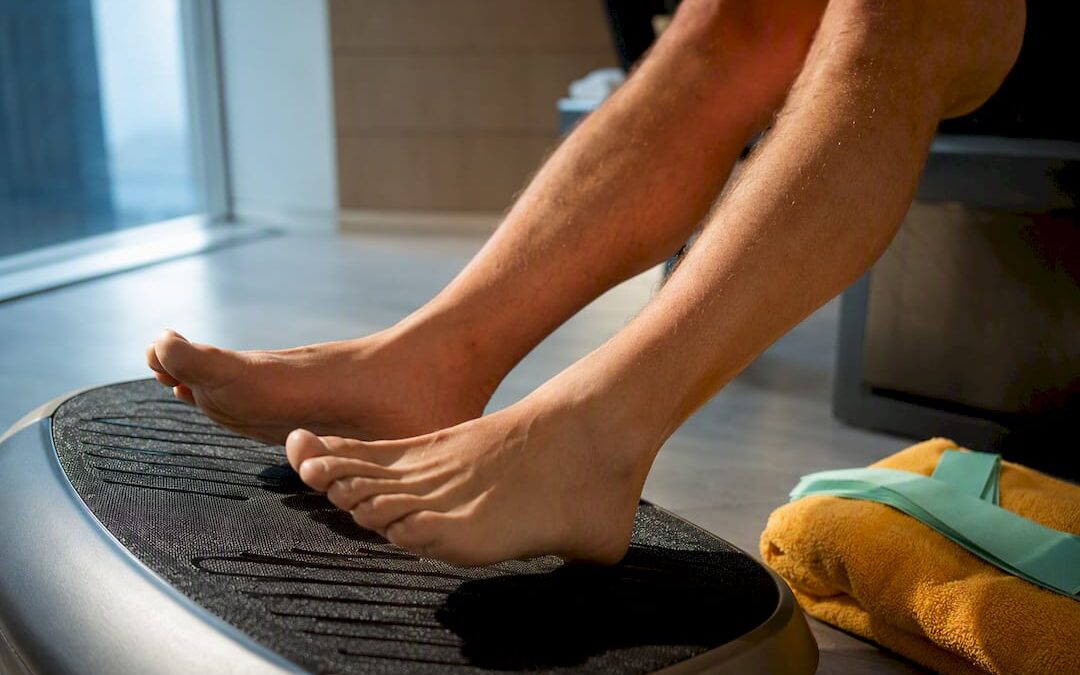
Vibration therapy does increase peripheral blood flow, but only temporarily and only within specific dosing ranges. Controlled studies show whole-body vibration (WBV) at frequencies of 30 Hz or lower can boost skin and muscle blood flow, in some cases roughly doubling it for about 10 minutes after a session. That makes it a legitimate short-term circulation tool, useful for warm-up, leg heaviness, or lymphatic support, but not a treatment for diagnosed vascular disease like deep vein thrombosis or advanced peripheral artery disease.
TL;DR:
- Vibration therapy at or below 30 Hz can double skin blood flow for about 10 minutes post-session, but benefits decline at higher frequencies.
- Both skin blood flow and muscle oxygenation respond quickly to vibration, with skin effects appearing within minutes and muscle effects needing longer exposure.
- Lower frequency, low amplitude protocols are safest and most effective, especially for older adults, while higher frequencies produce inconsistent circulation results.
- Vibration is a supportive tool that enhances short-term circulation but does not repair vascular damage or treat advanced vascular diseases.
- Supervised, moderate-frequency sessions within safety limits are recommended, especially for those with health concerns or vascular conditions.
Table of Contents
- How Vibration Therapy Circulation Effects Show Up in Clinical Research
- Why Vibration Affects Blood Flow: The Mechanisms Behind It
- Vibration Plate Settings That Actually Move Blood Flow
- A Conservative Protocol for Using Vibration Plates to Support Circulation
- Who Should Avoid Vibration Therapy for Circulation
- How OsteoStrong Uses Vibration Plates in a Supervised Setting
- Editorial Take: What the Evidence Actually Justifies
- Try Vibration Therapy as Part of a Supervised Wellness Routine
- Sources
How Vibration Therapy Circulation Effects Show Up in Clinical Research
The research on vibration therapy and circulation is more consistent than most wellness claims get credit for, and also more limited than marketing copy tends to suggest. Both things are true at once, and understanding why matters more than picking a side.
A systematic review of controlled WBV interventions found that frequencies at or below 30 Hz produced the clearest gains in peripheral blood flow and skin temperature. Push past that range into the 31 to 50 Hz band, and results turn inconsistent. Some studies see a bump, others see nothing, and a few see blood flow return to baseline faster than at lower settings. That single finding reshapes how you should think about vibration plates: more intensity is not automatically better, and for circulation purposes, it often works against you.
The clearest single data point comes from a study on lower-extremity skin blood flow in healthy adults. Participants who received vibration-only exposure saw their skin blood flow roughly double, and that elevation held for at least 10 minutes after the vibration stopped. That is a real, measurable acute effect, not a rounding error or a self-reported “I feel warmer” anecdote.
Muscle-level effects follow a slightly different timeline. A study comparing vertical and side-alternating vibration platforms found that muscle oxygenation didn’t rise meaningfully until participants had been on the platform for a couple of minutes, or completed multiple short sets. Skin blood flow responds fast; muscle oxygenation takes longer and needs repeated stimulation to show up on the numbers.
Older adults show a particularly clean signal. A study using lower-frequency WBV, in the 15 to 25 Hz range and staying within ISO 2631-1 exposure limits, found increased foot skin blood flow during and after exposure in an elderly population, even though balance improvements from the same sessions were inconsistent. That split result is worth sitting with: circulation and balance don’t always move together, even when they’re measured in the same study on the same people.
Broader reviews back up the general pattern while adding an honest caveat. A clinical review of WBV dosing across metabolic disease populations concluded the therapy has real potential, particularly for older adults and people with metabolic conditions, but that outcomes vary widely depending on frequency, amplitude, and session structure. A meta-analysis focused specifically on blood flow and muscle oxygenation reached a similar conclusion: the effect on peripheral blood flow is real across pooled data, but the size of that effect swings based on how the study dosed the vibration.
Here’s what that body of evidence adds up to:
- Frequencies at or below 30 Hz show the most consistent circulation benefit.
- Acute skin blood flow gains can double baseline values and persist for roughly 10 minutes post-session.
- Muscle oxygenation gains need at least two minutes of continuous exposure or multiple sets to register.
- Older adults and people with metabolic conditions tend to show more consistent gains than younger, already-fit populations.
- Higher frequencies (above 30 Hz) produce mixed, less reliable results for circulation specifically.
Stat to know: One controlled study found vibration-only exposure nearly doubled mean skin blood flow in the lower extremities, with the elevation lasting at least 10 minutes past the end of the session, a magnitude and duration that shows up repeatedly across the acute-effect literature.
None of this makes vibration plates a cure for anything. It makes them a reasonably well-studied way to nudge circulation in a specific, bounded window, which is a very different claim than the one most gym-floor marketing makes.
Why Vibration Affects Blood Flow: The Mechanisms Behind It
Three separate mechanisms are doing the work here, and they operate on different timelines, which is part of why acute results look so much clearer than long-term ones.
Nitric oxide and shear stress. Rhythmic mechanical stimulation on the skin and underlying tissue creates shear stress against the endothelium, the thin layer of cells lining blood vessels. That shear stress prompts the endothelium to release nitric oxide, a molecule that signals smooth muscle in vessel walls to relax. Relaxed vessel walls mean wider vessels and easier blood flow, the same basic vasodilation pathway that makes exercise and heat therapy effective for circulation.
The muscle pump and tonic vibration reflex. Vibration triggers rapid, low-level, involuntary muscle contractions, sometimes called the tonic vibration reflex. Those contractions squeeze veins and capillaries in a rhythm similar to walking, pushing blood back toward the heart and pulling fresh oxygenated blood into the tissue. This is the same physical principle behind compression therapy and calf-pump exercises, just delivered through mechanical oscillation instead of muscular effort or external pressure.
Vasoactive mediators. Some rotational WBV trials have reported reductions in endothelin-1, a hormone that constricts blood vessels. Separately, thermal therapy studies in peripheral artery disease patients show that lowering endothelin-1 correlates with meaningfully increased limb blood flow. The vibration-specific evidence here is thinner and comes from smaller trials, but it points toward a plausible hormonal pathway layered on top of the mechanical one.
What these three mechanisms have in common: they all produce transient effects. Nitric oxide release fades once the mechanical stimulus stops. Muscle contractions stop pumping blood the moment you step off the platform. None of these pathways repair a damaged vein valve, dissolve a clot, or reopen a blocked artery. That distinction is the single most important thing to carry into the rest of this guide.
- Nitric oxide release from endothelial shear stress drives short-term vasodilation.
- The tonic vibration reflex triggers rhythmic muscle contractions that mimic a walking pump.
- Some studies report reduced endothelin-1, a vasoconstricting hormone, after rotational WBV.
- All three mechanisms are mechanical or biochemical responses to active stimulation, not structural repairs to vessels.
Vibration Plate Settings That Actually Move Blood Flow
Parameters matter more here than in almost any other vibration therapy application, because the frequency window for circulation gains is narrower than the window for, say, muscle strength or bone stimulus.
Frequency. The evidence consistently favors lower ranges. Protocols using 12 to 20 Hz, and specific rotational protocols around 14 Hz, show up repeatedly in studies reporting circulation benefit. Once you cross into the 31 to 50 Hz range, results turn unreliable. If circulation is your primary goal rather than bone density or muscle power, dial the frequency down, not up.
Amplitude. Lower amplitude settings paired with low frequency appear safer and just as effective for peripheral blood flow as higher-amplitude setups, based on the elderly-population study using 15 to 25 Hz within ISO exposure limits. High amplitude adds mechanical load without a proportional circulation payoff, and it raises the exposure intensity you’re subjecting joints and tissue to.
Platform type. Vertical and side-alternating platforms produce measurably different results for lower-extremity blood flow and muscle oxygenation. Side-alternating platforms, which tilt like a seesaw, tend to recruit muscle groups differently than vertical platforms, which move straight up and down. Neither is universally superior. The practical takeaway is that platform type is a variable worth checking on the equipment you use, not an afterthought.
Duration and rest cadence. Acute skin blood flow benefits can appear quickly, but muscle oxygenation gains typically need at least two minutes of continuous vibration, or several shorter sets, before they register. Studies structuring sessions as repeated short bouts with rest between them tend to report more reliable oxygenation increases than single continuous exposures of the same total time.
ISO 2631-1 exposure guidance. This international standard sets recommended magnitude and duration limits for human exposure to mechanical vibration, and it’s the reference point clinicians use to keep WBV sessions inside a safe range rather than an intensity that just happens to feel strong. Staying within these limits is part of why lower-frequency, lower-amplitude protocols keep outperforming aggressive high-intensity settings in the circulation-specific literature.
- Favor frequencies in the 12 to 20 Hz range for circulation-focused sessions.
- Keep amplitude low, especially for older adults or anyone new to vibration training.
- Expect skin blood flow to respond within minutes; muscle oxygenation needs more sustained exposure.
- Reference ISO 2631-1 magnitude limits rather than pushing intensity based on feel alone.
Pro Tip: If your vibration plate lets you adjust frequency and amplitude independently, start at the low end of both and add time before you add intensity. Circulation gains in the research come from consistent low-frequency exposure, not from cranking the dial as high as it goes.
A Conservative Protocol for Using Vibration Plates to Support Circulation
Nobody needs a complicated routine to try this safely. What they need is a sequence that starts light, tracks how the body responds, and builds from there.
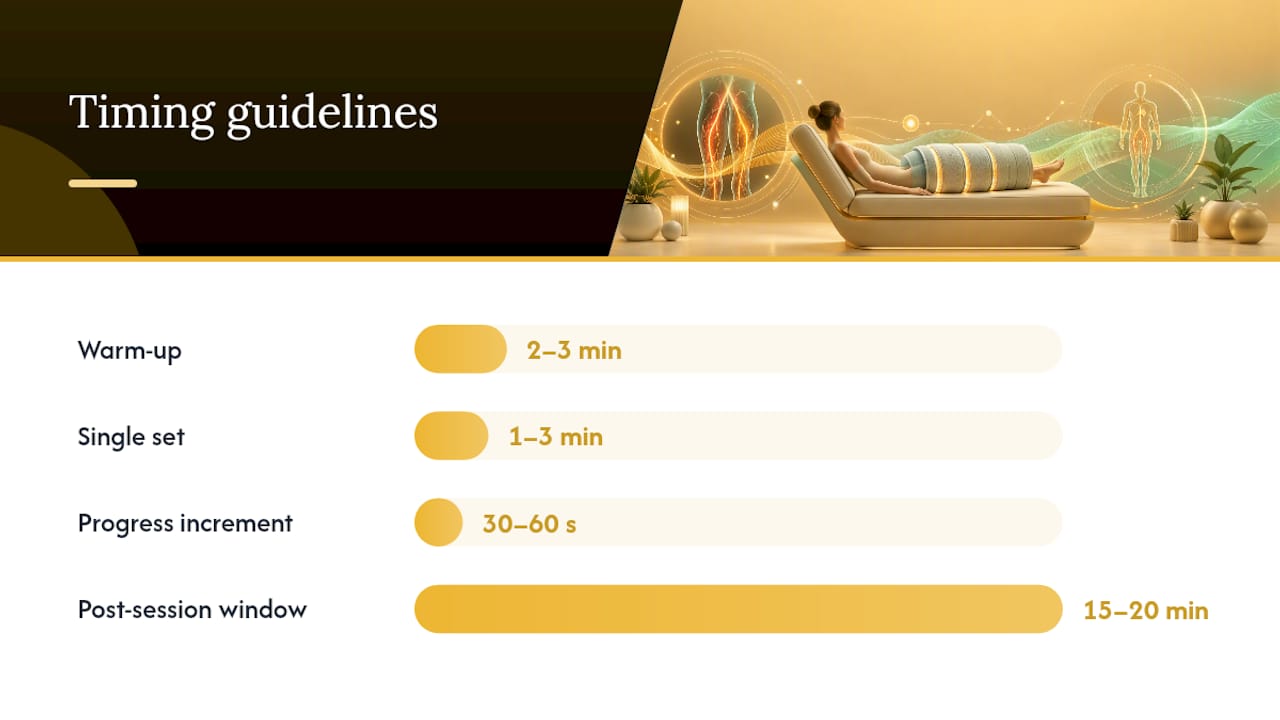
- Warm up for two to three minutes with light walking or ankle pumps before stepping on the plate. This primes blood flow so the vibration stimulus has something to amplify rather than starting from a cold baseline.
- Set the plate to 12 to 20 Hz with low amplitude. This range aligns with the frequencies most consistently linked to peripheral blood flow gains in the research reviewed above.
- Stand in a semi-squat or feet-shoulder-width stance rather than locking your knees. This position transmits vibration more effectively into the calf and thigh muscles that drive the venous pump.
- Run one to three sets of one to three minutes, with equal rest between sets. This mirrors the set-based structure that studies used to reach the two-minute-plus exposure window tied to muscle oxygenation gains.
- Add light active movement during the session if your plate and balance allow it. Small knee bends or heel raises on the platform appear to extend the circulation window beyond what passive standing alone produces.
- Progress gradually. Add 30 to 60 seconds per set every few sessions rather than jumping straight to longer continuous exposure. The goal is consistent low-intensity stimulus, not maximum tolerance.
- Pair sessions with post-exercise cool-down when possible. Combining vibration with light activity, rather than using it as a standalone sedentary treatment, tracks with better and longer circulation response in the acute-effect studies.
Pro Tip: Track how your legs feel 15 to 20 minutes after a session, not just during it. Most of the documented circulation benefit sits inside that post-session window, so that’s the period worth paying attention to if you’re deciding whether a protocol is working for you.
Stop a session immediately, and check in with a clinician, if you notice sharp pain, dizziness, sudden or unusual swelling, numbness that doesn’t resolve quickly, or any new skin discoloration in the legs or feet. None of those are normal responses to a properly dosed session, and pushing through them is not the same as building tolerance.
Who Should Avoid Vibration Therapy for Circulation
Vibration plates are not appropriate for every circulation concern, and knowing the red flags matters more than knowing the ideal frequency setting.
Get medical clearance before using a vibration plate if you have any history of deep vein thrombosis or active blood clots, uncontrolled high blood pressure, a recent fracture or joint replacement, or if you are pregnant. The same caution applies to anyone with a pacemaker or other implanted electronic device, since manufacturers often flag mechanical vibration as a variable worth checking with the device maker or prescribing physician first.
There’s a structural distinction worth being blunt about. Vibration therapy influences blood flow through nitric oxide release and rhythmic muscle contraction, mechanisms that work on healthy or mildly compromised vessels. It does nothing to repair a damaged vein valve, clear a blocked artery, or reverse structural venous insufficiency. Clinical guidance is consistent on this point: vibration therapy is a supportive modality, not a substitute for compression garments, prescribed medication, or surgical intervention when structural vascular disease has been diagnosed.
- Get medical clearance if you have a history of DVT, active clotting disorders, or uncontrolled hypertension.
- Avoid vibration plates after a recent fracture or joint surgery until your surgeon or physical therapist clears it.
- Check with your physician if you’re pregnant or have an implanted electronic device like a pacemaker.
- Treat vibration as adjunct support for vascular disease, never as a replacement for compression, medication, or surgery.
- Consult a vascular specialist for diagnosed conditions like advanced peripheral artery disease or chronic venous insufficiency before starting.
If you already manage a diagnosed vascular condition, the honest move is to loop in the physician managing that condition before adding vibration therapy to your routine, not after.
How OsteoStrong Uses Vibration Plates in a Supervised Setting
Vibration plates show up in OsteoStrong’s practice as one modality inside a broader session, not as a standalone circulation treatment. Clients typically visit once a week for osteogenic loading, the core service built around stimulating bone density gains through brief, targeted resistance impulses. Vibration plates, along with red light therapy, PEMF mats, compression therapy, and hydromassage lounges, get layered in around that weekly visit to support balance, recovery, and circulation goals complementary to the bone-focused work.
That weekly cadence matters for how vibration gets used. Because clients are already on-site and already screened for musculoskeletal and mobility considerations, adding a short vibration plate session for balance or circulation support fits naturally into an existing visit rather than requiring a separate appointment or a guess at correct settings. Staff can also flag when a client’s history suggests a conversation with their physician makes sense before vibration exposure, which lines up with the same screening logic covered above for clotting history, blood pressure control, or recent orthopedic procedures.
- Vibration plates are used as a complementary modality alongside weekly osteogenic loading, not as a replacement for it.
- Sessions are supervised, which allows for basic screening around known contraindications before a client steps on the platform.
- The broader service mix, including compression therapy and hydromassage, targets circulation and recovery from multiple angles rather than relying on vibration alone.
- Balance support is a secondary but consistent use case, echoing the same research showing mixed balance results even when circulation improves.
The practical benefit of this setup is straightforward: clients receive supervised guidance rather than experimenting with frequency and amplitude settings alone at home with no feedback loop. You’re using a modality that’s been folded into a supervised routine already built around a weekly check-in.
Editorial Take: What the Evidence Actually Justifies
Most vibration plate marketing skips straight from “increases blood flow” to “improves circulation health,” and that gap is where the conventional wisdom falls apart. The acute evidence is genuinely solid. Skin blood flow doubling for 10 minutes is a real, replicated finding. But acute vasodilation and long-term vascular health are different claims, and the research doesn’t support treating one as proof of the other.
What’s underrated is how much the frequency setting alone determines your outcome. Most people buying a vibration plate never learn that 30 Hz is roughly the ceiling for circulation-specific benefit, so they default to whatever intensity feels most vigorous, which is often the wrong direction entirely.
Prioritize dosing over duration. A properly dosed two-minute session at 15 Hz likely does more for circulation than ten minutes at 40 Hz. That is not intuitive, and it’s exactly the kind of detail a supervised setting catches that a solo home routine tends to miss.
— Aaron
Try Vibration Therapy as Part of a Supervised Wellness Routine
If you’ve read this far, you already know vibration therapy works best as one piece of a circulation and recovery strategy, not a standalone fix. That’s exactly how OsteoStrong structures it. Rather than handing you a vibration plate and a guess at settings, sessions pair it with weekly osteogenic loading, compression therapy, and hydromassage, so circulation support happens alongside bone density work that has its own body of supporting evidence.
This setup suits adults managing osteoporosis or osteopenia, and anyone proactively working on skeletal and circulatory health who wants a modality that’s dosed correctly instead of self-directed guesswork on a home unit. If you’re curious how a session actually runs, start with the practical guide to osteogenic loading or look into a session at a nearby center to see how vibration plates fit into a broader weekly visit.
Sources
- A systematic review of studies investigating the effects of controlled whole-body vibration intervention on peripheral circulation
- The effect of whole body vibration on lower extremity skin blood flow in normal subjects
- Acute effects of short-time active whole-body vibration on foot skin blood flow and related measures