

Red light therapy is not safe for everyone. Before you book a session or buy a device, you need to know which conditions, medications, and circumstances make it a poor or outright dangerous choice. The main red light therapy contraindications include active cancer, photosensitivity disorders like lupus, epilepsy, certain prescription medications, and pregnancy. Eye safety is a separate concern that applies to nearly all users. The American Academy of Dermatology recommends consulting a dermatologist before starting treatment, and that advice is especially important if any of the following apply to you:
- Active or recent cancer diagnosis
- Photosensitive conditions (lupus, porphyria, solar urticaria)
- Medications that increase light sensitivity (certain antibiotics, retinoids, chemotherapy agents)
- Epilepsy or seizure disorders
- Pregnancy or breastfeeding
- Thyroid conditions requiring direct neck exposure
- Open wounds or severe inflammatory skin conditions
FDA-cleared devices are considered safe for general use, but “cleared” means the device met a safety equivalence standard, not that it has been proven effective for your specific condition. That distinction matters when you are weighing risk.
Table of Contents
- What are the common side effects of red light therapy?
- Who should not use red light therapy?
- Should pregnant women, children, or breastfeeding individuals use red light therapy?
- How do you use red light therapy safely?
- Red light therapy at Osteostrong in Granite Bay
- Key Takeaways
What are the common side effects of red light therapy?
Red light therapy has a solid safety record when used correctly. According to Harvard Health, serious side effects are rare, and most people experience nothing worse than temporary skin redness after a session. That said, misuse changes the picture quickly.
Common and generally mild side effects include:
- Temporary skin redness or warmth at the treatment site
- Mild irritation or tightness, especially on sensitive skin
- Eye strain or discomfort if protective eyewear is skipped
- Post-inflammatory hyperpigmentation in people with darker skin tones
Overexposure is where things get more serious. High-intensity or excessively long sessions can cause swelling and blistering, and eye injury is a real risk with high-powered clinical devices if eyes are left unprotected. The Cleveland Clinic notes that long-term safety data for red light devices is still limited, which is a reason to stay conservative with session length and frequency.
Clinical devices used by dermatologists deliver significantly more power than at-home panels. Stanford Medicine points out that professional devices allow more precise dosing and come with trained staff who screen clients before treatment. At-home devices are lower-powered, but dose variability between products makes it harder to know exactly what you are getting.
Pro Tip: Start with shorter sessions at the lowest effective intensity, especially if you have sensitive skin or are new to red light therapy. Increase duration only after confirming your skin tolerates it well.
Who should not use red light therapy?
Some people face genuine contraindications, not just caution flags. The AAD specifically flags photosensitivity conditions and photosensitizing medications as reasons to avoid treatment. Here is a closer look at each group.
Photosensitivity conditions: Lupus, porphyria, and other autoimmune disorders that cause abnormal light sensitivity can be worsened by red light exposure. If your immune system already reacts poorly to light, adding a therapeutic light source is not a calculated risk worth taking without a specialist’s sign-off.
Photosensitizing medications: Certain drugs make your skin or eyes more reactive to light. These include:
- Tetracycline antibiotics (doxycycline, minocycline)
- Retinoids (isotretinoin, tretinoin)
- Some antifungals and diuretics
- Certain chemotherapy agents
- St. John’s Wort (an over-the-counter supplement with documented photosensitizing effects)
Active cancer or cancer history: Red light therapy should not be applied directly over active cancer sites or suspicious tumors. The effects of red or near-infrared light on malignant cells are not fully understood, and the risk of stimulating tumor growth is not one any responsible clinician will take. If you have a cancer history, consult your oncologist before any light-based therapy.
Epilepsy and seizure disorders: Pulsing or flickering light modes used in some red light devices can trigger photosensitive seizures. Professional screening for epilepsy before treatment is standard practice in clinical settings, and it should be in any wellness environment offering this service.
Thyroid exposure: Directing red light at the thyroid gland in the neck can cause unintended stimulation of the gland. This is a specific anatomical contraindication that often gets overlooked in consumer-facing guides. If you are treating the neck or chest area, shield the thyroid or avoid that zone entirely.
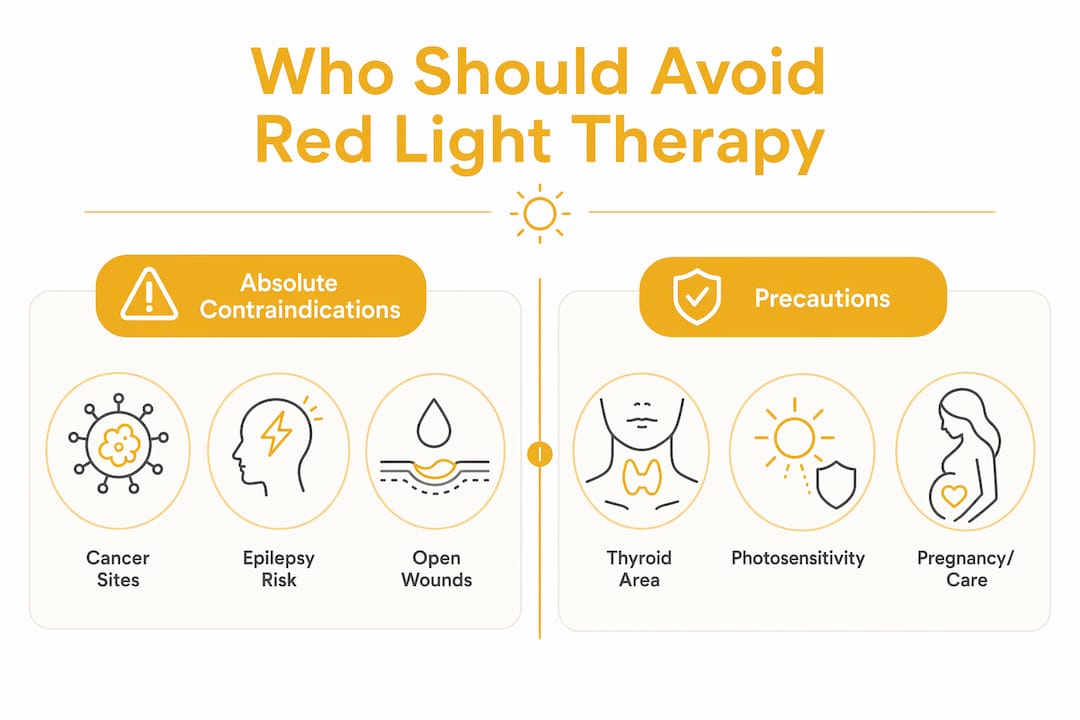
Open wounds and severe skin conditions: Active infections, open wounds, and certain inflammatory skin conditions may worsen with light exposure. Get a professional skin evaluation before starting.
Should pregnant women, children, or breastfeeding individuals use red light therapy?
These three groups share a common thread: the research simply has not caught up yet. That absence of evidence is not the same as evidence of safety, and the precautionary principle applies firmly here.
Pregnancy: There is no established evidence that red light therapy causes fetal harm, but there is also no robust clinical data confirming it is safe during pregnancy. The non-ionizing light does not damage DNA the way UV radiation does, but thermal effects and cellular stimulation during fetal development are not well studied. The guidance from most healthcare providers is straightforward: avoid it unless a physician specifically approves it for a defined clinical purpose.
Breastfeeding: Similar logic applies. Hormonal changes during breastfeeding affect skin sensitivity, and the systemic effects of regular light therapy sessions on lactation or milk composition have not been studied. Consulting a healthcare provider before starting is the responsible step.
Children: Pediatric use of red light therapy lacks clinical trial data. Children’s skin and developing tissues may respond differently than adult tissue, and dosing standards developed for adults do not automatically translate. Any use in children should happen under direct medical supervision, not as a self-directed wellness practice.
Key considerations for these populations:
- No established safe dosing guidelines exist for pregnant individuals or children
- Professional medical oversight is required before any use in these groups
- The precautionary principle, not anecdotal reports, should guide decisions here
- Dermatologists treat red light therapy as a complementary tool, not a standalone intervention, making professional diagnosis even more critical for vulnerable groups
How do you use red light therapy safely?
Safe use comes down to three things: the right device, the right protocol, and knowing when to stop. Dosing and duration are not yet standardized across the industry, which means following device-specific instructions and professional guidance is not optional.
Practical safety guidelines:
- Use FDA-cleared devices. Cleared status means the device met safety standards. Read the specifications, including wavelength range (typically 630–850 nm for therapeutic use) and power output.
- Wear protective eyewear every session. This applies whether you are at a clinical center or using a home panel. Direct exposure to red or near-infrared light can damage the retina over time.
- Limit session length. Most clinical protocols run 10–20 minutes per session. Longer is not better, and overexposure is the most common cause of adverse reactions.
- Get a professional skin evaluation first. A dermatologist can identify contraindications you may not be aware of, including subclinical photosensitivity or medication interactions.
- Watch for warning signs. Persistent redness beyond 24 hours, blistering, unusual pigmentation changes, or eye discomfort after a session are all reasons to stop and seek medical attention.
At a professional wellness center, staff screen clients before treatment and use calibrated equipment, which removes much of the guesswork that comes with at-home devices. That screening step is what separates a safe experience from one that could cause harm.
Pro Tip: If you are on any prescription medication, bring the full list to your first consultation. Photosensitizing drug interactions are underreported because people do not connect a skin reaction to a pill they have been taking for months.
Red light therapy at Osteostrong in Granite Bay

Osteostrong in Granite Bay offers red light therapy as part of a broader, professionally supervised wellness program, not as a standalone product you figure out on your own. That distinction is exactly what the research supports: the American Academy of Dermatology consistently frames red light therapy as a complementary treatment that works best alongside professional diagnosis and monitoring.
At Osteostrong, red light therapy sits alongside osteogenic loading, PEMF mats, compression therapy, vibration plates, and hydromassage, giving members a complete biohacking environment with trained staff who understand the contraindications covered in this article. You are not handed a device and left to guess. Sessions are structured, equipment is calibrated, and the team can help you determine whether red light therapy is appropriate for your health profile before you start.
If you are in Granite Bay and want to experience red light therapy in a setting where safety protocols are built in, visit Osteostrong to learn about membership options and schedule your first session.
Key Takeaways
Red light therapy is generally safe for most adults when used according to device instructions and professional guidance, but specific medical conditions, medications, and life stages make it unsuitable without professional clearance first. Serious side effects are rare, according to Harvard Health, and most people experience nothing worse than temporary skin redness after a session.
| Point | Details |
|---|---|
| Major contraindications | Active cancer, lupus, epilepsy, photosensitizing medications, and open wounds are the primary reasons to avoid red light therapy. |
| Eye protection is non-negotiable | Direct exposure to red or near-infrared light can injure the retina; protective eyewear is required every session. |
| Special populations need clearance | Pregnant individuals, breastfeeding mothers, and children should not use red light therapy without explicit medical approval. |
| Clinical vs. at-home devices | Professional devices offer more precise dosing and come with client screening; at-home panels vary widely in output and safety. |
| Osteostrong in Granite Bay | Osteostrong offers supervised red light therapy alongside osteogenic loading and other modalities, with staff trained to screen for contraindications before your first session. |