

Red light therapy before and after comparisons tell a consistent story: gradual, measurable improvements that build over weeks and months, not days. Skin looks smoother and more even by weeks 8–12. Hair density increases noticeably by weeks 16–24. Pain and inflammation often respond faster, sometimes within the first few sessions. None of this happens overnight, and that gap between expectation and reality is where most people give up too soon.
Here is what consistent use actually produces:
- Skin: improved texture, reduced redness, softer fine lines, and a visible glow starting around weeks 4–6; structural collagen changes by weeks 8–12, with studies reporting up to 37% collagen increase by that point
- Hair: reduced shedding in the first 8 weeks, vellus hair emergence by weeks 12–16, measurable density gains by weeks 16–24, with clinical trials showing a 39% hair count increase after 16 weeks of consistent therapy
- Pain and inflammation: noticeable relief within early sessions, with more lasting improvement by weeks 4–8, and pain reduction data showing decreases of 50% or more by that point with consistent treatment
- Sleep and recovery: reported improvements in sleep quality and post-exercise soreness, though the evidence here is less robust than for skin and hair
Studies report up to 37% collagen increase around the 8–12 week mark with consistent therapy. Hair count has shown a 39% increase after 16 weeks of regular treatment. These are not outlier numbers from cherry-picked trials. They reflect what adherent users actually achieve.
Table of Contents
- How does red light therapy work at the cellular level?
- What results can you realistically expect by treatment goal?
- What does an effective session protocol actually look like?
- How Osteostrong experts help you track and maximize your results
- Red light therapy at Osteostrong in El Dorado Hills
- Key Takeaways
How does red light therapy work at the cellular level?
The mechanism is called photobiomodulation, a term the National Library of Medicine added as an official Medical Subject Heading in 2015. It describes how specific wavelengths of red and near-infrared light interact with tissue to alter biology at the cellular level.
The primary target is cytochrome c oxidase, a key enzyme in the mitochondrial electron transport chain. When red or near-infrared light hits this enzyme, it nudges the chain into a more active state, boosting production of ATP, the fuel cells run on. More ATP means cells have the energy to repair, regenerate, and reduce inflammation more efficiently.
From there, several downstream effects follow:
- Collagen stimulation: fibroblasts respond to red light by increasing synthesis of collagen, elastin, and hyaluronic acid, the structural proteins that keep skin firm and smooth
- Vasodilation: light causes blood vessels to widen, improving nutrient and oxygen delivery to hair follicles and skin tissue
- Anti-inflammatory signaling: red light reduces cytokines like IL-6 and TNF-α, which drive chronic inflammation in skin conditions and joint pain
- Cell proliferation: activation of cell growth across multiple cell types, independent of light source, is one of the most consistent findings in photobiomodulation research
Wavelength determines where the light lands. Red light in the 633–670 nm range penetrates the skin at shallow depths, making it optimal for surface-level skin rejuvenation and hair follicle stimulation. Near-infrared light (810–850 nm) penetrates deeper into muscle and joint tissue, which is why it tends to be more effective for pain and recovery applications.
What results can you realistically expect by treatment goal?
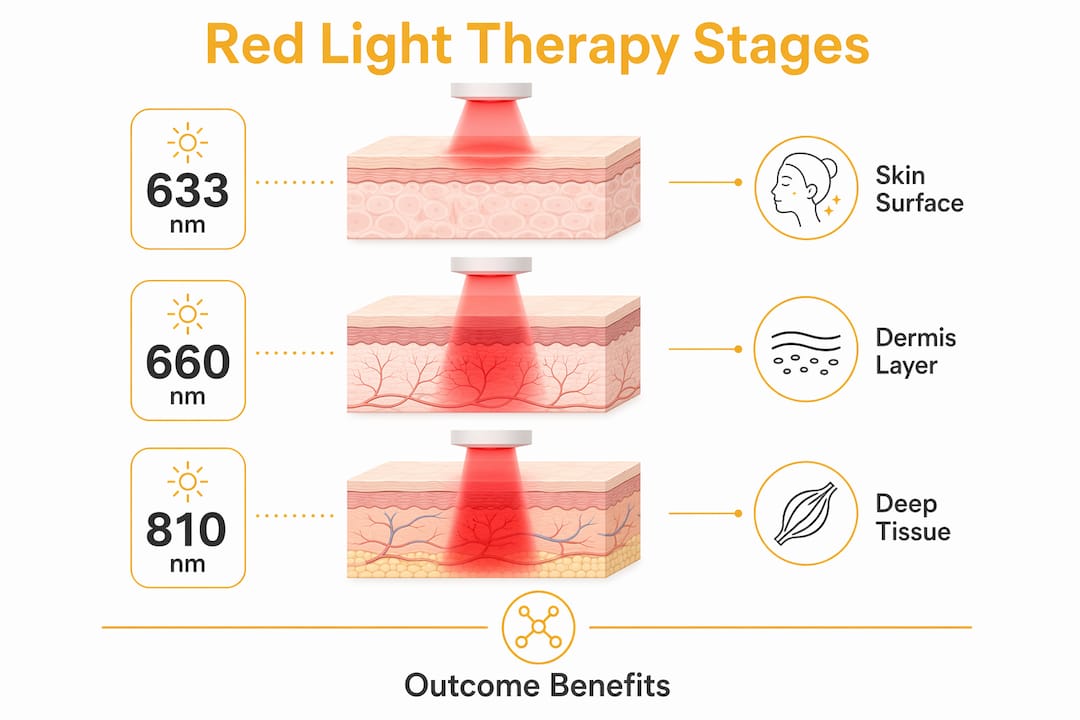
Results vary by what you are treating, how severe the condition is, and how consistently you show up. Here is what the clinical picture looks like across the four most common goals.
1. Skin rejuvenation
Texture improvements and a more even tone are usually the first changes people notice, often by weeks 4–6. The bigger structural changes, reduced fine lines, firmer skin, and lighter dark spots, follow the collagen timeline. The American Academy of Dermatology notes that red light therapy can reduce fine lines, smooth texture, diminish redness, and ease acne, though it works best as part of a broader skin care plan rather than a standalone fix.

2. Hair growth
Hair follicles respond to the vasodilation effect. More blood flow means more nutrients reaching the follicle, which is the same mechanism topical minoxidil exploits. Expect reduced shedding first, then slow regrowth. One important caveat from Stanford dermatologists: red light cannot revive dead follicles. If the follicle is gone, the light has nothing to work with.

3. Pain and inflammation
This is where the timeline compresses. Many people feel meaningful relief within their first few sessions, particularly for joint soreness and muscle recovery. More lasting, structural improvement typically solidifies by weeks 4–8. Pain reduction data shows decreases of 50% or more by weeks 4–8 with consistent treatment.
4. Body composition and recovery
The evidence for fat reduction and athletic performance is thinner than for skin and hair. Red light may support muscle recovery by accelerating tissue repair after exercise, but dramatic body sculpting claims outpace the science. Treat recovery support as a realistic benefit; treat body reshaping as a possible bonus, not a primary outcome.
What does an effective session protocol actually look like?
Consistency matters more than any single session. Dr. Rachel Reynolds of Harvard-affiliated Beth Israel Deaconess Medical Center puts it plainly: devices must be used multiple times a week for four to six months. “It’s slow and steady. It’s not going to be anyone’s quick fix.”
| Condition | Session frequency | Duration | Expected timeline |
|---|---|---|---|
| Skin rejuvenation | multiple times per week | several minutes | Texture: 4–6 weeks; collagen: up to 37% collagen increase at 8–12 weeks |
| Hair growth | multiple times per week | several minutes | Shedding reduction: 8 weeks; density: up to 39% hair count increase at 16–24 weeks |
| Pain and inflammation | Daily or every other day | several minutes | Initial relief: 1–3 sessions; 50% or more pain reduction lasting by 4–8 weeks |
| Recovery support | Post-exercise | several minutes | Ongoing; cumulative benefit |
Practical protocol points:
- Position the device 6–12 inches from bare skin for optimal light penetration
- Skin must be clean and free of makeup, SPF, or heavy moisturizer before sessions; any barrier reduces how much light reaches the tissue
- Clinical-grade devices with high irradiance (190 mW/cm² or above) consistently outperform basic consumer panels in study outcomes
- FDA-cleared devices confirm safety, not uniform efficacy; wavelength accuracy and irradiance still determine results
- Evening sessions pair well with sleep goals; post-workout sessions maximize recovery benefits
How Osteostrong experts help you track and maximize your results
Tracking progress is where most people fall short. The changes are gradual enough that you can miss them without a system.
Standardized photo documentation is the most reliable method. Same lighting, same angle, same time of day, every two weeks. Non-visual improvements like pain scores, sleep quality, and energy levels deserve equal attention in a simple journal. The combination gives you a complete picture of what is actually changing.
Pro Tip: Consult with a health professional before setting your protocol. Individual factors like skin type, condition severity, and medication use can affect both the appropriate dose and the expected timeline. A qualified provider can calibrate your sessions rather than leaving you to guess.
Practical tips for getting the most from each session:
- Start with clean, dry, bare skin every time
- Stay consistent; missing sessions compounds over time and the effects of red light therapy stop when treatment stops
- Choose FDA-cleared devices or work with a qualified clinic for more precise dose control
- Wear eye protection when the device instructions recommend it
- Pair red light therapy with complementary habits: sun protection, adequate sleep, and good nutrition all support the same cellular repair pathways
At OsteoStrong Rancho Cordova East, red light therapy is integrated into a broader wellness protocol that includes osteogenic loading, PEMF mats, and other evidence-based modalities. That context matters. Bone health, inflammation, and skin aging share overlapping biological pathways, and addressing them together tends to produce more noticeable results than treating any one in isolation.
One common misconception worth addressing: placebo effects are real in before-and-after comparisons, particularly for pain and energy. Blinded clinical trials that control for expectation still show measurable collagen increases and hair count improvements, which is why the skin and hair evidence base is considered more reliable than the data on sleep or athletic performance. Knowing the difference helps you set honest expectations.
Red light therapy at Osteostrong in El Dorado Hills
If you have been researching red light therapy results and want to experience them in a supervised, clinical setting rather than guessing at home device settings, Osteostrong is worth a serious look.

Osteostrong offers red light therapy as part of a full-spectrum wellness program built around bone density, recovery, and vitality. The difference from a standalone red light device at home is access to clinical-grade equipment, professional guidance on session protocols, and the ability to combine red light with PEMF mats, vibration plates, compression therapy, and the BioCharger in a single weekly visit. You get the dose control that home devices often lack, without needing to manage it yourself.
The red light therapy dosage guide on the Osteostrong resource site walks through the specifics for bone health applications. For El Dorado Hills residents ready to move from research to results, the next step is straightforward: book a session at Osteostrong and get a protocol built around your actual goals.
Key Takeaways
Red light therapy produces measurable improvements in skin, hair, and pain outcomes, but only with consistent use over weeks to months and proper dose control.
| Point | Details |
|---|---|
| Collagen timeline | Studies report up to 37% collagen increase by weeks 8–12 with consistent therapy. |
| Hair growth evidence | Hair count increases by 39% after 16 weeks; dead follicles do not respond to treatment. |
| Pain relief speed | Pain reduction of 50% or more can begin within the first few sessions, with lasting improvement by weeks 4–8. |
| Device quality matters | High-irradiance panels (190 mW/cm²+) and FDA-cleared devices outperform basic consumer units in clinical outcomes. |
| Osteostrong advantage | Osteostrong in El Dorado Hills offers clinical-grade red light therapy integrated with PEMF, osteogenic loading, and professional protocol guidance. |