

Supervised, in-person osteogenic-loading sessions have been associated with modest, measurable lumbar-spine bone mineral density (BMD) gains in clinical series. The mechanism is Wolff’s law: bone remodels in response to mechanical force, and concentrated axial loading at high multiples of body weight triggers osteogenesis. A quasi-experimental case-series of Osteostrong participants found a mean lumbar-spine BMD increase of 0.029 g/cm² in the subgroup combining Osteostrong sessions with antiresorptive therapy (Bonferroni-adjusted p < 0.001), though many other within-group changes lost significance after correction. Interim THU425 data from 140 postmenopausal women showed significant lumbar-spine BMD and trabecular bone score (TBS) improvements after 9 months of once-weekly, approximately 12-minute sessions. The BONEMORE randomized trial found Osteostrong non-inferior to a dynamic multicomponent exercise program on bone material strength index (BMSi), with no clear between-group superiority on BMD. Evidence is promising but not definitive. Physician coordination and DXA monitoring are recommended before and during any program.
Pro Tip: Before your first session, ask your physician to order a baseline DXA scan with TBS. That single number gives you and the center a real starting point to measure against at 9–12 months.
Key Takeaways
Supervised osteogenic loading, adequate protein intake, and DXA monitoring form the core of a practical, evidence-informed bone health strategy for adults with osteoporosis or osteopenia.
| Point | Details |
|---|---|
| Clinical signals are modest | Lumbar-spine BMD gains of 0.029 g/cm² reported in one Osteostrong subgroup; interpret cautiously. |
| Mechanism is Wolff’s law | High-magnitude axial loading triggers bone remodeling; brief sessions can reach osteogenic thresholds. |
| Protein targets for older adults | Aim for 1.0–1.2 g/kg/day alongside adequate calcium and vitamin D. |
| DXA retest at 9–12 months | Bone marker changes precede DXA shifts; retest timing matters for accurate progress assessment. |
| Osteostrong as a starting point | Weekly 10–12 minute supervised sessions with baseline and follow-up DXA tracking at local US centers. |
Pro Tip: Ask any center you contact: “Do you track DXA before and after, and can you share results with my doctor?” A center that cannot answer yes to both is not set up for accountable bone health care.
Table of Contents
- How does dietary protein affect bone density?
- How protein, calcium, and vitamin D work together for bone health
- Does animal protein build stronger bones than plant protein?
- How much protein do you actually need to support bone health?
- Can too much protein harm your bones?
- What else shapes bone density beyond loading and protein?
- What an Osteostrong session actually looks like
- Starting at a local Osteostrong center
- What the evidence gap actually means for you
- Sources
How does dietary protein affect bone density?
Protein is a structural component of bone matrix, making up roughly one-third of bone by weight. Adequate protein intake supports the collagen scaffold that calcium and phosphate mineralize onto. Research on progressive exercise and BMD consistently shows that nutritional adequacy, including protein, amplifies the skeletal response to loading. Low protein intake is associated with lower BMD and higher fracture risk in older adults, particularly postmenopausal women.
The relationship is not simply “more protein equals stronger bones.” Protein supports bone when calcium and vitamin D are also sufficient. Without those co-factors, the benefit is blunted.
How protein, calcium, and vitamin D work together for bone health
Calcium is the primary mineral in bone. Vitamin D regulates calcium absorption in the gut. Protein provides the matrix those minerals anchor to. All three interact: high protein intake without adequate calcium can theoretically increase urinary calcium excretion, though current evidence suggests this effect is modest and offset by improved calcium absorption when intake is sufficient.
For adults managing osteoporosis or osteopenia, the practical takeaway is to treat protein, calcium, and vitamin D as a package. Hitting protein targets while running low on vitamin D leaves the system incomplete. Most US adults over 50 fall short on all three simultaneously, which compounds skeletal risk.
Does animal protein build stronger bones than plant protein?
Animal protein sources (dairy, meat, fish, eggs) tend to deliver higher leucine content and a complete amino acid profile, both of which support muscle and bone anabolism. Dairy specifically combines protein with calcium, making it particularly useful for bone density support.
Plant proteins (legumes, tofu, tempeh, seeds) can support bone health when intake is sufficient and varied. The concern with exclusively plant-based diets is lower bioavailability of some amino acids and co-occurring antinutrients that reduce mineral absorption. That said, well-planned plant-based diets with adequate total protein and supplemental calcium and vitamin D are not associated with significantly worse bone outcomes in most observational data.
How much protein do you actually need to support bone health?
The current Recommended Dietary Allowance (RDA) for protein is 0.8 g per kilogram of body weight per day for adults. Most bone health researchers and geriatric nutrition specialists consider this a floor, not a target, for older adults. Many clinical guidelines for osteoporosis management suggest 1.0–1.2 g/kg/day for adults over 50, and some resistance-training protocols push toward 1.6 g/kg/day to maximize the anabolic response to exercise.
For a 150-pound (68 kg) adult, 1.2 g/kg/day works out to roughly 82 grams of protein daily, spread across meals for optimal muscle protein synthesis.
Can too much protein harm your bones?
The “protein leaches calcium from bones” concern comes from older acid-load hypothesis research. More recent evidence suggests that in the context of adequate calcium intake, higher protein does not meaningfully reduce BMD and may actually support it. The risk profile shifts at very high intakes (above 2.0 g/kg/day) in people with impaired kidney function, where excess protein can stress renal clearance. For most adults without kidney disease, moderate-to-high protein intake poses no demonstrated skeletal harm.
What else shapes bone density beyond loading and protein?
Smoking directly suppresses osteoblast activity and accelerates bone loss. Heavy alcohol use (more than two drinks per day consistently) reduces calcium absorption and impairs bone formation. Both are independent risk factors for fracture, and neither is offset by exercise or nutrition alone.
Beyond those two, sleep quality, sex hormone levels (estrogen and testosterone decline accelerates bone loss), and chronic corticosteroid use each carry measurable skeletal consequences. Vitamin K2 is increasingly recognized for directing calcium into bone rather than soft tissue. Body weight matters too: very low body weight reduces mechanical loading on the skeleton and is associated with lower BMD even in otherwise healthy adults.
What an Osteostrong session actually looks like
A typical Osteostrong session runs approximately 10–12 minutes, once per week. Four proprietary devices target the spine, hip, upper body, and legs through brief, isometric, self-loaded contractions. The goal is to reach loading magnitudes well above what standard gym exercise produces, aiming toward the high multiples of body weight that Wolff’s law identifies as the threshold for an osteogenic stimulus.
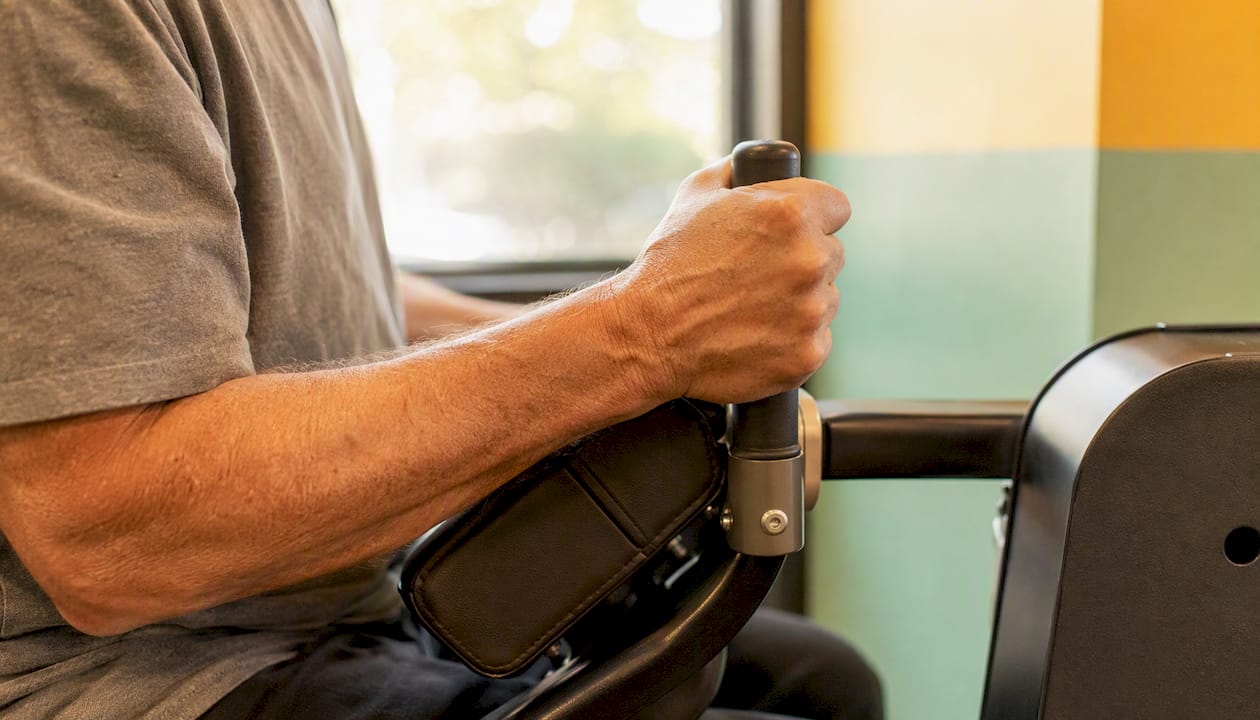
Before starting, clients complete a safety screening. Anyone with a recent fracture, unstable cardiovascular condition, or other contraindication is referred back to their physician before proceeding. Physician clearance is standard, not optional.
| Session metric | Typical value |
|---|---|
| Session length | 10–12 minutes |
| Weekly frequency | Once per week |
| Baseline measurement | DXA + TBS before starting |
| DXA retest interval | 9–12 months |
| Target loading | High multiples of body weight |
Program structure follows a straightforward arc: baseline DXA and TBS, safety screening, a short onboarding session, then weekly supervised visits with objective progress tracking. The BONEMORE trial used a similar once-weekly protocol and found it non-inferior to twice-weekly dynamic exercise on BMSi, which gives the frequency model some external validation.
Pro Tip: Bring your most recent DXA report and a list of current medications (especially bisphosphonates or denosumab) to your first visit. The staff can coordinate directly with your prescribing clinician.
Starting at a local Osteostrong center
Getting started takes four steps. First, check with your physician and get written clearance. Second, schedule a baseline DXA scan with TBS if you do not have one from the past 12 months. Third, book an onboarding session at your nearest Osteostrong center. Fourth, commit to weekly sessions for at least 3–6 months before expecting measurable DXA changes.
Pricing follows a recurring membership model. Most insurance plans do not cover sessions, so verify your benefits before assuming coverage. The center tracks your baseline and follow-up DXA results and can share progress notes with your prescribing clinician.
Realistic expectations matter. The quasi-experimental data show modest lumbar-spine BMD gains in some subgroups, not dramatic reversals of bone loss. The value is in a supervised, measurable, low-time-commitment protocol that fits alongside medication and nutrition.
What the evidence gap actually means for you
Most people reading about protein and bone density, or about osteogenic loading, want a clean answer: does this work? The honest answer is that the evidence points in a consistent direction without yet being definitive. The quasi-experimental Osteostrong data, the THU425 interim signals, and the BONEMORE non-inferiority result all suggest the approach is worth pursuing, especially for adults who are already on antiresorptive medication and want an adjunct that is low-time, low-impact, and measurable.
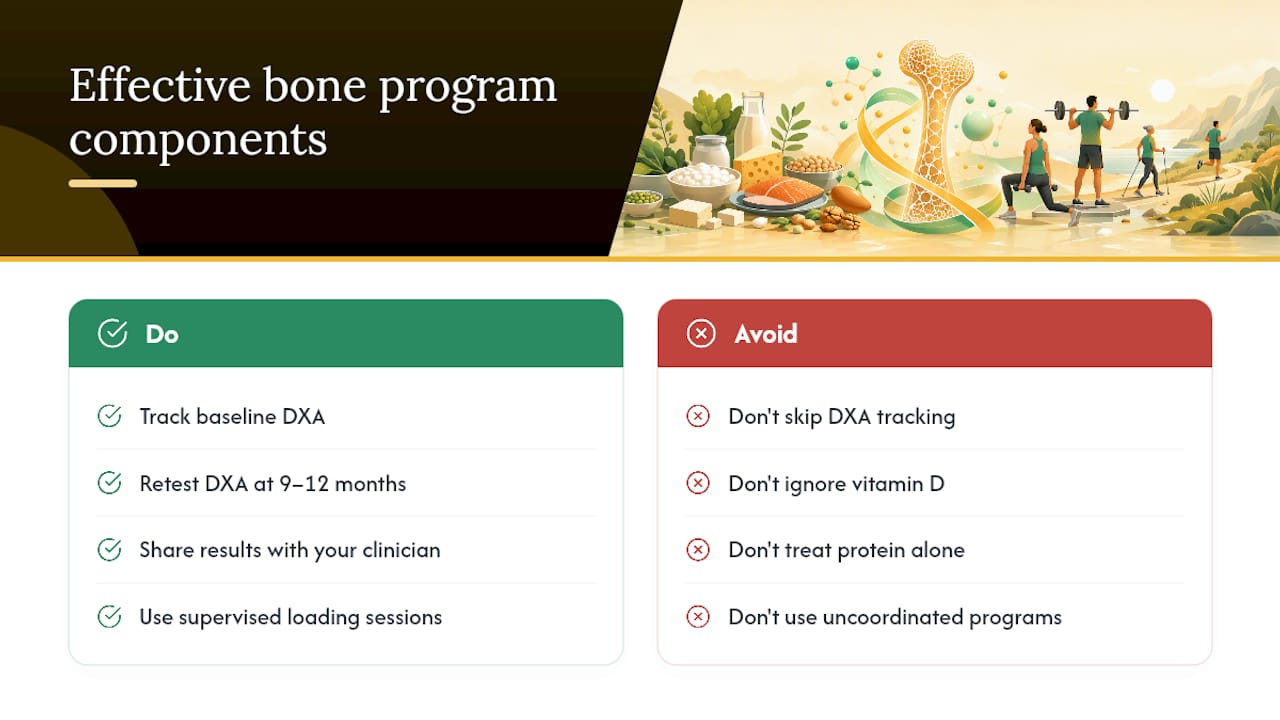
What I find underappreciated in most coverage of this topic is the monitoring piece. The intervention is almost secondary to the measurement. A program that does not track baseline DXA, retest at 9–12 months, and communicate with your prescribing clinician is not a bone health program. It is exercise with good marketing. The clinical value of Osteostrong-style loading comes precisely from the combination: supervised loading plus objective measurement plus physician coordination. Strip any one of those out and you lose the accountability that makes the modest evidence meaningful.
Protein matters too, but not in isolation. Hitting 1.2 g/kg/day of protein while ignoring vitamin D, skipping DXA tracking, or continuing to smoke produces a much smaller net effect than addressing all of those levers together. Bone health is a systems problem, and the people who make the most progress treat it that way.
This article is general information, not a substitute for advice from a qualified doctor. Consult a qualified healthcare professional about your own circumstances before acting on anything here.
Sources
The evidence base for osteogenic loading is growing but still maturing. These sources represent the strongest available signals; discuss them with your prescribing clinician before drawing conclusions about your own case.
- Brief, low‑impact, high‑intensity osteogenic loading in postmenopausal osteoporosis: a quasi‑experimental case‑series study – PMC
- The effect of OsteoStrong compared to dynamic multicomponent exercise on bone strength in older women: the BONEMORE non‑inferiority randomized controlled trial | Archives of Osteoporosis | Springer Nature Link
- Osteogenic loading primer – American Bone Health (pdf)
This article is general information, not medical advice. Confirm any exercise or nutrition changes with your physician or a qualified bone health specialist.