
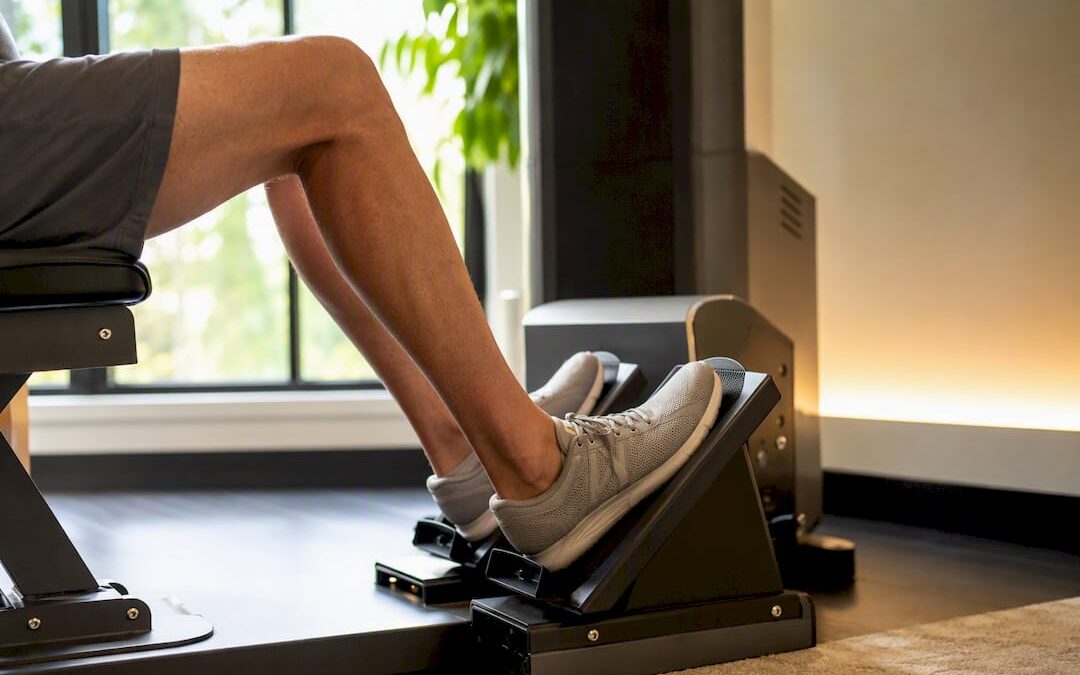
Current clinical evidence shows osteogenic loading produces modest, site-specific gains in lumbar-spine bone mineral density for some postmenopausal women, but it has not yet been proven to reduce fractures. The strongest data come from a 2025 quasi-experimental case-series study and a related controlled study of 140 participants, both examining OsteoStrong, a once-weekly device-based program.
Here is what the numbers actually show:
- Reported lumbar-spine BMD improvements are generally small and concentrated at the spine rather than the hip.
- Several subgroup effects lost statistical significance once researchers applied a Bonferroni correction, a standard statistical adjustment that guards against false positives when testing multiple outcomes at once.
Whether these BMD shifts translate into fewer fractures remains unknown. No published trial on osteogenic loading has used fracture incidence as a primary endpoint, and an 8-month pilot study on medRxiv found no significant hip or spine BMD improvement at all.
Key Takeaways
Osteogenic loading shows modest, site-specific lumbar-spine BMD gains in early studies, but fracture-risk benefit remains unproven and independent replication is still needed.
| Point | Details |
|---|---|
| Evidence is early-stage | Studies are small, short-term, and mostly single-arm or quasi-experimental in design. |
| Gains are modest and site-specific | Lumbar-spine BMD improvements run roughly 1% to 5% in most reports; hip results are weaker or nonsignificant. |
| Statistical caveats matter | Several subgroup findings lost significance after Bonferroni correction, a red flag for overinterpretation. |
| Fracture outcomes remain unstudied | No trial has used fracture incidence as a primary endpoint, so BMD gains remain a surrogate marker. |
| Osteostrong fits as a supervised adjunct | Once-weekly sessions with safety screening can complement, not replace, established osteoporosis care. |
Table of Contents
- Osteogenic Loading Research: What the Evidence Shows So Far
- What Systematic Reviews Say About Bone-Loading Exercise
- Key Clinical Studies on Osteogenic Loading
- Do These Bone Density Gains Actually Matter Clinically?
- How Osteogenic Loading Sessions Actually Work
- Is Osteogenic Loading Safe? Screening and Adverse Events
- Where the Evidence Falls Short
- How to Evaluate an Osteogenic Loading Clinic or Device
- What Patients and Clinicians Should Do With This Evidence Now
- Try Osteogenic Loading With Medical Screening and Oversight
- Frequently Asked Questions
- Sources
Osteogenic Loading Research: What the Evidence Shows So Far
The evidence base for osteogenic loading is still thin compared to what exists for pharmacologic osteoporosis treatment or established resistance training. As of 2026, the published record consists of a handful of quasi-experimental studies, one controlled trial reported through a conference abstract, and at least one single-arm pilot study. That is not nothing, but it is far short of the multi-thousand-participant randomized controlled trials that support drugs like bisphosphonates or teriparatide.
What exists points in a consistent, if narrow, direction: lumbar-spine bone mineral density tends to move upward slightly in people who complete a year of sessions, while hip measures move less reliably, if at all.
Study types currently available:
- Quasi-experimental case-series studies (no randomization, before-and-after comparison within the same group)
- One controlled study with a comparison group, reported as a conference abstract rather than a full peer-reviewed paper
- A single-arm pilot study assessing feasibility and safety more than efficacy
- No large-scale, adequately powered randomized controlled trial has yet been published
Each design carries different weight. A randomized controlled trial (RCT) remains the gold standard because it accounts for the placebo effect, regression to the mean, and confounding activity changes that participants often make once they join a study. Quasi-experimental designs, by contrast, cannot rule out the possibility that participants who noticed early BMD gains also changed their diet, started walking more, or reduced alcohol intake. None of that shows up in a before-and-after DXA scan.
Endpoints researchers typically measure include:
- Areal bone mineral density (aBMD) by DXA scan at the lumbar spine and hip
- Trabecular bone score (TBS), a texture-based measure derived from DXA images that estimates bone microarchitecture
- HR-pQCT volumetric measures, a higher-resolution imaging technique used less often because of cost and availability
- Physical function tests, including grip strength and balance measures
The 2025 case-series study reported modest lumbar-spine improvements over 12 months, but some of the subgroup effects that looked promising in raw analysis lost statistical significance after the Bonferroni correction was applied. That is not a minor technical footnote. It is the difference between a finding a clinician can trust and one that might have appeared by chance.
The related PMC-indexed conference report, covering 140 women completing roughly 10 to 12 minute weekly sessions over 12 months, found small but statistically significant improvements in lumbar-spine BMD and TBS in certain subgroups. Again, several results did not survive the stricter multiple-comparison adjustment. This pattern, real signal in the raw numbers, weaker signal after correction, shows up often enough in the osteogenic loading literature that it deserves its own mention: subgroup findings should be read as hypothesis-generating, not confirmatory.
Meanwhile, the 8-month single-arm pilot published on medRxiv found no significant change in total hip, femoral neck, or lumbar spine BMD, even though some physical function measures improved. The authors concluded the intervention was feasible and safe, but stopped short of claiming a bone-density benefit at that follow-up length.
Typical magnitude ranges reported across these studies run from less than 1% to about 5% at the lumbar spine, depending on the study and subgroup. Hip measures, when reported, show smaller and less consistent movement. For comparison, bone-anabolic medications can produce lumbar-spine gains approaching 13% over a year, a gap worth keeping in mind when a clinic markets osteogenic loading as a standalone fix for severe osteoporosis.
What Systematic Reviews Say About Bone-Loading Exercise
Broader reviews of exercise and bone health tend to support mechanical loading as a general principle while treating device-based osteogenic loading as a newer, thinly studied subset of that category. A widely cited review on resistance exercise and bone health concludes that generating an adaptive bone response requires sufficient loading magnitude, rate, and frequency, drawing on both animal models and human trials. That review predates most of the OsteoStrong-specific literature and focuses on conventional resistance training, but its conclusions about dose parameters apply directly to any loading-based bone intervention.
Recurring conclusions across systematic reviews of bone-loading interventions:
- High-intensity resistance and impact training, such as the protocols used in LIFTMOR-M and related HiRIT (High-Intensity Resistance and Impact Training) research, has shown larger lumbar-spine BMD gains than many lower-intensity loading approaches.
- Device-assisted osteogenic loading programs are frequently excluded from broader exercise-and-bone meta-analyses, or flagged separately, because the evidence base is smaller and more recent than that for free-weight resistance training.
- Reviewers consistently note that heterogeneity, differences in protocol length, participant population, and outcome measures, makes pooling results across studies difficult.
- Follow-up periods across the available osteogenic loading studies rarely extend past 12 months, which limits any claim about durability of effect.
That exclusion from mainstream reviews is not necessarily a mark against the approach. It reflects a numbers problem rather than a results problem. Meta-analyses need enough comparable trials to pool statistically, and osteogenic loading simply has not been studied long enough, or by enough independent research groups, to clear that bar yet. Osteoporosis Canada’s formal response to one of the OsteoStrong publications made a similar point directly, urging caution about drawing broad clinical conclusions from single-study results and calling for independent, higher-quality trials before wider endorsement.
Quality concerns beyond sample size include the reliance on aBMD as the primary outcome rather than structural measures like HR-pQCT, and the fact that most osteogenic loading research to date has involved researchers or funding connected to the device manufacturer. That does not invalidate the findings, but it is a detail worth knowing before treating any single study as definitive.
Key Clinical Studies on Osteogenic Loading
The table below summarizes the most-cited studies on osteogenic loading and what each one actually found, stripped of marketing language.
| Study | Design | Sample Size | Follow-Up | Main Finding |
|---|---|---|---|---|
| LIFTMOR-M and related HiRIT trials | Randomized, high-intensity resistance and impact training | Varies by trial | 8 to 12 months | Larger lumbar-spine BMD gains than many lower-intensity approaches, used here as a benchmark rather than a direct osteogenic-loading study |
A few patterns jump out when you line these studies up side by side:
- The single controlled study with the largest sample (140 participants) still relies on subgroup analysis to find significance, a sign that the overall effect size is small relative to the noise in the data.
- The only study with a longer observation history at a different loading intensity, the HiRIT research, achieved larger BMD gains, suggesting intensity and loading pattern matter as much as frequency.
- No study listed here reports fracture incidence as an outcome, which means every finding here is a bone-density surrogate, not direct proof of reduced fracture risk.
Do These Bone Density Gains Actually Matter Clinically?
A 1% to 5% lumbar-spine BMD gain sounds meaningful until you compare it to what other interventions produce. Exercise interventions broadly tend to produce roughly 1% to 3% annual gains at the total hip and under 5% at the lumbar spine, while bone-anabolic medications can reach lumbar-spine gains near 13% over 12 months. Osteogenic loading studies fall at the lower end of the exercise range, not anywhere close to pharmacologic territory.
That comparison matters because BMD percent change is a surrogate marker, not the outcome patients actually care about. Fracture risk is the real endpoint, and it depends on more than density alone: bone geometry, microarchitecture, fall risk, and muscle strength all play a role. No osteogenic loading study to date has tracked fracture incidence directly, largely because doing so requires thousands of participants followed for several years, a scale well beyond anything published so far.
There is also a measurement-precision issue clinicians should weigh before getting excited about a small DXA change. Every DXA machine has a least significant change (LSC) threshold, the minimum shift needed to be confident a measured change is real rather than scanner noise. Many of the percent changes reported in osteogenic loading studies sit close to that threshold, particularly at the hip, where changes were often not statistically significant at all.
What to keep in mind when interpreting a reported BMD change:
- Site specificity matters. A lumbar-spine gain does not necessarily mean the hip, which fractures far more dangerously in older adults, improved at all.
- Subgroup-only significance, especially after correction for multiple comparisons, is a weaker form of evidence than a clear whole-group effect.
- Combining osteogenic loading with an antiresorptive or anabolic medication may amplify results, though this has not been tested in a dedicated trial.
How Osteogenic Loading Sessions Actually Work
Osteogenic loading programs, OsteoStrong being the most studied example, typically involve once-weekly visits lasting roughly 10 to 15 minutes total, using specialized equipment that applies brief, high-force isometric loads through the skeleton. Isometric means the muscle and joint position stay static while force builds, rather than moving through a range of motion the way a squat or deadlift does.
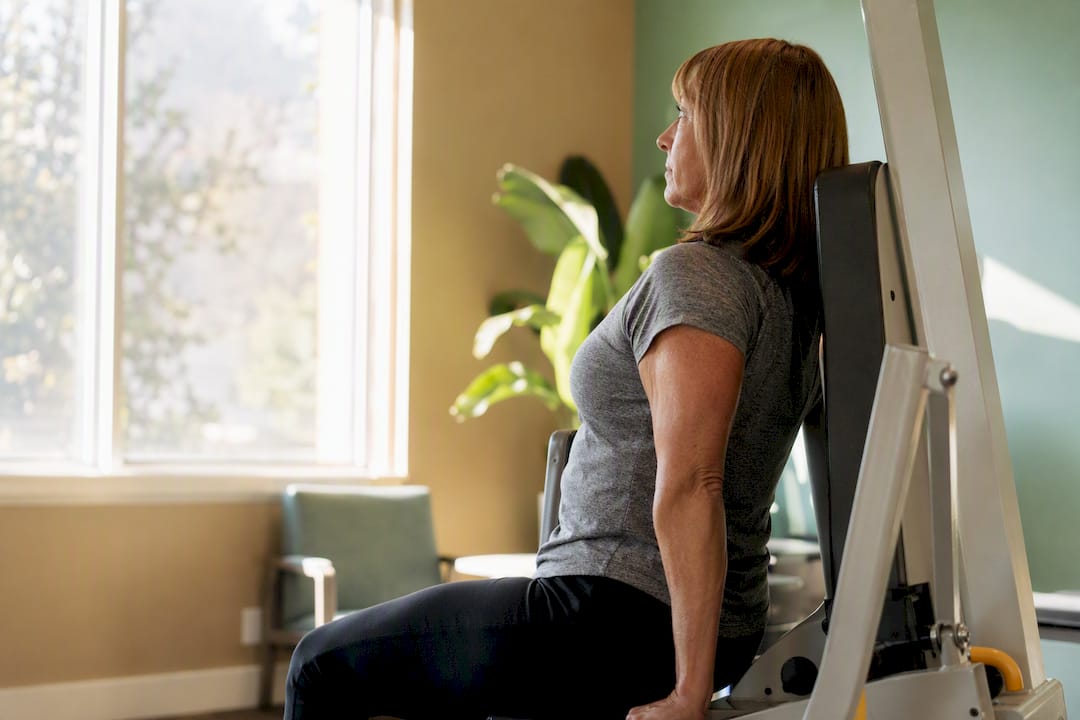
The devices are built around the concept of a “growth trigger” or a target expressed in multiples of body weight (MOB), the idea being that bone needs to experience a certain strain magnitude to register a remodeling signal. This traces back to Wolff’s law and the mechanostat theory, the physiologic model holding that bone adapts to the mechanical strain it experiences, provided the strain reaches sufficient magnitude, arrives at a sufficient loading rate, and is followed by adequate rest for remodeling to occur. Sessions are intentionally brief because the mechanostat model suggests bone responds to peak strain and rest cycles, not to time under tension the way muscle hypertrophy does.
It is worth being precise about terminology here: osteogenic loading is not the same thing as heavy free-weight resistance training, even though both aim to stimulate bone. The research literature is explicit on this point, warning against conflating the two, since their loading patterns, session length, and evidence bases differ substantially. If you are researching options, Osteostrong’s operational guidance on protocol design outlines how device parameters and growth-trigger targets are structured in practice.
Pro Tip: Ask whether a program actually records how often you reach your individual growth-trigger threshold over time, not just whether you attended a session. Attendance without documented load progression tells you almost nothing about dose-response, and dose is the variable the mechanostat model says matters most.
Is Osteogenic Loading Safe? Screening and Adverse Events
Published cohorts report osteogenic loading as generally well tolerated, with no major adverse events flagged across the pilot and controlled studies reviewed here. That tolerability profile is one of the more consistent findings across the literature, even where BMD results were mixed or null.
Tolerability, however, is not the same as universal appropriateness. Certain conditions warrant caution or exclusion before starting any loading-based program, whether device-assisted or conventional resistance training:
- Recent vertebral or hip fractures, especially unstable ones, until adequately healed and cleared by a physician
- Severe joint disease affecting the limbs used to brace against the loading device
- Uncontrolled cardiovascular disease, given the isometric nature of the effort involved
- Pregnancy
- Any condition your physician flags during a bone-health or fitness screening
Because the evidence base remains limited, medical clearance and clinical oversight matter more here than they might for a well-established exercise routine. Osteoporosis Canada’s response to the OsteoStrong research specifically called for independent replication before broad clinical endorsement, a reasonable stance given how new this evidence base still is. A reputable program should screen for these factors before your first session, not after.
Where the Evidence Falls Short
Every study reviewed here shares some combination of the same weaknesses. Sample sizes rarely exceed a couple hundred participants. Most follow-ups stop at 12 months or less, too short to know whether gains persist, plateau, or reverse. Several designs are single-arm, meaning there is no control group to separate the effect of the device from the effect of simply paying attention to your bone health for a year.
The recurring limitations, in short:
- Small sample sizes across nearly every published study
- Short follow-up periods, rarely extending past 12 months
- Single-arm or quasi-experimental designs lacking randomization or control groups
- Subgroup-only statistical significance that often fails to survive corrections like the Bonferroni adjustment
- Reliance on aBMD rather than structural measures like HR-pQCT
- Research and funding ties to the device manufacturer in several published studies
Future trials need to fix these gaps directly: adequately powered randomized controlled trials, ideally with fracture incidence or validated structural measures as endpoints, standardized reporting of growth-trigger achievement as a dose metric, and replication by research teams independent of the manufacturer.
None of that means the current evidence is worthless. It means clinicians and patients should treat it as an early, promising signal rather than a settled verdict, useful for weighing osteogenic loading as one option among several, not as a replacement for therapies with a longer track record.
How to Evaluate an Osteogenic Loading Clinic or Device
Not every clinic offering osteogenic loading operates the same way, and the questions below separate programs built on real data from ones running on marketing alone.
Questions worth asking before you sign up:
- Does the clinic track and share DXA or TBS outcomes for its own client population, or only cite outside published studies?
- How does the program define and record “growth trigger” achievement, and will they show you your own progression data over time?
- Is there documented medical screening before your first session, covering the contraindications outlined above?
- Does staff track and report adverse events, even minor ones, as part of standard practice?
- Will the program coordinate with your prescribing physician if you are already on osteoporosis medication?
What this modality tends to do well: short weekly time commitment, low joint impact compared to high-intensity resistance training, and generally strong adherence since sessions are brief. Where it tends to fall short: the independent RCT evidence is still thin, effect sizes at the hip in particular are small or nonsignificant, and no study has yet shown a fracture-risk benefit.
A clinic offering in-person osteogenic loading, one example being a center following the OsteoStrong protocol, fits naturally into this checklist as a supervised option that documents session data and integrates with a broader wellness plan rather than standing alone as a cure.
Pro Tip: If a clinic cannot tell you your own growth-trigger progression numbers over the last three months, ask why. That data should exist for every session you have completed, and its absence is a bigger red flag than a small reported BMD gain.

What Patients and Clinicians Should Do With This Evidence Now
If you are a patient, keep expectations grounded in what the data actually show: modest, site-specific gains are possible, not guaranteed, and fracture-risk reduction has not been demonstrated. Talk to your prescribing clinician before adding osteogenic loading if you are already on osteoporosis medication, since no trial has tested that combination directly. Request baseline and follow-up DXA and TBS scans so you can track your own numbers rather than relying on general study averages, and ask your program to document your growth-trigger achievement over time.
If you are a clinician, osteogenic loading can reasonably be considered a complementary option for motivated patients who pass safety screening, particularly those looking for a low-impact addition to an existing plan. For patients at high fracture risk, established pharmacologic therapy and resistance-training approaches with a longer evidence base should remain the priority, with osteogenic loading positioned as an adjunct rather than a substitute.
Shared decision-making works best here: set a monitoring cadence, typically annual DXA with TBS where available, agree on functional measures worth tracking, and revisit the plan if numbers do not move after a reasonable trial period.
Why We Covered This Topic
We approached this evidence cautiously optimistic but clear-eyed about its limits. The signal for osteogenic loading is real enough to take seriously, particularly for motivated patients looking for a low-impact adjunct, but it is not yet strong enough to replace established osteoporosis care. Treat it as one tool worth discussing with your clinician, not a verdict. This article is for informational purposes only and does not replace personalized medical advice. Talk to your physician before starting any new bone-health therapy.
Try Osteogenic Loading With Medical Screening and Oversight
Osteostrong runs once-weekly, supervised osteogenic loading sessions built around the same growth-trigger concept discussed throughout this article, paired with safety screening before you ever start, making it a promising option for adjunct health strategies in bone care. Rather than asking you to piece together a home routine and guess whether you are hitting a meaningful load threshold, sessions are supervised, brief, and designed to integrate with other bone-health strategies you may already be using, including resistance training or medication your physician has prescribed.
Osteostrong also offers complementary therapies on-site, including red light therapy, PEMF mats, and vibration plates, for clients looking to combine approaches under one roof rather than researching each modality separately. If you want to see how a session works, what screening looks like, and whether a location near you offers it, visit the Osteostrong Rancho Cordova East page to check availability and book an initial visit.
Frequently Asked Questions
Does osteogenic loading actually increase bone density?
Some studies report modest lumbar-spine BMD gains after 12 months of osteogenic loading, but hip results are weaker and often not statistically significant. The overall bone loading research base remains too small to call this a settled finding.
Is there strong clinical evidence osteogenic loading prevents fractures?
No published study on osteogenic loading has used fracture incidence as a primary outcome. Current evidence of bone strength improvement is limited to BMD and TBS surrogate markers, not direct fracture-risk data.
How does osteogenic loading compare to resistance training for bone health?
Osteogenic loading uses brief, once-weekly, device-assisted isometric loads rather than traditional free-weight resistance training. High-intensity resistance and impact training programs like LIFTMOR-M have shown larger lumbar-spine BMD gains in some trials, though direct head-to-head comparisons are lacking.
What is a growth trigger in osteogenic loading?
A growth trigger refers to a target strain threshold, often expressed in multiples of body weight, that a session aims to achieve based on mechanostat theory. Programs that track and report this metric over time give a clearer picture of dose-response than attendance alone.
Who should avoid osteogenic loading sessions?
People with recent unstable fractures, severe joint disease, uncontrolled cardiovascular disease, or who are pregnant should get medical clearance first. A qualified program should screen for these factors before your first session.
Can osteogenic loading be combined with osteoporosis medication?
No dedicated trial has tested osteogenic loading alongside antiresorptive or anabolic medication, though clinicians generally consider it a reasonable complementary option once safety screening is passed. Discuss any addition to your treatment plan with your prescribing physician first.
This article is general information, not a substitute for advice from a qualified doctor. Consult a qualified healthcare professional about your own circumstances before acting on anything here.
Sources
- Brief, Low-impact, High-intensity Osteogenic Loading in Postmenopausal Osteoporosis: A Quasi-experimental Case-series Study
- THU425 Brief, Low-impact, High-intensity Osteogenic Loading Training Utilizing Proprietary Osteostrong Devices With Once-A-Week, 10 Minute Treatments Improves Bone Mineral Density In Women With Osteoporosis Of The Lumbar Spine – PMC
- Feasibility, Safety and Efficacy of OsteoStrong® in Postmenopausal Women with Low Bone Mineral Density: A Pilot Study | medRxiv
- Brief, Low-impact, High-intensity Osteogenic Loading in Postmenopausal Osteoporosis: A Quasi-experimental Case-series Study