
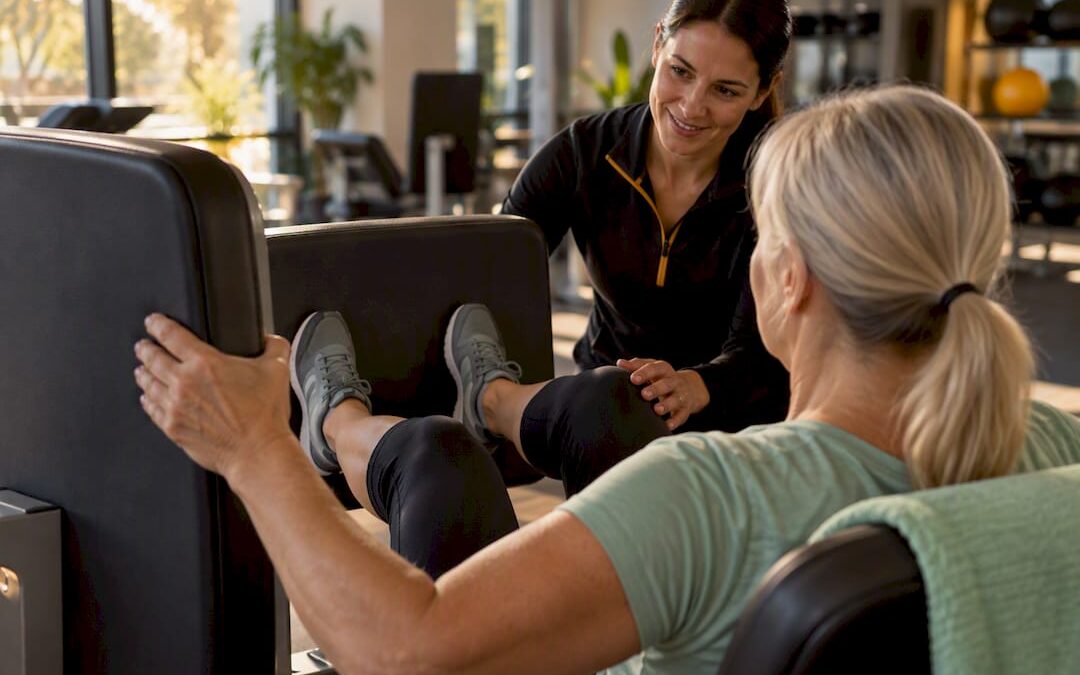
If you are looking for non-drug osteoporosis care in Rancho Cordova, start with two things: ask your primary care provider about a DEXA scan if you have not had one recently, and book a supervised session at a local clinic offering osteogenic loading. Talk with a clinician first if you have a recent fracture or a serious health condition, since supervised programs need to be matched to your risk level.
TL;DR:
- Supervised osteogenic loading sessions are low-time-commitment, occurring weekly and suitable for those with stable osteoporosis or osteopenia without recent fractures or active pain.
- In-home physical therapy is recommended for individuals with recent fractures, significant pain, or balance issues, with coverage being more likely when medically necessary.
- Consistent strength, balance, and weight-bearing exercises, at least twice weekly, are the most evidence-supported non-drug strategies for bone health.
- A DEXA scan is essential for anyone over 50 or with risk factors, providing the baseline to tailor exercise and therapy plans accurately.
- Adjunct treatments like pulsed electromagnetic fields and vibration therapy show promise but have inconsistent evidence and should be discussed with a healthcare provider.
Table of Contents
- What local non-drug programs and services exist in Rancho Cordova
- Research-backed non-drug strategies to prevent or improve osteoporosis
- How to get started in Rancho Cordova: testing, referrals, and practical first appointments
- Local expertise and evidence: what OsteoStrong Rancho Cordova offers and how the evidence fits
- What the research actually supports and what gets overstated
- Trying a local, supervised, non-drug program: booking and what to expect
- Sources
- FAQ
What local non-drug programs and services exist in Rancho Cordova
Rancho Cordova residents have a few real paths to non-drug bone health care, and the right one depends on your mobility, fracture history, and how much structure you want.
Clinic-based osteogenic loading is a brief, supervised session format where you apply controlled force to your skeleton through your arms and legs, once a week, with a coach guiding form and intensity. People who want a low-time-commitment routine with a fixed weekly appointment tend to gravitate here, since a session typically takes only minutes rather than an hour-long workout.
Supervised physical therapy, whether in a clinic or delivered in your home, works better for people with more clinical complexity: recent fractures, significant pain, or balance problems that need one-on-one correction. In-home PT services bring equipment to you and build a program around your specific limitations, and this route is often covered by insurance when a physician documents medical necessity.
Community balance and strength classes round out the local landscape, useful as a lower-cost complement to either option above but rarely enough on their own for someone with diagnosed osteoporosis.
A few questions help you sort between them:
- Do you have a recent fracture or significant pain: lean toward PT.
- Is insurance coverage a priority over out-of-pocket flexibility: PT is more likely to be covered.
- Do you want a short weekly commitment rather than a scheduled workout: clinic loading fits better.
- Are you managing osteoporosis alongside another condition that needs close monitoring: talk to your doctor before choosing either.
Research-backed non-drug strategies to prevent or improve osteoporosis
The strongest non-drug evidence points to consistent, structured movement rather than any single therapy. NIAMS guidance recommends strength and weight-bearing exercises at least twice a week, daily balance and posture work, and roughly 150 minutes of aerobic activity weekly for older adults.
Pro Tip: Pair strength days with a short daily balance drill, like standing on one leg near a counter, since fall prevention protects your skeleton as much as bone-building exercise does.
The Too Fit To Fracture consensus from the Bone Health and Osteoporosis Foundation adds important nuance: exercise should be personalized, spine-sparing technique matters more than intensity, and anyone with a fracture history or active pain should work with a physical therapist rather than following generic advice.
A practical weekly structure looks like this:
- Two or more sessions of progressive resistance training targeting hips, spine, and wrists.
- Daily balance practice, even five minutes counts, done consistently.
- Functional movements like sit-to-stand and step-ups that mimic real-world demands on bone.
- Aerobic activity most days, walking counts, aiming for the weekly total NIAMS outlines.
Guidelines emphasize personalized exercise over blanket restrictions, which means the old advice to avoid bending or twisting entirely has given way to spine-sparing technique coaching instead (Too Fit To Fracture).
Adjunct clinic modalities like pulsed electromagnetic fields and whole-body vibration show promise in some trials when paired with exercise, but the evidence is uneven. Research in Osteoporosis International found PEMF combined with exercise increased bone density more than exercise alone in some study populations, though results vary by trial and duration. These are worth discussing with your clinician rather than treating as standalone solutions.
How to get started in Rancho Cordova: testing, referrals, and practical first appointments
A DEXA scan is the standard starting point for anyone over 50 who has not been screened, or anyone with risk factors like early menopause, prior fractures, or a family history of osteoporosis. Ask your primary care provider directly for a referral, and expect the scan to report a T-score that tells you whether you fall into normal, osteopenic, or osteoporotic ranges.
Before your first supervised session or PT visit, bring:
- A list of current medications and recent fracture history.
- Any mobility limits or chronic pain locations your provider should know about.
- Your most recent DEXA results, if you have them.
- A list of questions about supervision level and safety protocols.
When you call a clinic, ask how sessions are supervised, what safety screening happens before you start, how often you will be reassessed, and what outcome measures they track. For payment, physical therapy is more often covered by insurance when medically necessary, while wellness-clinic memberships are typically out-of-pocket. Confirm coverage details with your insurer before committing to either.
Local expertise and evidence: what OsteoStrong Rancho Cordova offers and how the evidence fits

OsteoStrong Rancho Cordova East runs supervised osteogenic loading sessions once a week, each lasting only minutes, alongside adjunct wellness modalities including red light therapy, PEMF mats, a BioCharger, a PureWave VEMI lounge, compression therapy, vibration plates, and hydromassage lounges. The clinic advertises free initial sessions for people who want to try the format before committing.
The broader evidence base for this approach is still developing. A 2025 quasi-experimental study tracking 147 participants over 12 months found modest lumbar spine bone density improvements in certain subgroups following an OsteoStrong-style intervention. The authors were careful to call for cautious interpretation and further randomized trials, which is the right way to read it: promising, not proven.
Modest bone density improvements in some subgroups over 12 months, with researchers themselves urging cautious interpretation pending randomized trials.
Sessions at the clinic are designed to sit alongside, not replace, clinician oversight, particularly for anyone with a fracture history or complex medical needs.
What the research actually supports and what gets overstated
The honest read on non-drug osteoporosis care is that consistency beats novelty. A twice-weekly strength routine done for years will do more for your skeleton than any single high-tech modality done occasionally, and fall prevention often matters more for avoiding fractures than chasing bone density numbers alone.
Where conventional advice falls short is in treating osteoporosis as a single condition needing a single fix. Someone with a recent vertebral fracture and someone with early osteopenia and no fracture history need very different starting points, yet a lot of generic content flattens both into the same exercise list.
If you take one thing from this, prioritize getting screened and getting a program that matches your actual risk level before you invest time or money in any specific modality. Adjunct therapies like PEMF or vibration have a place in the middle of a session structure, not at the front of it.
— Aaron
Trying a local, supervised, non-drug program: booking and what to expect
A free intro session at a local osteogenic loading clinic typically includes an orientation to the equipment, a supervised first attempt at osteogenic loading, and a conversation about your goals and any limitations you mention up front. The ongoing format is one brief session a week, which fits people who want structure without a major time commitment. You can also learn more about the general osteogenic loading approach before booking.
This format tends to fit people with stable osteopenia or osteoporosis who are cleared for general activity and want a low-effort weekly routine, plus anyone curious about adjunct modalities like PEMF or vibration therapy as a complement to their existing exercise habits. If you have a recent fracture, significant pain, or a condition your doctor is actively monitoring, talk to your clinician before starting any new loading program.
To book:
- Visit the Rancho Cordova East landing page to check current appointment availability.
- Ask about the free initial session when you call or book online.
- Bring your DEXA results if you have them, so the team can tailor your first visit.
Sources
The claims in this article draw on federal and nonprofit guidance alongside a peer-reviewed intervention study, and reading the originals is worth your time if you want the full context.
- Exercise for Your Bone Health | NIAMS
- Too Fit To Fracture: exercise and activity recommendations for individuals with osteoporosis
- OsteoStrong intervention study (PubMed entry)
This article is general information, not a substitute for advice from a qualified doctor. Consult a qualified healthcare professional about your own circumstances before acting on anything here.
FAQ
What is the best treatment for osteoporosis without medication?
The strongest non-drug approach combines strength and weight-bearing exercise at least twice weekly with daily balance training, following NIAMS guidance. Adjunct options like supervised osteogenic loading or PEMF can complement this foundation, but they work best alongside, not instead of, regular exercise and clinician oversight.
What do the Japanese take for osteoporosis?
This article focuses on non-drug care available in the United States, and dietary or supplement patterns specific to Japan are outside what the sources here can confirm. In the US, NIA guidance recommends adults over 50 get adequate calcium and vitamin D through diet or supplements as needed.
What is the top vitamin to rebuild bone density?
No single vitamin rebuilds bone density on its own. NIA guidance recommends adults 50 and older get 1,000 to 1,200 milligrams of calcium daily and 800 to 1,000 IU of vitamin D daily when diet alone falls short, since both work together to support bone.
What do holistic doctors recommend for osteoporosis?
Clinicians focused on non-drug care generally recommend individualized exercise programs, adequate calcium and vitamin D intake, and fall-prevention strategies as the core plan, per the Too Fit To Fracture consensus. Some also incorporate supervised clinic modalities like osteogenic loading, though this should be discussed with your own doctor given your fracture history and health status.
How do I know if I need a DEXA scan?
If you are over 50, have gone through early menopause, or have a family history of fractures, ask your primary care provider about a DEXA scan. The scan produces a T-score that shows whether your bone density falls into a normal, osteopenic, or osteoporotic range, which then guides which non-drug or clinical options make sense for you.