
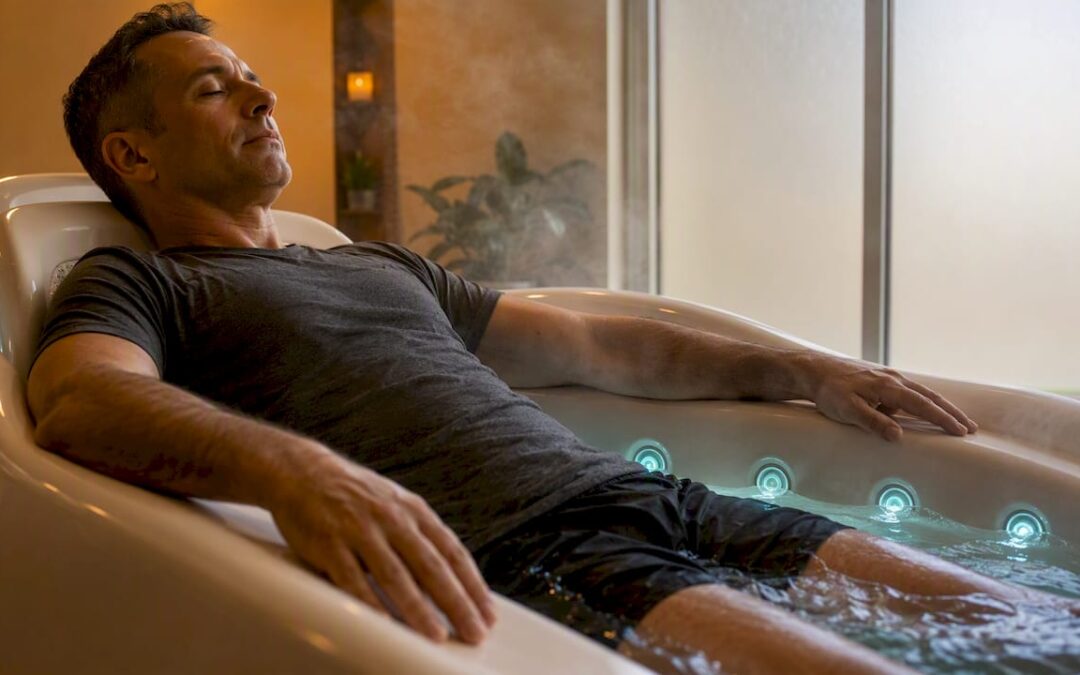
Hydromassage genuinely helps with relaxation, temporary pain relief, improved circulation, and post-workout muscle recovery. The effects are real, but the research behind them is thinner than most wellness marketing suggests. Here is the honest picture.
- Primary benefits: reduced muscle tension, improved local circulation, relaxation and mood lift, and faster perceived recovery after exercise
- Main limits: most supporting evidence comes from broader aquatic therapy or manual massage research; direct trials on hydromassage devices are limited, and certainty ratings are low to very low
- Safety: generally safe for healthy adults; consult a clinician first if you are pregnant, have uncontrolled hypertension, a bleeding disorder, open wounds, or recent surgery
Start with a single short session (10–15 minutes) and see how your body responds. If you have an existing health condition, check with your doctor before booking.
Key Takeaways
Hydromassage reliably delivers relaxation and short-term pain relief through heat and mechanical pressure, but durable clinical outcomes remain unproven in high-quality trials.
| Point | Details |
|---|---|
| Immediate benefits are real | Relaxation, reduced muscle tension, and improved local circulation are consistent effects after a single session. |
| Evidence is limited for long-term outcomes | Systematic reviews rate aquatic therapy evidence as low to very low certainty; dry hydromassage has even fewer direct trials. |
| Safety screening matters | Avoid hydromassage without clinician clearance if you are pregnant, have uncontrolled hypertension, bleeding disorders, or open wounds. |
| Frequency depends on your goal | Post-workout recovery: 10–15 minutes after training; chronic pain programs: 2–3 times per week over 4–8 weeks. |
| Osteostrong integrates hydromassage | Osteostrong offers hydromassage lounges as a post-osteogenic-loading recovery tool alongside red light therapy, PEMF, and compression therapy. |
Table of Contents
- How hydromassage works: jets, heat, and water pressure
- The main hydromassage benefits, explained one by one
- What the research actually shows, and where it gets complicated
- How often to use hydromassage, and how long each session should be
- Where to find hydromassage and what it typically costs
- Where hydromassage fits in a bone-health and recovery program
- Hydromassage is available at Osteostrong
- Key research and trusted resources
- Sources
How hydromassage works: jets, heat, and water pressure
Hydromassage is a therapeutic technique that uses pressurized, heated water to massage soft tissues. The two main formats differ in one practical way: whether you get wet.
Wet (immersive) hydromassage places you in a pool, tub, or tank where water jets target specific muscle groups. You need a swimsuit, and the water surrounds your body. This format adds buoyancy and hydrostatic pressure, which unload body weight from joints and can make movement easier for people with arthritis or chronic pain.
Dry hydromassage uses a sealed table or lounge chair. Heated, pressurized water circulates inside the device while you lie fully clothed on a waterproof barrier. You feel the heat and pressure without any direct water contact. Dry hydrotherapy devices are the format most commonly found in gyms, wellness centers, and recovery lounges.
Three mechanisms drive the effects in both formats:
- Mechanical pressure from jets stimulates cutaneous mechanoreceptors in the skin and underlying fascia, which signals the nervous system to reduce muscle tone.
- Thermal effects from warm water (typically around 33–35°C in clinical protocols) cause vasodilation, widening blood vessels and increasing local blood flow.
- Hydrostatic pressure (immersive only) compresses peripheral tissues, which can reduce swelling and assist venous return from the limbs.
Warm and cold water immersion affect cardiovascular and neuromuscular systems differently: warm water primarily drives cardiovascular and thermal responses, while cold water targets neuromuscular recovery. Most dry hydromassage devices use warm water, so their effects lean toward relaxation and circulation rather than the acute anti-inflammatory response cold immersion produces.
The main hydromassage benefits, explained one by one
1. Relaxation and mood
The most consistent and immediate effect is a drop in perceived stress and muscle tension. Warm water pressure activates the parasympathetic nervous system, shifting the body away from a fight-or-flight state. Most people notice this within the first five minutes of a session. The effect is short-lived without repeated use, but for people who carry chronic tension in the neck, shoulders, or lower back, even a 15-minute session can reset baseline tension meaningfully.
2. Muscle and joint pain relief
Hydromassage can ease muscle tension and reduce discomfort, particularly for diffuse aches rather than localized trigger points. Dry hydromassage produces a generalized pressure pattern and cannot replicate a therapist’s hands for targeted trigger-point release. For joint stiffness, the thermal component matters: the Arthritis Foundation notes that heat therapy can relax stiff joints and is commonly recommended as a safe adjunct for arthritis-related stiffness when applied appropriately.
3. Improved circulation
Warm water jets increase local blood flow by dilating surface blood vessels. This can reduce the sensation of heaviness in the legs, support tissue oxygenation, and assist lymphatic drainage. The effect is most pronounced in the limbs and is one reason hydromassage is popular in recovery lounges alongside compression therapy.
4. Post-workout recovery and reduced muscle soreness
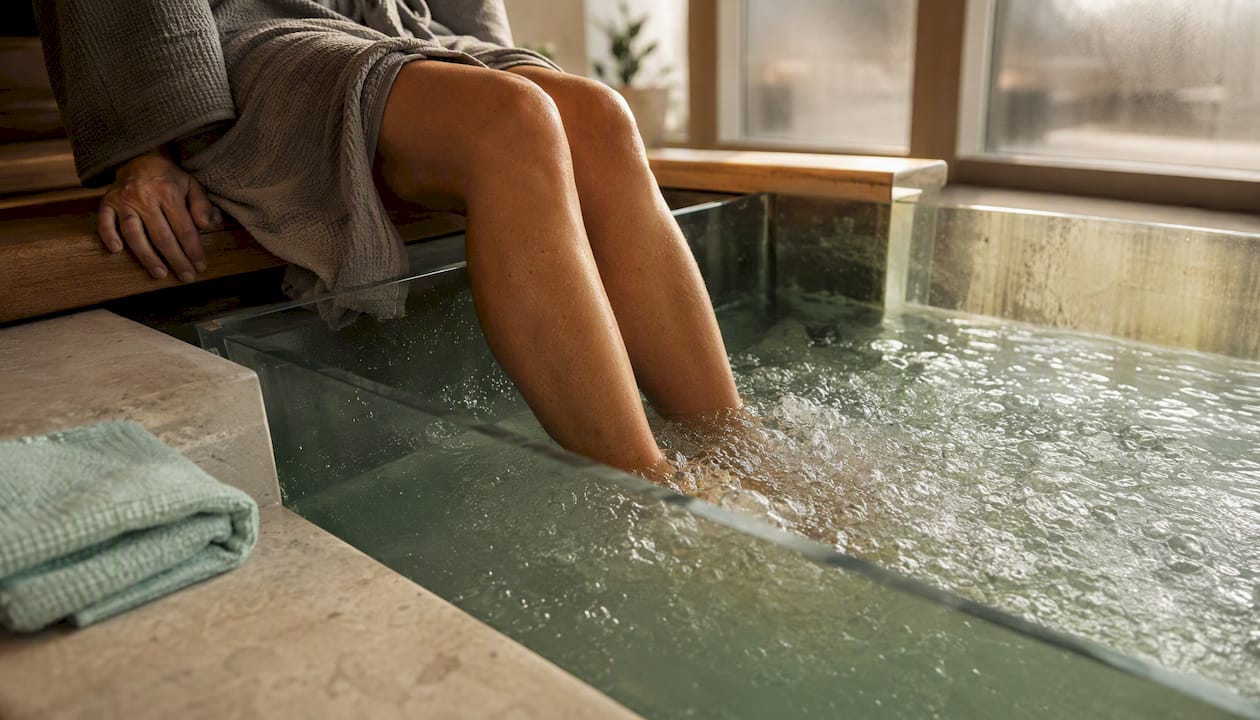
This is where most gym-goers encounter hydromassage. The combination of heat and mechanical pressure after exercise may accelerate the clearance of metabolic byproducts and reduce delayed-onset muscle soreness (DOMS). The evidence here is largely inferred from broader hydrotherapy and massage research rather than direct hydromassage trials, but the physiological rationale is sound. Using a hydromassage lounge for 10–15 minutes after a strength session is a low-risk, low-effort recovery tool.
5. Mobility and range of motion
Warm water relaxes connective tissue, which can temporarily increase flexibility and range of motion. This effect is most useful when hydromassage precedes or follows stretching. It is not a substitute for active mobility work, but it can make that work feel easier and more productive.
6. Reduced swelling and fluid retention
Hydrostatic pressure in immersive formats compresses peripheral tissues and assists venous return, which can reduce mild swelling in the legs and feet. Dry hydromassage produces a weaker version of this effect through mechanical pressure alone, without the full-body compression that immersion provides.
7. Mood and sleep quality
Warm water immersion before sleep has been studied in the context of sleep onset. The mechanism involves the body’s thermoregulatory response: core temperature rises during a warm session and drops afterward, which signals the brain that it is time to sleep. Hydromassage may produce a similar, milder effect. Anecdotally, people who use hydromassage in the evening report falling asleep faster, though direct trials on this specific application are lacking.
What the research actually shows, and where it gets complicated
The honest summary: the evidence for hydromassage’s benefits is real but limited. Most of the strongest data comes from aquatic physical therapy research, which uses immersive pools and supervised exercise, not dry hydromassage lounges.
A systematic review and meta-analysis of 13 RCTs covering 597 patients found that aquatic physical therapy reduced pain intensity and disability compared with no aquatic therapy, with a standardized mean difference (SMD) of -0.68 on the Visual Analogue Scale for pain. The review also found improvements in physical and mental quality-of-life components. The catch: the authors graded the evidence as low or very low certainty, citing small trial sizes, heterogeneous protocols, and risk of bias.
A network meta-analysis of aquatic and land-based interventions for chronic non-specific low back pain found that multimodal programs combining aquatic elements with exercise or general care tended to rank highest for pain and disability outcomes. Single-modality aquatic interventions performed less consistently.
| Evidence source | Finding | Certainty rating |
|---|---|---|
| Aquatic PT meta-analysis (13 RCTs) | Pain SMD -0.68 vs. no treatment | Low to very low |
| Network meta-analysis (aquatic + land) | Combined programs rank highest for pain/disability | Low, high heterogeneity |
| Dry hydromassage device policies (Aetna, BCBSRI) | Purported benefits noted; durable outcomes unproven | Insufficient evidence |
The gap between what hydromassage feels like and what the research can confirm is real. Payers including Aetna and BCBSRI describe dry hydrotherapy’s purported physiological effects but state that evidence is insufficient to conclude durable health outcome improvements. That does not mean it does not work. It means the trials needed to prove it rigorously have not been done yet.
Safety and contraindications. For most healthy adults, hydromassage carries minimal risk. Clinician consultation is recommended before starting if you have any of the following:
- Pregnancy
- Uncontrolled hypertension or cardiovascular disease
- Bleeding disorders or anticoagulant therapy
- Open wounds, skin infections, or active rashes
- Recent surgery or acute injury
- Orthopedic, rheumatic, or neurological conditions
Improper application can cause burns, skin irritation, or bruising, particularly if jet pressure is too high or water temperature is not properly regulated. Always confirm that the device or facility has staff trained to screen for contraindications and adjust settings appropriately.
How often to use hydromassage, and how long each session should be
Session length and frequency depend on your goal.
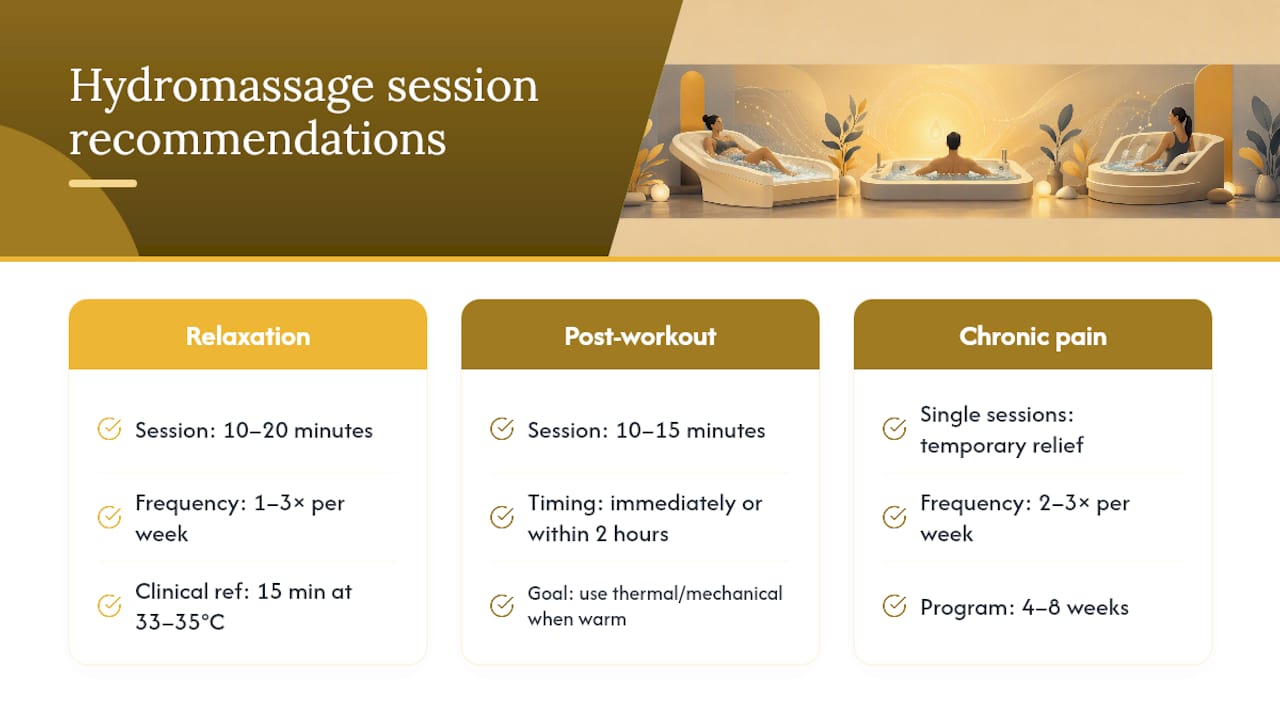
For relaxation and general wellness: a single session of 10–20 minutes, one to three times per week, is a reasonable starting point. Clinical underwater-jet protocols in trials typically use 15-minute sessions at water temperatures around 33–35°C, which gives a useful reference for what a structured therapeutic dose looks like.
For post-workout recovery: 10–15 minutes immediately after or within two hours of a training session tends to work best. The goal is to use the thermal and mechanical effects while muscles are still warm and circulation is elevated.
For chronic pain management: short programs of four to eight weeks, used consistently two to three times per week, are the pattern most commonly studied. Single sessions provide temporary relief; sustained benefit requires repeated use over time.
Starting out: begin with shorter sessions (8–10 minutes) at moderate pressure and temperature. Monitor how your skin and muscles respond for 24 hours afterward. If you notice unusual soreness, redness, or irritation, reduce intensity before your next session.
Pro Tip: Use hydromassage after high-intensity training rather than before. Pre-workout, the relaxation effect can blunt neuromuscular activation. Post-workout, that same relaxation response is exactly what you want.
Pair hydromassage with active recovery (light walking, gentle stretching) for better results than either approach alone. If you are using it for back pain specifically, the network meta-analysis evidence suggests combining aquatic modalities with exercise or general care produces larger functional gains than hydromassage in isolation.
Where to find hydromassage and what it typically costs
Venue types and what to expect at each:
- Wellness and recovery centers (like Osteostrong): dry hydromassage lounges available as a membership add-on or per-session fee; typically staffed and integrated with other recovery modalities
- Commercial gyms: some mid-to-premium tier gyms include dry hydromassage as a membership perk or low-cost add-on ($5–$15 per session); self-serve with minimal staff oversight
- Medical spas and physical therapy clinics: wet or dry formats with more clinical oversight; sessions often run $30–$80 and may be part of a supervised program
- Self-serve hydromassage kiosks: found in some malls and standalone locations; low cost ($1–$2 per minute) but no screening or clinical oversight
Cost varies significantly by geography and format. Dry hydromassage at a wellness center typically runs $10–$30 per standalone session, with membership models bringing that down to $5–$15 per use. Immersive aquatic therapy in a clinical setting costs considerably more and is rarely covered by insurance for this indication.
Questions to ask before your first session:
- Is this a dry table or wet immersive format?
- What is the water temperature range, and can it be adjusted?
- Is there a contraindication screening process?
- How is the device cleaned between users?
- Are staff trained to adjust jet pressure and session settings?
- Is there clinician oversight on site, or is it fully self-serve?
The answers matter most if you have any of the health conditions listed in the safety section above.
Where hydromassage fits in a bone-health and recovery program
Hydromassage is not a bone-density therapy. Osteogenic loading, the kind of high-force mechanical stimulus that actually signals bone remodeling, is a different category entirely. But hydromassage earns its place in a well-designed recovery program as a relaxation and circulation tool that helps the body absorb training stress more comfortably.
At Osteostrong, the sequencing that tends to work well looks like this: an osteogenic loading session (brief, high-intensity, once per week) followed by 10–15 minutes on the hydromassage lounge to encourage parasympathetic recovery and local circulation. Members who want more can layer in red light therapy, PEMF mat sessions, or compression therapy depending on their goals. None of these are substitutes for the loading stimulus itself, but they support the recovery window around it.
The honest limitation: hydromassage is a comfort and recovery adjunct. It will not reverse osteoporosis, repair structural joint damage, or replace a physical therapist’s targeted intervention. What it does reliably is reduce perceived tension, support circulation, and make the hour after a demanding session feel better. For people managing chronic stiffness or post-exercise soreness alongside a bone-health program, that is genuinely useful.
Pro Tip: If you are using hydromassage after osteogenic loading, keep the session to 10–15 minutes and let the warmth do the work. There is no benefit to extending beyond 20 minutes, and longer sessions can leave some people feeling fatigued rather than recovered.
Hydromassage is available at Osteostrong
Osteostrong centers offer hydromassage lounges as part of a broader recovery and wellness program that includes osteogenic loading, red light therapy, PEMF mats, and compression therapy. If you have been curious about adding hydromassage to your routine, the easiest next step is to visit a center and ask staff to walk you through the lounge setup and session options. You can find an Osteostrong center near you and book a visit to see the full range of recovery tools available.
If you have a significant health condition, check with your clinician before your first session. For members already doing osteogenic loading, hydromassage is a natural post-session add-on that requires no extra preparation.
Key research and trusted resources
- What Is Hydromassage? How It Works, Benefits, and Precautions — Healthline overview covering wet vs. dry formats and safety precautions
- Hydromassage Benefits: What to Expect Before and After Workouts — Medical News Today patient-facing summary with cautious benefit framing
- Effect of Aquatic Physical Therapy on Chronic Low Back Pain — systematic review and meta-analysis of 13 RCTs (PubMed)
- Network Meta-Analysis of Aquatic and Land-Based Interventions for Chronic Non-Specific Low Back Pain — Frontiers in Medicine, 2026
- Health Effects of Water Immersion: A Systematic Review — thermal and cold immersion cardiovascular/neuromuscular effects
- Dry Hydrotherapy Clinical Policy Bulletin — Aetna coverage policy with device description and evidence assessment
- Dry Hydrotherapy for Chronic Pain Conditions — BCBSRI policy noting claimed benefits and evidence gaps
- Benefits of Hydromassage — The Praxis Institute practitioner training summary with safety cautions
Sources
- What Is Hydromassage? How It Works, Benefits, and Precautions
- Dry Hydrotherapy (Hydromassage, Aquamassage, Water Massage) – Medical Clinical Policy Bulletins | Aetna
- Effect of aquatic physical therapy on chronic low back pain: a systematic review and meta-analysis
- Network meta-analysis of aquatic and land-based interventions for chronic non-specific low back pain
- Health effects of water immersion: a systematic review
- Hydromassage benefits: What to expect before and after workouts | Medical News Today
- Dry Hydrotherapy for Chronic Pain Conditions (BCBSRI policy)
- Benefits of Hydromassage – The Praxis Institute