

PEMF therapy has clinically supported benefits for bone healing and for specific pain conditions, especially spinal and radicular pain, but results vary widely by condition and protocol. It works best as an adjunct to rehabilitation, not a standalone fix, and it carries a strong safety record. A systematic review backs its orthopedic uses, and Cleveland Clinic confirms the pain and inflammation benefits while noting research is ongoing.
TL;DR:
- PEMF therapy shows the strongest evidence for pain relief in spinal and radicular conditions with large effect sizes, such as nerve root pain.
- Effectiveness varies greatly depending on protocol details, condition type, and treatment duration, with most benefits in bone healing and certain musculoskeletal pains.
- Consistent, long-term use over multiple weeks, typically 20 to 60 minutes daily for six weeks or more, is necessary for noticeable and sustained results.
- Safety is generally reassuring, but individuals with implanted electronic devices, pregnant women, and those with seizure disorders should consult a doctor before use.
- Combining PEMF with active rehabilitation and professional supervision enhances outcomes, especially for fracture healing, osteoarthritis, and post-surgical recovery.
Table of Contents
- What Is PEMF Therapy and How Does It Work?
- What Do Systematic Reviews and RCTs Actually Show?
- Which Conditions Respond Best to PEMF Therapy?
- What Are Typical PEMF Treatment Parameters and Timelines?
- Is PEMF Therapy Safe? Side Effects and Who Should Avoid It
- How Should You Use PEMF Alongside Rehab and Exercise?
- How Osteostrong Applies PEMF Within a Bone Health Program
- An Editorial Take on What This Evidence Actually Means
- Ready to Combine PEMF With a Proven Bone-Building Program?
- Sources
What Is PEMF Therapy and How Does It Work?
Pulsed electromagnetic field (PEMF) therapy sends low-frequency magnetic pulses through the body using a mat, coil, or targeted applicator. Unlike static magnets sold at drugstores, PEMF devices generate a time-varying field that induces tiny electrical currents inside tissue. That distinction matters clinically. Static magnets do nothing measurable to cells; a properly calibrated PEMF field can.
Clinic-grade systems deliver programmable frequency and intensity settings supervised by a provider. Consumer mats and portable coils, by contrast, run fixed or limited-range programs meant for general use rather than treating a diagnosed condition. Both formats rely on the same underlying physics, but the parameters, and therefore the clinical reliability, differ substantially.
The biological story starts at the cell membrane. When a magnetic field passes through tissue, it induces a weak electric field that shifts ion movement across cell membranes, particularly calcium. That shift triggers a cascade of downstream effects researchers have documented in mechanistic studies:
- Adenosine receptor activation. PEMF appears to stimulate A2A and A3 adenosine receptors, which are directly tied to anti-inflammatory signaling and pain modulation, according to mechanistic reviews.
- Osteogenic signaling. In bone tissue, induced currents seem to encourage osteoblast activity and extracellular matrix (ECM) synthesis, which is the biological basis for using PEMF in fracture care.
- Cytokine modulation. Several preclinical models show reduced pro-inflammatory cytokine expression after PEMF exposure, offering a plausible mechanism for the inflammation reduction patients report.
- Improved local circulation. Cleveland Clinic notes that patients often report better circulation alongside pain relief, though the clinic is careful to frame this as an observed effect still under study rather than a settled mechanism.
Why do frequency, intensity, and pulse shape matter so much? Because cells respond differently depending on the “window” of stimulation they receive. A frequency that activates adenosine receptors in cartilage may do nothing useful in nerve tissue. This is a major reason why PEMF research has struggled with consistency. Nobody has agreed on one universal dose.
One important piece of regulatory context: the FDA has cleared PEMF devices for bone nonunion since the 1970s, making it one of the oldest FDA-recognized applications of the technology. That history gives orthopedic use a firmer evidentiary foundation than most other PEMF applications, which remain in earlier stages of clinical validation.
What Do Systematic Reviews and RCTs Actually Show?
The honest answer is: it depends heavily on which condition you’re asking about, and the research reflects that unevenness plainly.
Start with the broadest orthopedic review available. A comprehensive analysis covering decades of PEMF research concludes the therapy has demonstrated real clinical benefit for bone formation, nonunion fractures, and osteoarthritis. But the same review is blunt about a persistent problem: study parameters vary so much from trial to trial that generalizing results across the literature is difficult. One study’s “low intensity” might be another’s “moderate,” and pulse shapes are rarely standardized.
That variability shows up sharply in pain research. A meta-analysis of 13 randomized controlled trials involving 688 patients found an overall pain reduction with PEMF compared to sham treatment, but with extreme heterogeneity across the pooled studies. That heterogeneity isn’t just a statistical footnote. It’s the whole story.
Statistic callout: The same meta-analysis found a standardized mean difference of −2.35 for spinal and radicular pain, a very large effect by conventional clinical standards, while peripheral neuropathy showed no statistically significant benefit at all.
That split matters more than the topline average. It tells you PEMF isn’t a uniform painkiller. It works strongly in some conditions and does essentially nothing measurable in others, and lumping them together in a single average would hide both facts.
RCT-level evidence tells a similarly specific story once you look past headline conclusions. A randomized controlled trial comparing daily at-home PEMF against standard-of-care for joint and soft-tissue pain found a substantial pain reduction in the PEMF group over 14 days, significantly larger than in the standard-of-care group. Medication use also decreased markedly in the PEMF group during this period. When patients on standard care crossed over to PEMF after the initial period, their pain scores improved further, which strengthens the case that the effect came from the intervention rather than natural recovery over time.
A 2026 systematic review in Frontiers covering magnetic-field therapies more broadly reached a comparable verdict: PEMF and related modalities appear generally safe and can reduce pain while improving function across musculoskeletal conditions. Notably, this review found PEMF produced more sustained functional and tissue-level effects compared to some other magnetic-field approaches it examined, suggesting the benefit isn’t just a short-term analgesic bump.
Where does the heterogeneity come from, mechanically speaking? A few identifiable sources:
- Protocol variability. Frequency, intensity, and session length differ between studies, sometimes by an order of magnitude.
- Condition differences. Pooling neuropathic pain, osteoarthritis, and spinal pain into one meta-analysis inevitably averages together conditions that respond very differently.
- Risk-of-bias concerns. Blinding is genuinely hard with PEMF, since some devices produce a faint hum or warmth that unblinded patients might notice.
- Small sample sizes. Several trials in the pooled data involved fewer than 50 participants per arm, which widens confidence intervals and makes individual results less reliable.
Safety data across these trials is consistently reassuring. Adverse events reported in the RCTs were mild and infrequent, mostly transient warmth or minor skin sensitivity at the mat or coil contact point. None of the major reviews cited here flagged serious adverse events tied directly to PEMF exposure at standard therapeutic parameters.
The bottom line from the clinical literature isn’t “PEMF works” or “PEMF doesn’t work.” It’s that PEMF’s effect size tracks closely with how mechanically specific and localized the condition is, and how tightly the study controlled its dosing parameters.
Which Conditions Respond Best to PEMF Therapy?
Mapping the evidence onto actual diagnoses makes the picture much clearer than any single average effect size can.
-
Spinal and radicular pain. This is where PEMF’s evidence is strongest for pain relief specifically. The subgroup analysis showing a standardized mean difference of −2.35 suggests a substantial, clinically meaningful benefit for nerve-root compression pain patterns, likely because the localized inflammation and nerve irritation in radicular pain responds well to the anti-inflammatory signaling PEMF appears to trigger.
-
Osteoarthritis and postoperative joint recovery. Evidence supports meaningful pain and function gains here, particularly in early-stage osteoarthritis and during the postoperative recovery window after joint procedures. The orthopedic review specifically calls out osteoarthritis as one of the conditions with the most consistent clinical benefit.
-
Fracture healing and nonunion. This remains PEMF’s best-established indication, backed by decades of FDA clearance history. Typical outcomes in nonunion cases involve accelerated bone formation at the fracture site, which is the original clinical rationale for the technology before it expanded into broader pain management applications.
-
Peripheral neuropathy. Here’s where expectations need tempering. The neuropathic pain meta-analysis found no statistically significant benefit for peripheral neuropathy specifically, even though the same pooled dataset showed a large effect for spinal pain. If you’re managing diabetic neuropathy or a similar diffuse nerve condition, don’t expect PEMF to perform the way it might for a herniated disc.
-
Wound healing and soft tissue. Early-stage data is promising but limited. Integrative reviews point to increased angiogenesis and collagen deposition in small human and animal studies, translating to short-term improvements in healing speed. Most of this evidence comes from small samples with short follow-up, so treat it as encouraging rather than definitive.
What Are Typical PEMF Treatment Parameters and Timelines?
Clinical studies converge on some reasonably consistent ranges, even amid the heterogeneity discussed earlier. Most trials use low-frequency PEMF, generally in the single digits to low hundreds of hertz, paired with low-intensity magnetic fields measured in millitesla or gauss rather than the higher-intensity fields used in some diagnostic imaging contexts.
Session length in the RCT literature typically runs 20 to 60 minutes, with daily use over a defined program rather than sporadic sessions. The joint and soft-tissue pain trial used a 14-day daily protocol and saw meaningful separation from standard-of-care within that window, though longer multi-week programs, sometimes 4 to 8 weeks, appear in the orthopedic and osteoarthritis literature for more chronic conditions.
Think of cumulative dose as minutes per session, multiplied by sessions per week, multiplied by total weeks. A patient doing 30 minutes daily for six weeks accumulates roughly 21 hours of total exposure, compared to just a few hours for someone using a device sporadically once or twice a week. Consistency compounds. A single session rarely produces a durable effect; the biological adaptations researchers describe, upregulated adenosine receptor activity, sustained anti-inflammatory signaling, appear to build over repeated exposures.
What should you actually track to know if it’s working?
- Pain scores using a standard 0 to 10 scale, logged at the same time of day for consistency.
- Functional tests, such as walking distance, range of motion, or specific movements tied to your condition.
- Analgesic use, since a genuine reduction in medication reliance is one of the more objective markers available.
- Imaging or biomarkers when relevant, particularly for fracture healing, where follow-up X-rays can confirm bone formation progress.
Pro Tip: Log your pain score and one functional measurement (like walking distance or a specific stretch) before every session for the first two weeks. Patterns that aren’t obvious day-to-day often become clear once you look at a two-week trend line.
Is PEMF Therapy Safe? Side Effects and Who Should Avoid It
The safety profile across the clinical literature is reassuring. Serious adverse events are rare, and most trials report PEMF as well tolerated across treatment courses lasting weeks.
Common mild effects include:
- Transient warmth or tingling at the treatment site
- Mild, temporary increase in localized discomfort during the first few sessions
- Occasional headache with certain higher-intensity clinic protocols
Contraindications matter and deserve direct attention. People with implanted electronic devices, including pacemakers and implanted defibrillators, should avoid PEMF unless explicitly cleared by their cardiologist, since magnetic fields can theoretically interfere with device function. Pregnant patients and people with uncontrolled seizure disorders are typically advised against PEMF use as a precaution, even though direct evidence of harm in these groups is limited. Cleveland Clinic’s guidance recommends consulting a provider before starting, particularly for anyone with an implanted device or a complex medical history.
Insurance coverage for PEMF varies widely by provider, diagnosis, and device type, and many plans still treat it as investigational outside of FDA-cleared bone nonunion indications. Check your specific policy rather than assuming coverage. Whatever device you choose, verify its FDA clearance status and use it under clinician supervision when treating a diagnosed condition rather than general wellness.
How Should You Use PEMF Alongside Rehab and Exercise?
PEMF performs best as one piece of a broader recovery plan rather than a substitute for movement-based rehabilitation. Clinical guidance from medical center resources consistently frames it as supportive rather than curative, aimed to reduce pain and inflammation enough that patients can engage more fully in physical therapy and strengthening work.
Here’s a practical way to structure that combination:
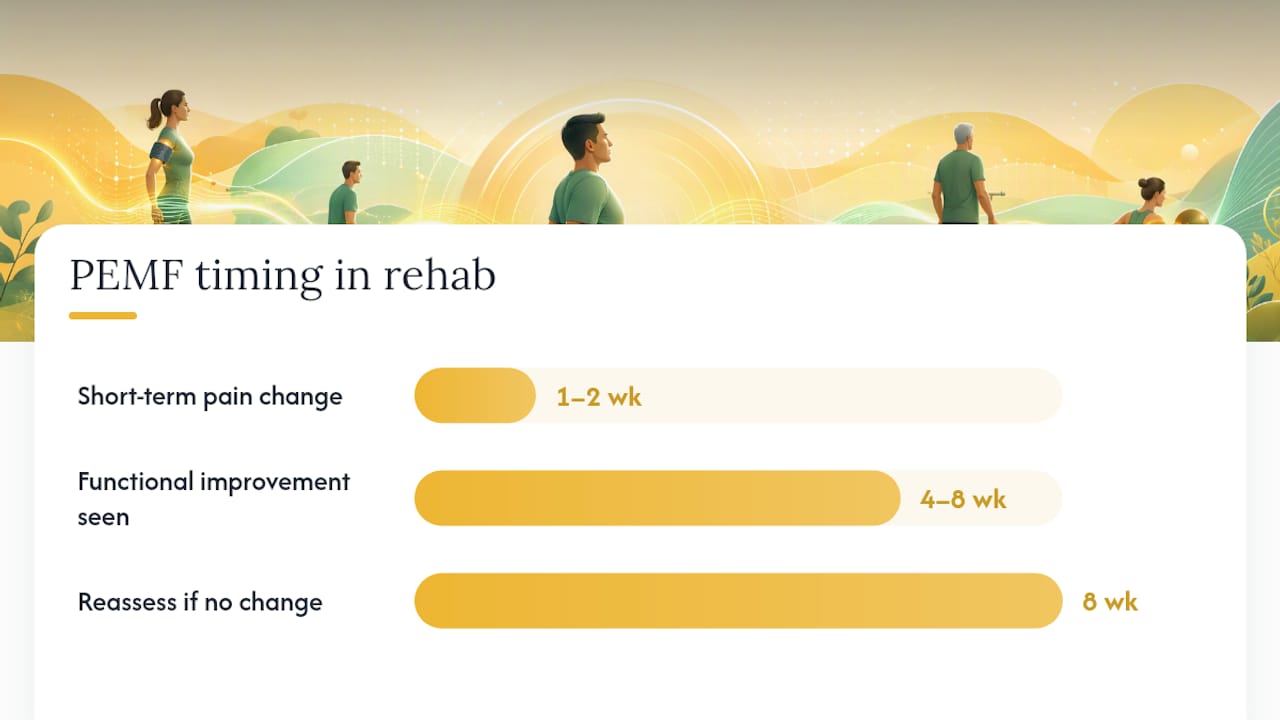
- Set a monitoring timeline. Expect short-term pain changes within the first one to two weeks, but reserve judgment on functional improvement until the 4 to 8 week mark, which is where most clinical trials see their clearer separation from baseline.
- Define concrete goals with your clinician. Walking tolerance, specific range-of-motion targets, and a measurable reduction in analgesic use all work better than a vague “feel better” benchmark.
- Pair PEMF sessions with active rehab. Evidence consistently points toward combined approaches outperforming passive treatment alone, since reduced inflammation creates a better window for strengthening work to actually stick.
- Choose supervised care for diagnosed conditions to ensure you’re working with premium fitness equipment advantages that justify the investment in clinic-grade devices and provide reliable treatment. Home devices work for general maintenance, but a diagnosed nonunion, significant radicular pain, or postoperative recovery warrants clinic-grade equipment and professional oversight.
- Reassess if you see no functional change by 8 weeks. If pain scores haven’t budged and functional benchmarks are flat, that’s the signal to revisit the protocol with your provider rather than continuing indefinitely on the same settings.
How Osteostrong Applies PEMF Within a Bone Health Program
Osteostrong integrates PEMF mats alongside osteogenic loading sessions, red light therapy, BioCharger sessions, and the PureWave VEMI lounge as part of a broader skeletal health program rather than a standalone treatment. The osteogenic loading session remains the weekly anchor, designed to stimulate bone-building signals directly, while PEMF and the other modalities support recovery and circulation between sessions.
Progress gets tracked against objective benchmarks, not just how a member feels that day, echoing the functional-outcome approach that Cleveland Clinic and the RCT literature both point toward. The center at Tysons, VA illustrates how this therapy mix runs in practice for members focused on bone density and proactive wellness.
An Editorial Take on What This Evidence Actually Means
Most PEMF marketing treats it as a single, universal therapy: one device, one setting, benefits for everything from arthritis to anxiety. The research doesn’t support that framing, and the conventional wisdom built around it does readers a disservice. What the data actually shows is condition-specificity. A standardized mean difference of −2.35 for spinal pain against a null result for peripheral neuropathy, in the same meta-analysis, isn’t a footnote. It’s the headline.
The mistake most patients make is asking “does PEMF work?” instead of “does PEMF work for my specific condition, at an adequate dose, over enough time?” Those are different questions with very different answers. Fracture nonunion and osteoarthritis have decades of orthopedic backing. Diffuse neuropathic pain does not, at least not yet.
If you take one thing from this evidence base, prioritize dosing consistency and condition match over device hype. A clinic-grade device used correctly for eight weeks on a well-matched condition will outperform a premium home mat used sporadically on the wrong problem every time.
— Aaron
Ready to Combine PEMF With a Proven Bone-Building Program?
Osteostrong pairs supervised PEMF mat sessions with weekly osteogenic loading, giving you the anti-inflammatory and circulation support PEMF offers alongside the mechanical stimulus that actually drives bone density gains, something a PEMF mat alone can’t do.

If you’re managing osteoporosis, osteopenia, or joint recovery and want a structured plan instead of guessing at settings on a home device, explore osteogenic loading combined with PEMF to see how the two therapies work together. Ready to see it firsthand? Find your nearest Osteostrong center and schedule an initial session to get a baseline reading on your bone health and a plan built around your actual goals.
This article is general information, not a substitute for advice from a qualified doctor. Consult a qualified healthcare professional about your own circumstances before acting on anything here.
Sources
- PEMF (Pulsed Electromagnetic Field) Therapy: What It Is
- Pulsed Electromagnetic Fields (PEMF)—Physiological Response and Its Potential in Trauma Treatment
- Systematic review of magnetic field therapies in musculoskeletal pain (Frontiers, 2026)
- Randomized controlled trial: PEMF vs standard-of-care for joint and soft tissue pain (2025)
Trackbacks/Pingbacks