

Expect to pay $30–$100 per in-clinic session for pulsed electromagnetic field (PEMF) therapy, with membership packages that lower the per-visit price and home devices ranging from about $200 to over $12,000. The clinical term is pulsed electromagnetic field therapy, though “PEMF therapy” is how most wellness centers and patients refer to it. Before you budget, know this: most private insurers in the U.S. classify wellness PEMF as experimental and will not reimburse it. FDA-cleared bone growth stimulators are a narrow medical exception, covered in detail below. Osteostrong offers supervised, in-person PEMF mat sessions as part of a broader bone-density program, which gives you professional oversight without buying a device outright.
Quick cost snapshot:
- In-clinic drop-in session: typically $30–$100 per session depending on center and device intensity, with higher prices for high-intensity practitioner sessions
- Monthly membership at a wellness center: generally $200–$300, offering regular access and improved adherence
- Home consumer mat: upfront costs range from about $200 to $1,500 for targeted units
- Home whole-body system: costs typically $4,500–$12,000 or more depending on features
- FDA-cleared bone growth stimulator (medical device): generally costly devices ($2,000–$10,000+) that may be covered by insurance with prior authorization for specific fracture indications
Table of Contents
- What drives PEMF pricing?
- Concrete price ranges: clinics, memberships, home devices, and medical stimulators
- Will insurance pay for PEMF therapy?
- What outcomes should you realistically expect, and when?
- How to reduce or spread the cost of PEMF therapy
- Questions to ask before you book or buy, and red flags to watch for
- Safety, contraindications, and side effects to know before starting
- Key Takeaways
- Why supervised bone-health programs outperform solo device use
- Osteostrong’s supervised bone-health program: what it costs and how to start
- Research and reputable sources
What drives PEMF pricing?
Two clinics in the same city can charge very different rates, and the gap usually comes down to device grade. Practitioner-grade machines deliver substantially higher magnetic field intensities than the consumer mats sold online. That hardware difference is real and it shows up in both the session price and the expected outcomes for bone tissue.
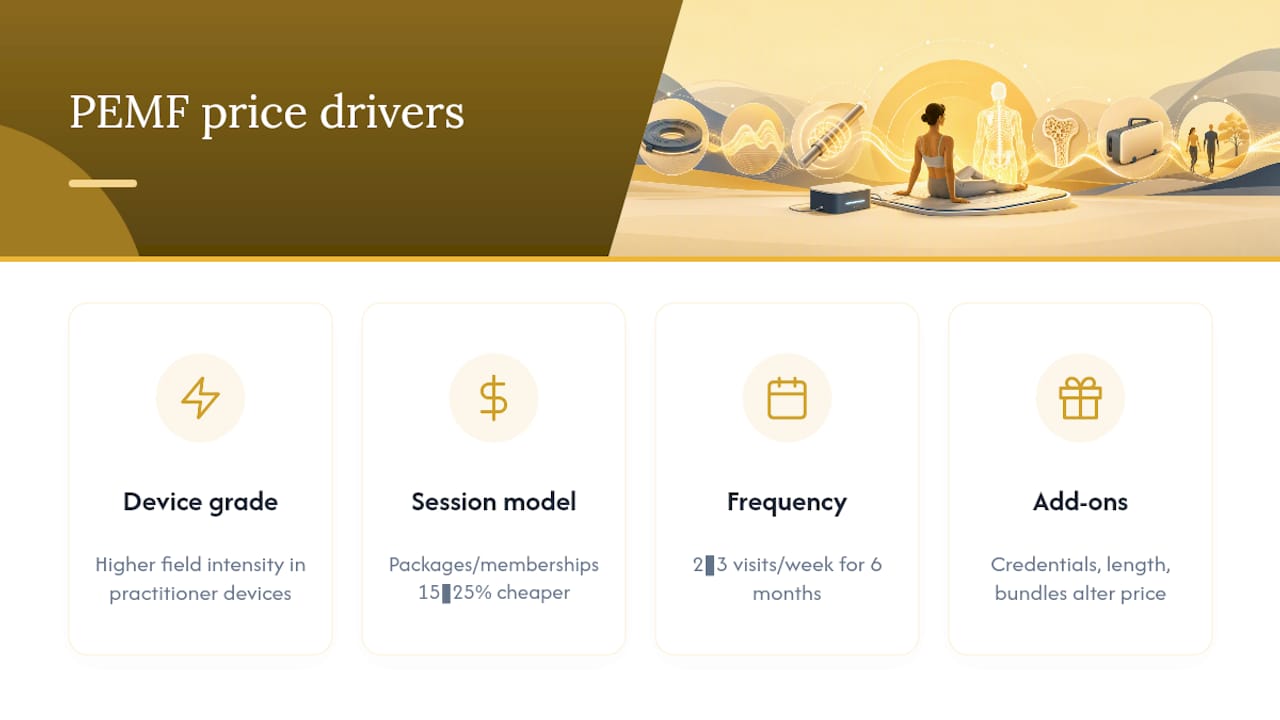
Session model matters just as much. A drop-in rate is always the most expensive per-session option. Packages of 5–10 sessions and monthly memberships cut per-session cost by roughly 15–25% compared with walk-in pricing. Provider credentials, session length, and bundled services (vibration plates, red light therapy) also push prices up or down.
The hidden cost driver most people miss: frequency. Bone remodeling protocols require regular, scheduled sessions over months. A $50 session sounds manageable until you multiply it by two or three visits per week for six months.
Pro Tip: Ask any clinic what device model they use and its maximum field intensity before you book. A low-intensity consumer mat in a clinical setting is not the same as a high-intensity practitioner device, even if both are marketed as “PEMF therapy.”
Concrete price ranges: clinics, memberships, home devices, and medical stimulators
Professional PEMF sessions typically cost $30–$100 per session, though the range widens depending on setting and device type.
| Setting / Model | Typical Cost | Insurance Coverage | Supervision | Recommended Frequency |
|---|---|---|---|---|
| Chiropractor / PT add-on | Moderate cost per session | Rarely covered | Clinician present | Regular weekly visits |
| Wellness center drop-in | Moderate to higher session cost | Not covered | Staff present | Regular weekly visits |
| High-intensity practitioner | Higher session cost | Not covered | Clinician supervised | Regular weekly visits |
| Monthly membership (wellness) | Moderate monthly fee | Not covered | Staff present | Set visits or unlimited |
| Home consumer mat | Variable upfront cost | Not covered | Self-managed | Frequent daily use |
| Home whole-body system | Higher upfront cost | Not covered | Self-managed | Frequent daily use |
| FDA-cleared bone growth stimulator | Typically costly device | Possible with prior auth | Prescribed/monitored | Per prescription |
A few specifics worth noting:
- Wellness centers and medical spas commonly charge $30–$60 for a 30-minute session, with longer or bundled sessions priced higher.
- Package discounts are standard. A 10-session package at a center charging $80 drop-in might run $65–$70 per session.
- FDA-cleared bone growth stimulators are prescription medical devices designed for non-union fractures, not general wellness. Their intent, regulatory status, and coverage pathway are distinct from wellness PEMF mats.
Will insurance pay for PEMF therapy?
The short answer is almost certainly not for wellness use. Most private insurers treat PEMF therapy as experimental and unproven for general wellness indications, which means out-of-pocket costs are the norm.
The exception is meaningful but narrow. FDA-cleared bone growth stimulators prescribed for specific fracture indications (typically non-union fractures) can qualify for reimbursement with prior authorization and proper clinical documentation. This is a medical device pathway, not a wellness pathway.
Pro Tip: If you are pursuing insurance coverage for a bone growth stimulator, ask your prescribing physician for the relevant HCPCS code (commonly E0747 or E0748 for spinal stimulators, though codes vary by device and indication) and request a prior-authorization checklist from your insurer before the device is ordered.
Steps to take if you want to pursue reimbursement:
- Confirm the device has FDA clearance for your specific indication.
- Get a letter of medical necessity from your physician.
- Submit a prior-authorization request with clinical documentation before purchase.
- Ask the supplier for itemized billing codes and a certificate of medical necessity.
- Appeal a denial with supporting clinical literature if your physician recommends it.
What outcomes should you realistically expect, and when?
Bone remodeling is slow. Measurable changes on a DEXA scan typically require 6–12 months of consistent protocol adherence. PEMF is not a shortcut, and any provider who suggests otherwise is overpromising.
What the research shows: Clinical studies on PEMF for bone density generally use protocols spanning several months, with sessions ranging from daily home use to multiple weekly clinic visits. Measurable DEXA improvements are the benchmark outcome, not symptom relief.
Track your progress with:
- A baseline DEXA scan before starting any protocol.
- A follow-up DEXA at 12 months (or per your physician’s recommendation).
- Session logs to confirm adherence, since consistency is the variable most likely to determine your result.
- Symptom and functional notes (pain, mobility, fatigue) as secondary markers.
For a bone-health protocol at a wellness center, two to three sessions per week at moderate per-session rates can add up to several hundred dollars per month at drop-in rates, or a lower monthly amount with a membership plan.
How to reduce or spread the cost of PEMF therapy
Memberships are the most reliable way to lower per-session cost for an ongoing bone protocol. Monthly membership fees generally provide a set number of sessions or unlimited access, helping budgeting and encouraging regular attendance.
Package math is straightforward: if a 10-session package saves you $15 per session versus drop-in, you recover $150 on a single purchase. Over a 12-month protocol, that compounds quickly.
For home devices, ask manufacturers about financing plans, rent-to-own options, and warranty terms before you buy. A device with a two-year warranty and a payment plan may carry less financial risk than a lump-sum purchase of an unfamiliar brand.
Pro Tip: Build maintenance costs into your home-device budget from day one. Replacement applicators, pads, and occasional calibration can add $50–$200 per year depending on the device. A clinic membership has no maintenance overhead on your end.
Monthly budget estimate for a bone-health protocol varies by approach, with clinic memberships costing a moderate monthly fee, drop-in clinics more expensive, and home devices potentially offering lower monthly cost after upfront investment if used consistently.
Questions to ask before you book or buy, and red flags to watch for
Before booking a clinic:
- What device model do you use, and what is its maximum field intensity?
- What protocol do you follow for bone-health or osteoporosis clients?
- What are your staff’s credentials and training in PEMF protocols?
- How do you track outcomes? Do you recommend DEXA follow-up?
- What is your cancellation and refund policy for packages or memberships?
Before buying a home device:
- What is the warranty period and what does it cover?
- What is the recommended session frequency and duration for bone health?
- Is there clinical evidence specific to bone density for this device?
- What ongoing support or protocol guidance do you provide after purchase?
Red flags to walk away from:
- Any guarantee of bone density improvement or fracture prevention.
- Pressure to purchase an expensive home device at your first consultation.
- No mention of contraindication screening or health history review.
- Vague protocol descriptions (“just lie on the mat for 20 minutes”).
- No plan for objective outcome tracking.
Safety, contraindications, and side effects to know before starting
The primary contraindications for PEMF therapy are implanted electronic devices (pacemakers, defibrillators, cochlear implants), pregnancy, and active malignancy. If any of these apply to you, do not start PEMF without explicit clearance from your physician.
Common transient side effects include mild muscle aching, temporary fatigue, and occasional sleep changes in the first few sessions. These typically resolve as the body adjusts. Rare severe reactions should prompt you to stop treatment immediately and contact a clinician.
Pro Tip: Anyone with a complex health history, multiple medications, or a recent fracture should get medical clearance before starting any PEMF protocol. Supervised settings like Osteostrong include a health screening intake, which reduces this risk considerably.
Key Takeaways
In-clinic PEMF therapy costs $30–$100 per session, memberships are typically $200–$300 per month, and home devices range from about $200 to over $12,000 upfront, with insurance rarely covering wellness PEMF.
| Point | Details |
|---|---|
| Typical per-session cost | Clinic sessions run $30–$100; high-intensity practitioner sessions can reach $150. |
| Membership savings | Monthly memberships at wellness centers typically run $200–$300 and improve adherence. |
| Home device math | A $400 device used daily costs roughly $1.10/session; a $6,000 system daily for three years runs about $5.50/session. |
| Insurance reality | Most private plans exclude wellness PEMF; FDA-cleared bone growth stimulators (costing $2,000–$10,000+) may qualify with prior authorization for fracture indications. |
| Osteostrong supervised option | Osteostrong bundles PEMF mats with osteogenic loading and other therapies in a supervised, membership-based model designed for bone-health protocols. |
Why supervised bone-health programs outperform solo device use
The conventional wisdom says buy a home device and use it daily. In practice, that advice ignores the single biggest variable in any bone-health protocol: adherence. Bone remodeling does not respond to occasional, inconsistent exposure. It responds to regular, scheduled mechanical and electromagnetic stimulus over months.
What most cost comparisons miss is that a $6,000 home device sitting unused three days a week is more expensive per actual session than a $250/month membership you show up to every week. The supervised model forces the schedule. That is not a soft benefit. For people managing osteoporosis or osteopenia, it is the difference between a protocol that produces a measurable DEXA result at 12 months and one that does not.
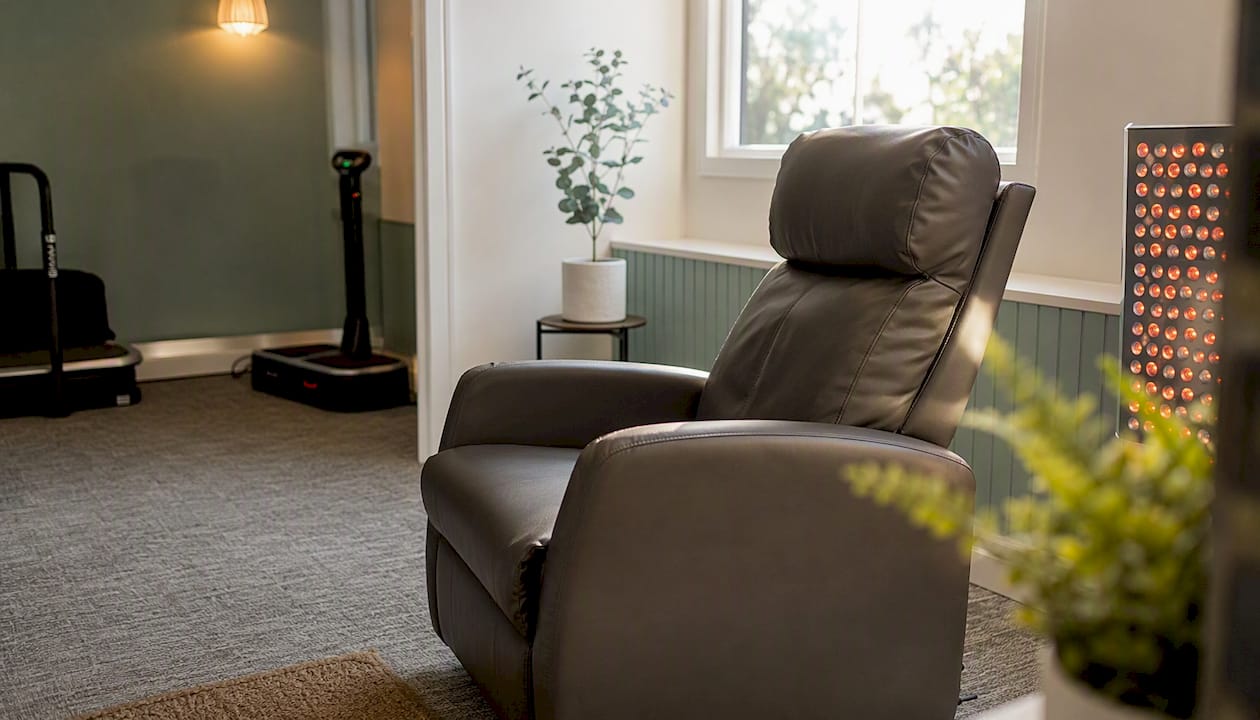
Osteostrong’s approach pairs weekly osteogenic loading with adjunct therapies including PEMF mats, red light therapy, vibration plates, and the PureWave VEMI lounge. The combination addresses bone density from multiple angles, and the weekly appointment structure is what keeps people consistent long enough to see results. Safety screening at intake and objective follow-up are built into the model, not optional add-ons.
Osteostrong’s supervised bone-health program: what it costs and how to start
If you have read this far and want professional oversight rather than a solo device experiment, Osteostrong is built for exactly that. Members come in once a week for osteogenic loading, the primary bone-density stimulus, and can access PEMF mats, red light therapy, vibration plates, compression therapy, and the PureWave VEMI lounge as part of their program. Everything is supervised, scheduled, and tracked.

The membership model makes budgeting straightforward: one recurring cost, no device maintenance, and a built-in appointment cadence that keeps your protocol on track. For people serious about improving bone density, that structure is worth more than the per-session math suggests. You can also pair your sessions with osteogenic loading at home for additional stimulus between visits, and support your protocol with bone-density nutrition guidance the site maintains.
Find your nearest center and review membership options at centers.osteostrong.me, or go directly to a location near you, such as Osteostrong Tysons VA, to book a session or ask about current pricing.
This article is general information, not medical advice. Confirm any PEMF protocol, device selection, or insurance coverage question with your physician or a qualified healthcare provider.
Research and reputable sources
The sources below were used to build the cost ranges, insurance guidance, and safety information in this article. Bring the insurance and device links to your provider when asking about billing codes or prior authorization.
- PEMF Therapy: A Chemist’s Guide to Costs, Devices, Evidence & Finding Treatment Near You | BestDosage
- Does Insurance Cover PEMF Therapy? (2026 Guide) | BestDosage
- How Much Does PEMF Therapy Cost? – PEMF Complete
- How Much Do People Charge for PEMF Therapy? – Medical Spa Supply
- PEMF Therapy Side Effects: What You Need to Know