
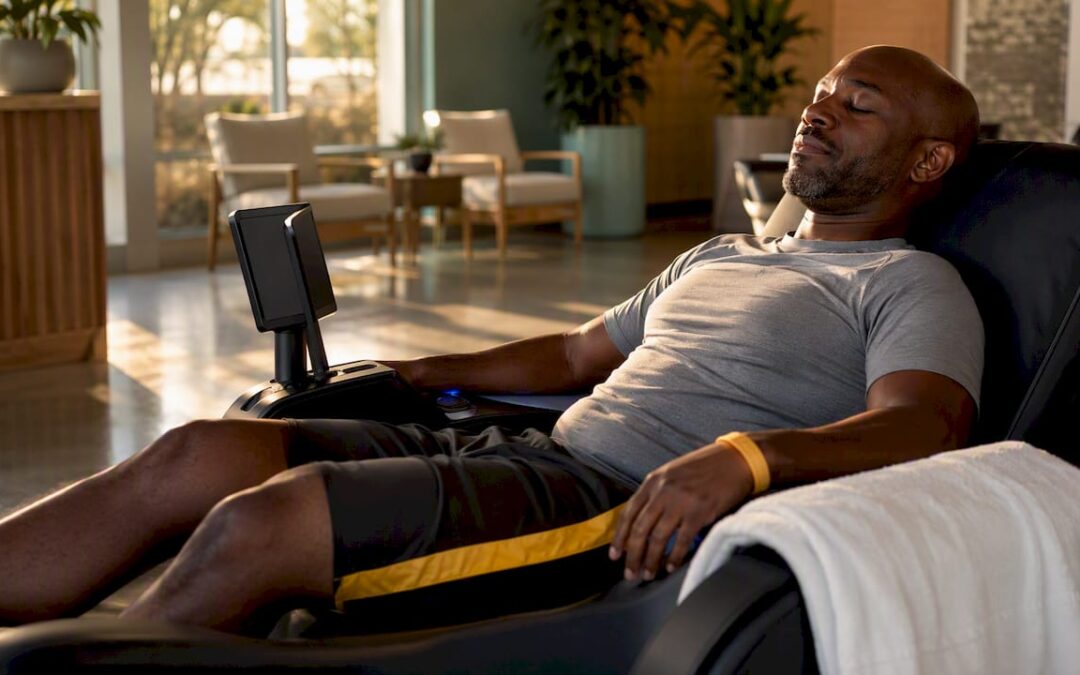
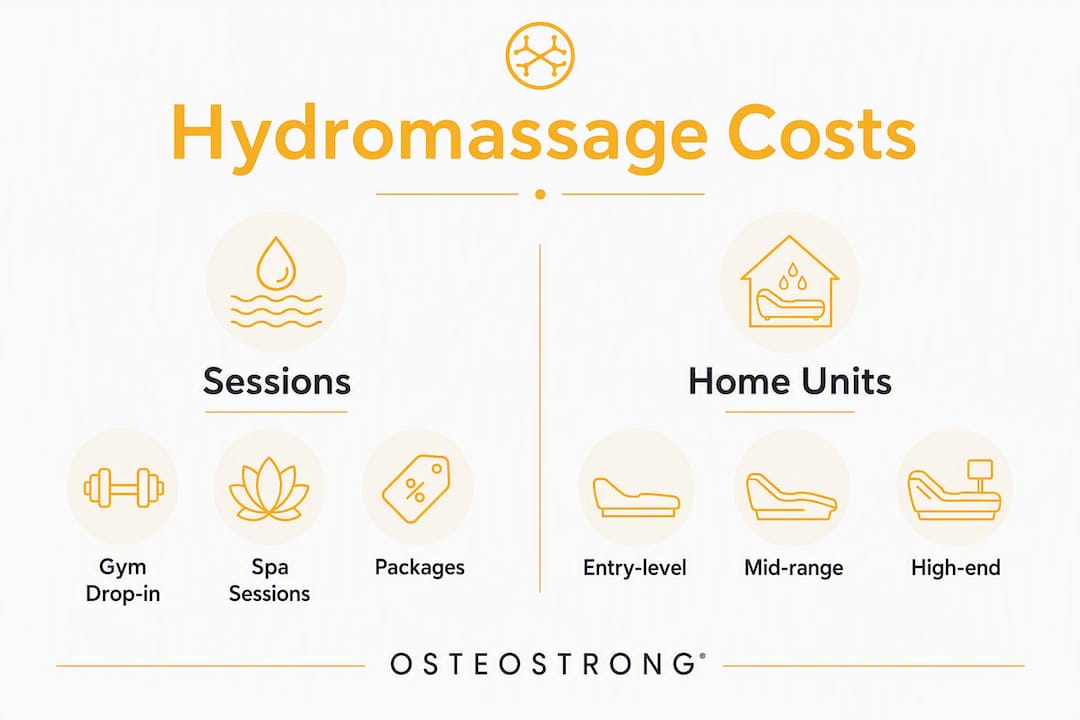
Expect to pay roughly between $10 and $25 for a short gym session, between $25 and $45 at a spa, or above $50 at a clinic. A monthly gym add-on typically runs around $25/month, and buying a home unit means budgeting several thousand dollars or more upfront. The fastest decision rule: if you want to try it once, pay drop-in; if you plan to go weekly, a membership add-on cuts your per-session cost dramatically; if you want daily access at home, a unit purchase makes sense once you’ve confirmed you’ll actually use it.
At a glance:
- Drop-in sessions: $10–$75+ depending on venue and session length
- Gym membership add-on: roughly $25/month for unlimited access
- Home unit purchase: $2,000–$15,000+, plus several hundred to a few thousand dollars in installation costs
- Osteostrong centers offer hydromassage lounges as part of an integrated wellness membership, making it easy to pair with osteogenic loading and other therapies in one visit
For the full breakdown by venue, session length, and purchase tier, the cost-by-type section below has the numbers.
Table of Contents
- How much does hydromassage cost by venue and access type?
- What drives the wide spread in hydromassage pricing?
- How to get the best price on hydromassage sessions or equipment
- Does insurance cover hydromassage?
- Is hydromassage worth the price for your goals?
- What does buying a home unit actually cost you?
- How Osteostrong structures hydromassage access
- Key Takeaways
- The real value question most buyers skip
- Osteostrong hydromassage: try it alongside your wellness routine
- Sources and further reading
How much does hydromassage cost by venue and access type?
Per-session pricing varies more than most people expect, and the gap between a gym lounge and a clinical session isn’t just about the device.
| Access Type | Session Length | Typical Price Range | Notes |
|---|---|---|---|
| Gym / tanning salon (drop-in) | 10–15 min | between $10 and $25 | Self-serve, no staff supervision |
| Spa (drop-in) | 20–30 min | between $25 and $45 | Ambient setting, sometimes attended |
| Medical clinic / high-end spa | 45–60 min | more than $50 | Clinician or therapist involvement |
| Gym membership add-on | Monthly unlimited | ~$25/month | Best value for frequent users |
| Home unit (entry-level) | Unlimited | $2,000–$4,000 upfront | Self-serve, no recurring session fee |
| Home unit (mid-range) | Unlimited | $4,000–$6,000 upfront | More jets, better pump capacity |
| Home unit (high-end / commercial-grade) | Unlimited | $6,000–$15,000+ upfront | Near-commercial performance at home |
When membership math beats paying per session
Say you use hydromassage twice a week at a gym that charges a typical drop-in session price. That’s $120/month. A monthly unlimited add-on at the same facility cuts your monthly spend by $95 and pays for itself after just two sessions. The break-even point for most gym add-ons sits at two to three sessions per month. Go more often than that, and the membership wins every time.

Packages (blocks of 10 or 20 sessions sold at a discount) fall between drop-in and monthly memberships in cost-per-session terms. They work well for someone who wants frequent access for a defined stretch, like post-surgery recovery, without committing to an ongoing subscription.
Pro Tip: Watch for recurring software or service plan fees on commercial-grade home units. Some manufacturers charge annual licensing fees for session-management software, which can add a few hundred dollars per year to your total cost of ownership.
What drives the wide spread in hydromassage pricing?
The price range isn’t random. A handful of specific factors account for most of it.
Device class and engineering. Consumer-grade home lounges use lighter pumps and fewer massage zones. Commercial systems are built for high daily traffic and require stronger cooling, session-management software, and heavy-duty electrical infrastructure. That engineering difference is a real cost, not just a markup.
Session length and venue environment. A a short self-serve session at a gym costs a fraction of a 60-minute attended session at a medical spa. The device may be similar; the staffing, room design, and time commitment are not. Spas and clinics charge for the full experience, and that’s a legitimate part of what you’re buying.
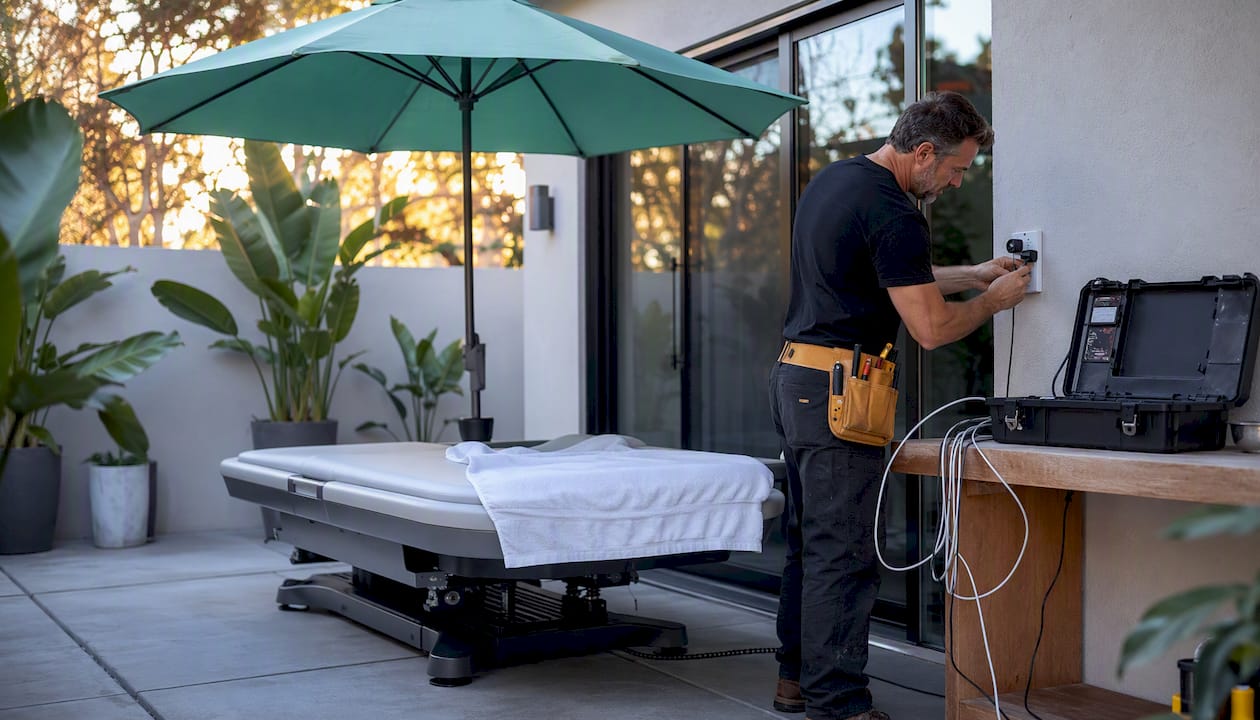
Installation complexity. Home buyers routinely underestimate soft costs. Delivery alone runs a few hundred dollars. Electrical work for a dedicated 220V circuit adds several hundred to a few thousand dollars. Plumbing and drainage can push installation costs to several hundred to a few thousand dollars total. If your unit needs to go to an upper floor, expect a premium on freight and labor.
Distribution channel. Buying direct from a manufacturer typically costs less than purchasing through a dealer or a spa equipment reseller. Dealer markup can be a significant markup percentage above manufacturer pricing, and that gap is often negotiable, especially on installation and service contracts.
Warranty and service coverage. A unit with a longer warranty coverage costs more upfront than shorter warranties. For complex electronics and pump systems, that coverage difference matters.
How to get the best price on hydromassage sessions or equipment
For session buyers
The membership break-even math is straightforward. If a gym charges $20/session and $25/month for unlimited add-on access, you need just two sessions per month to come out ahead on the add-on. Three sessions per month and you’re saving $35. The math compounds fast for weekly users.
Multi-session packages are worth considering when you have a specific recovery window, say six to eight weeks of post-workout or post-procedure care, and you don’t want a recurring charge after that period ends. Most spas offer 10-session packages at some discount below the per-session rate.
For home unit buyers
- Get at least three installation quotes. Electrical and plumbing costs vary widely by contractor and region. The device price is fixed; the installation cost is negotiable.
- Ask about refurbished units. Reputable vendors sell refurbished hydromassage lounges with limited warranties. Refurbished units can reduce upfront cost by 40–60% compared to new, and a solid parts-and-labor warranty on a refurbished unit is often better protection than a short warranty on a cheap new unit.
- Consider lease-to-own or rental. Rental programs typically run several hundred to over a thousand dollars per month depending on program length. That’s expensive long-term, but it lets you confirm the device fits your space and routine before committing to a purchase.
- Negotiate the service contract separately. Dealers often bundle a service agreement into the sale price. Ask for it itemized. You may find a third-party service provider offers equivalent coverage at a lower annual rate.
- Time your purchase. End-of-quarter and trade-show periods often bring manufacturer promotions, especially on commercial-grade units being phased out for newer models.
Checklist when comparing offers:
- Is delivery included, or quoted separately?
- Does the price include installation, or just the unit?
- What’s covered under warranty, and for how long?
- Are software/session-management licenses included or annual add-ons?
- What’s the service response time if a pump or heating element fails?
Pro Tip: If you’re buying a refurbished unit, ask specifically whether the warranty covers the pump and heating element. Those are the two components most likely to need service, and a warranty that excludes them offers limited real protection.
Does insurance cover hydromassage?
The short answer: usually not for wellness sessions, but there are exceptions.
Standard health insurance plans treat hydromassage as a wellness or relaxation service and exclude it from coverage. That applies to gym add-ons, spa sessions, and most home unit purchases. Medicare and Medicaid follow the same general rule.
Coverage becomes possible when hydromassage is delivered as part of a clinician-supervised hydrotherapy plan for a documented medical condition, such as arthritis, fibromyalgia, or post-surgical rehabilitation. In those cases, the session may be billed under physical therapy or hydrotherapy CPT codes, and partial reimbursement is sometimes available depending on your plan.
Steps to pursue potential reimbursement:
- Get a written referral or prescription from your physician specifying hydrotherapy as part of your treatment plan.
- Ask the provider whether they bill insurance and which CPT codes they use.
- Request itemized invoices that include treatment notes, dates, and the provider’s NPI number.
- Call your insurer before your first session and ask specifically about hydrotherapy coverage under your physical therapy or durable medical equipment benefit.
- If denied, ask whether a letter of medical necessity from your physician supports an appeal.
Home unit purchases face an even higher bar. A durable medical equipment (DME) claim for a hydromassage bed requires strong clinical documentation and is rarely approved. Check your plan’s DME benefit schedule before assuming any reimbursement is available.
This is general information, not medical or insurance advice. Confirm your specific coverage with your insurer and a qualified healthcare provider.
Is hydromassage worth the price for your goals?
That depends almost entirely on what you’re trying to accomplish.
Post-workout recovery: Hydromassage delivers heat and pressure that can reduce muscle soreness and improve circulation after training. For athletes or active adults using it two to four times per week, a $25/month gym add-on works out to less than $2 per session. At that price point, the value case is easy to make.
Chronic muscle tension: Regular sessions can help manage tension patterns, particularly in the back and shoulders. Research published in peer-reviewed literature supports warm water therapy for musculoskeletal pain relief. The key word is “regular.” Occasional drop-in sessions at $20–$45 each are less cost-effective than a monthly plan if tension is an ongoing issue.
Relaxation: A single spa session at between $25 and $45 is a reasonable one-time spend. If relaxation is your only goal and you’re not going weekly, drop-in pricing is fine.
Adjunct therapeutic care: When hydromassage is part of a broader treatment plan supervised by a clinician, the value extends beyond the session itself. In that context, the higher per-session cost of a clinic (more than $50) reflects real clinical oversight, not just a nicer room.
| Goal | Best access model | Typical monthly cost | vs. Traditional massage |
|---|---|---|---|
| Post-workout recovery (frequent) | Gym membership add-on | ~$25/month | Traditional massage: $60–$120/session |
| Chronic tension (ongoing) | Membership or package | between $25 and $45/month | PT co-pay: $20–$60/session with insurance |
| Relaxation (occasional) | Drop-in spa session | between $25 and $45/visit | Comparable to a 30-min massage |
| Supervised therapy | Clinic session | more than $50/session | Similar to out-of-pocket PT |
Traditional massage and physical therapy offer hands-on assessment and adaptive technique that hydromassage cannot replicate. Hydromassage’s advantage is consistency, accessibility, and cost per session when used frequently through a membership.
What does buying a home unit actually cost you?
The sticker price is only the beginning. A realistic home-unit budget looks like this:
| Cost Category | Typical Range |
|---|---|
| Unit purchase (entry-level) | $2,000–$4,000 |
| Unit purchase (mid-range) | $4,000–$6,000 |
| Unit purchase (high-end) | $6,000–$15,000+ |
| Delivery | a few hundred dollars |
| Electrical (dedicated 220V circuit) | several hundred to a few thousand dollars |
| Plumbing / drainage | several hundred to a few thousand dollars |
| Annual maintenance and supplies | hundreds to around a thousand dollars per year |
| Insurance (commercial-grade units) | Several hundred dollars per year |
Total first-year cost for a mid-range home install can easily reach $7,000–$12,000 once installation and operating costs are factored in.
Before you buy, confirm:
- Room dimensions and floor load capacity (units can weigh 400–800 lbs filled)
- Whether your electrical panel supports a dedicated 220V circuit without an upgrade
- Drainage access within reach of the unit’s drain line
- Ceiling clearance if the unit has a canopy or overhead components
- Warranty terms: parts coverage, labor coverage, and response time
- Whether the dealer offers a service agreement and what it excludes
Warranty questions to ask every dealer:
- Does the warranty cover the pump and heating element specifically?
- Is labor included, or parts only?
- What’s the typical response time for a service call?
- Does a refurbished unit carry a separate, shorter warranty?
Pro Tip: Ask your electrician to assess your panel before you finalize a unit purchase. A panel upgrade can add over a thousand dollars to several thousand dollars to your project cost, and it’s better to know that before you’ve committed to a specific unit.
How Osteostrong structures hydromassage access
Osteostrong centers offer hydromassage lounges as part of an integrated wellness model, not as a standalone service. Members typically access the hydromassage lounge during the same visit as their weekly osteogenic loading session, making it a natural complement rather than a separate trip.
How access works at Osteostrong:
- Hydromassage is available as part of membership tiers that also include access to other therapies: red light therapy, PEMF mats, BioCharger, PureWave VEMI lounge, compression therapy, and vibration plates
- Members can use the hydromassage lounge before or after their osteogenic loading session, which typically takes about 15 minutes
- Pay-per-session access is available for those who want to try the lounge before committing to a membership
- Pricing varies by location; contact your local Osteostrong center for current membership rates and session options
The integrated model matters for cost comparison. When hydromassage access is bundled with osteogenic loading and other therapies under one membership, the per-therapy cost drops well below what you’d pay for each service separately at a spa or clinic.
Pro Tip: If you’re already coming in weekly for osteogenic loading, adding a 15-minute hydromassage session to the same visit costs you no extra travel time. That’s a meaningful difference from driving to a separate spa for a $35 session.
Key Takeaways
Hydromassage pricing ranges from $10/session at a gym to $15,000+ for a high-end home unit, and the most cost-effective access model for frequent users is almost always a recurring membership add-on rather than drop-in pricing.
| Point | Details |
|---|---|
| Drop-in session cost | Gym sessions run between $10 and $25; spa sessions between $25 and $45; clinic sessions more than $50. |
| Membership break-even | A ~$25/month gym add-on pays for itself after just two to three sessions per month. |
| Home unit total cost | Budget $2,000–$15,000+ for the unit, plus several hundred to a few thousand dollars for installation and hundreds to around a thousand dollars per year in maintenance. |
| Insurance coverage | Wellness sessions are rarely covered; clinician-supervised hydrotherapy may qualify with proper documentation. |
| Osteostrong access | Members access hydromassage lounges alongside osteogenic loading and other therapies under one membership, reducing per-therapy cost. |
The real value question most buyers skip
Hydromassage is one of those wellness services where the pricing model matters more than the price itself. A $75 clinic session once a month is a very different purchase than a $25/month gym add-on used three times a week. The device in both cases might be nearly identical. What you’re actually buying in the clinic is time, supervision, and environment.
Most people researching hydromassage cost are really asking a different question: “Will I actually use this enough to justify it?” That’s the right question. A home unit that sits unused after the first month is the most expensive hydromassage you’ll ever buy, regardless of what it cost. A $25/month gym add-on you use twice a week for a year is one of the better wellness investments available at that price point.
The buyers who get the most value are the ones who match the access model to their actual behavior, not their aspirational behavior. If you’ve never used a hydromassage lounge before, start with a drop-in session or a trial membership. Confirm you like it. Then decide whether a membership or a home unit makes sense. That sequence costs you almost nothing and eliminates the biggest risk: buying something you won’t use.
For people already coming in weekly for bone health work, the calculus is simpler. Adding hydromassage to an existing visit is low friction, low cost, and easy to sustain.
Osteostrong hydromassage: try it alongside your wellness routine
If you’re weighing a spa membership or a home unit purchase, Osteostrong offers a different route: hydromassage access built into a weekly wellness visit that already includes osteogenic loading, red light therapy, PEMF, and more. You’re not paying separately for each therapy or driving to multiple locations.
Members at Osteostrong centers use the hydromassage lounge as a recovery and relaxation complement to their osteogenic loading session, all in one 30–45 minute visit. The bundled model keeps per-therapy costs well below what standalone spa or clinic sessions run. For anyone focused on bone health and overall recovery, that combination is hard to match at a comparable price.
Find your nearest center and ask about current membership options, including first-visit trials, at centers.osteostrong.me.
Sources and further reading
Price ranges in this article are compiled from published vendor price matrices, gym and YMCA membership menus, equipment retailer listings, and market sampling of U.S. spa and clinic session pricing. Figures labeled as “typical” or “estimated” reflect published midpoints across multiple sources; quoted prices from specific venues may differ. Always confirm current pricing directly with the provider or dealer before purchasing.
Primary sources used:
- Experience HydroMassage — Saratoga Regional YMCA — gym membership add-on pricing example (~$25/month)
- HydroMassage Model Comparison Matrix — HydroMassage — commercial system engineering requirements and feature differentiation
- Warm Water Therapy for Musculoskeletal Pain — NCBI/PMC — peer-reviewed context for therapeutic warm water applications