
What exercises help prevent osteoporosis, and which should you skip?
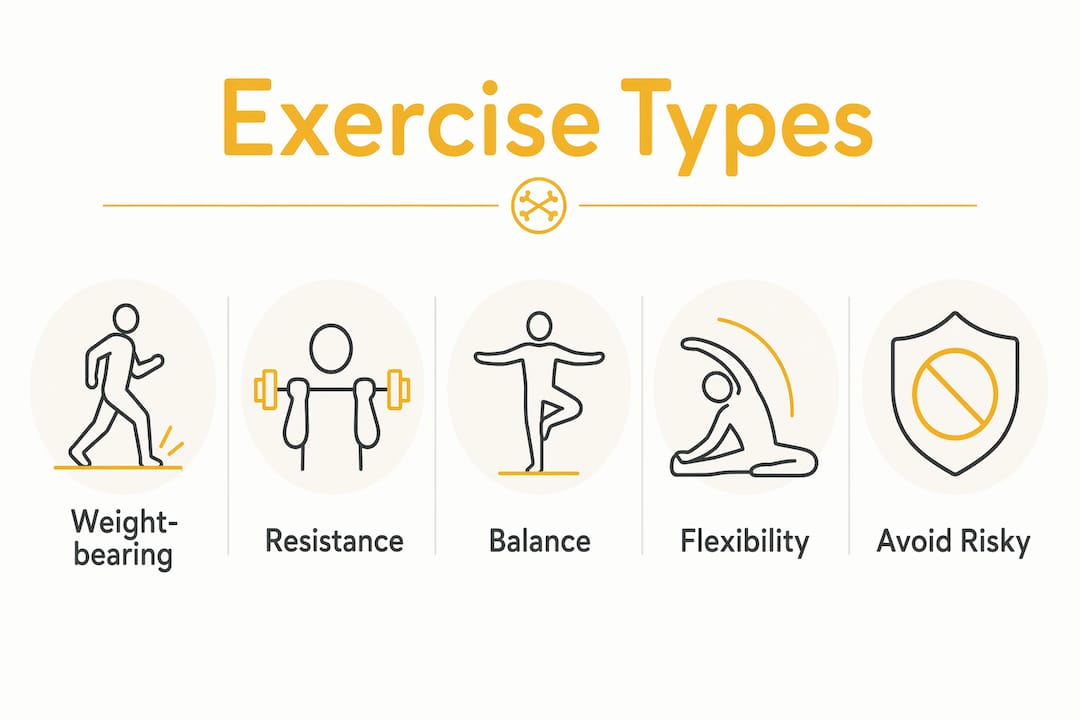
The most effective exercises to avoid osteoporosis are weight-bearing activities, resistance training, balance work, and flexibility routines. Together, they stimulate bone remodeling, build the muscle control that prevents falls, and slow the bone loss that accelerates after age 50. According to NIAMS, adults should aim for at least 150 minutes of moderate-intensity or 75 minutes of vigorous aerobic exercise per week, plus muscle-strengthening activities two times per week.
Before starting any program, get a bone density measurement and talk to your healthcare provider. That step is not optional. It shapes which exercises are safe for you specifically, and it gives you a baseline to measure progress against.
The exercises that build bone:
- Brisk walking, stair climbing, dancing, and tennis (weight-bearing, gravity-loaded)
- Free weights, resistance bands, and weight machines (resistance training)
- Tai chi, single-leg stands, and balance drills (fall prevention)
- Gentle stretching and safe yoga poses (flexibility and posture)
The movements to avoid:
- Forward spinal flexion: toe touches, sit-ups, crunches
- Forceful spinal twisting: certain golf swings, bowling, some yoga poses
- High-impact, jerky movements: jumping or running if bone density is severely compromised
What types of safe exercise actually build bone?
Not all exercise is equal for bone health. Swimming and cycling are excellent for cardiovascular fitness but do not directly stimulate bone remodeling because the water or bike supports your body weight. The activities that work are the ones that load your skeleton.
Weight-bearing activities
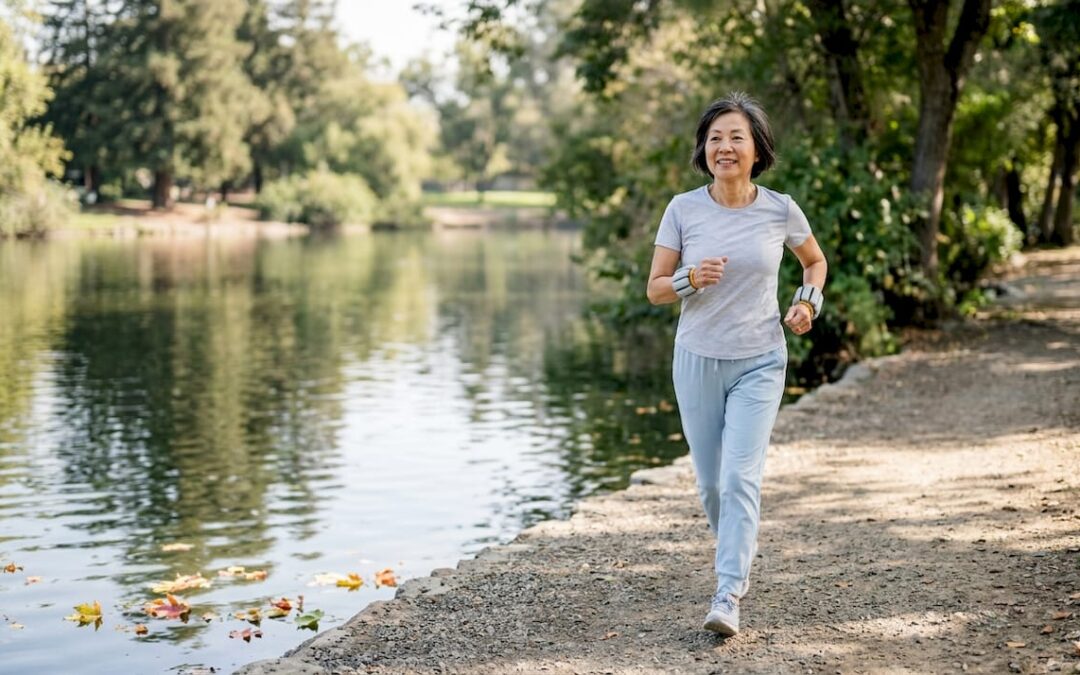
Walking is the most accessible starting point, but to genuinely challenge your bones, vary the stimulus. Speed up your pace, add a hill, or try walking backward. Research on multi-directional loading shows that side-stepping, stomping, and sudden direction changes trigger bone formation more effectively than repetitive straight-line movement. Dancing and stair climbing deliver this variety naturally.
Resistance training
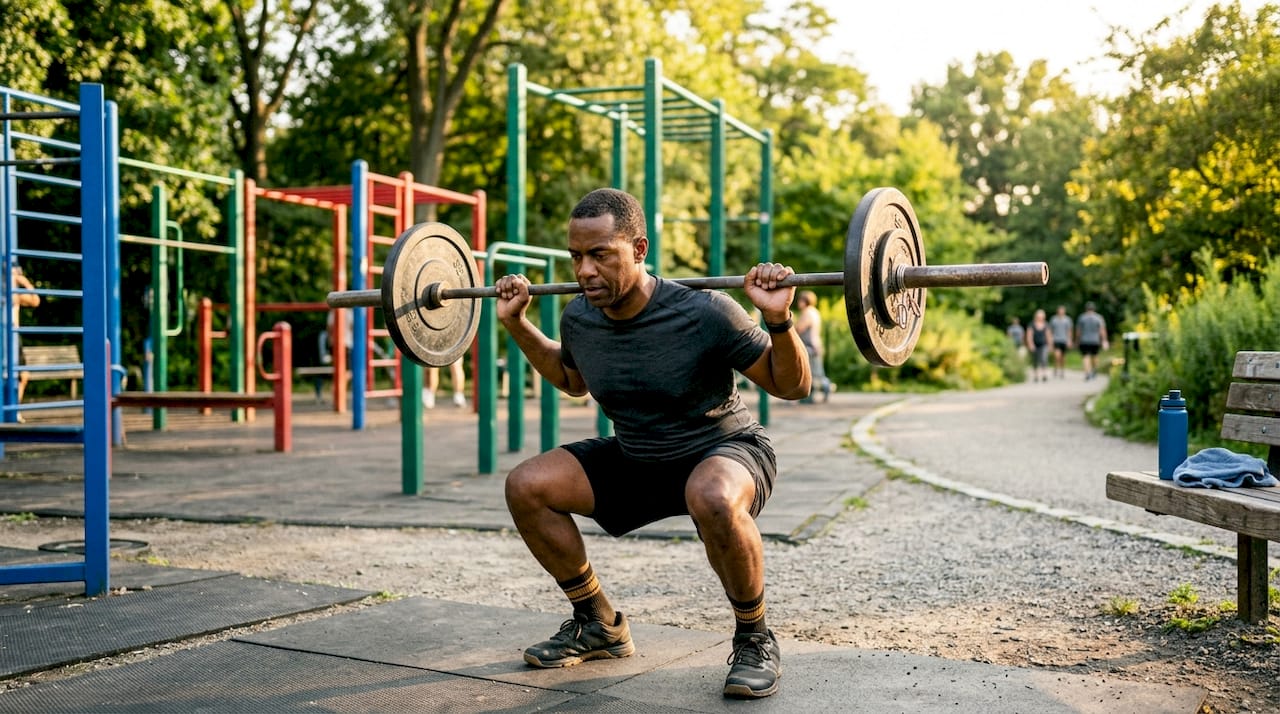
Lifting light weights for high reps is a common mistake. To stimulate osteogenesis, progressive overload toward 70%–85% of your one-rep max for 3–8 repetitions is the target. That means fewer reps with enough weight to feel genuine effort, not endless sets with a 5-pound dumbbell. Focus on the spine, hips, and wrists, the three sites most vulnerable to osteoporotic fracture.
Balance and flexibility work
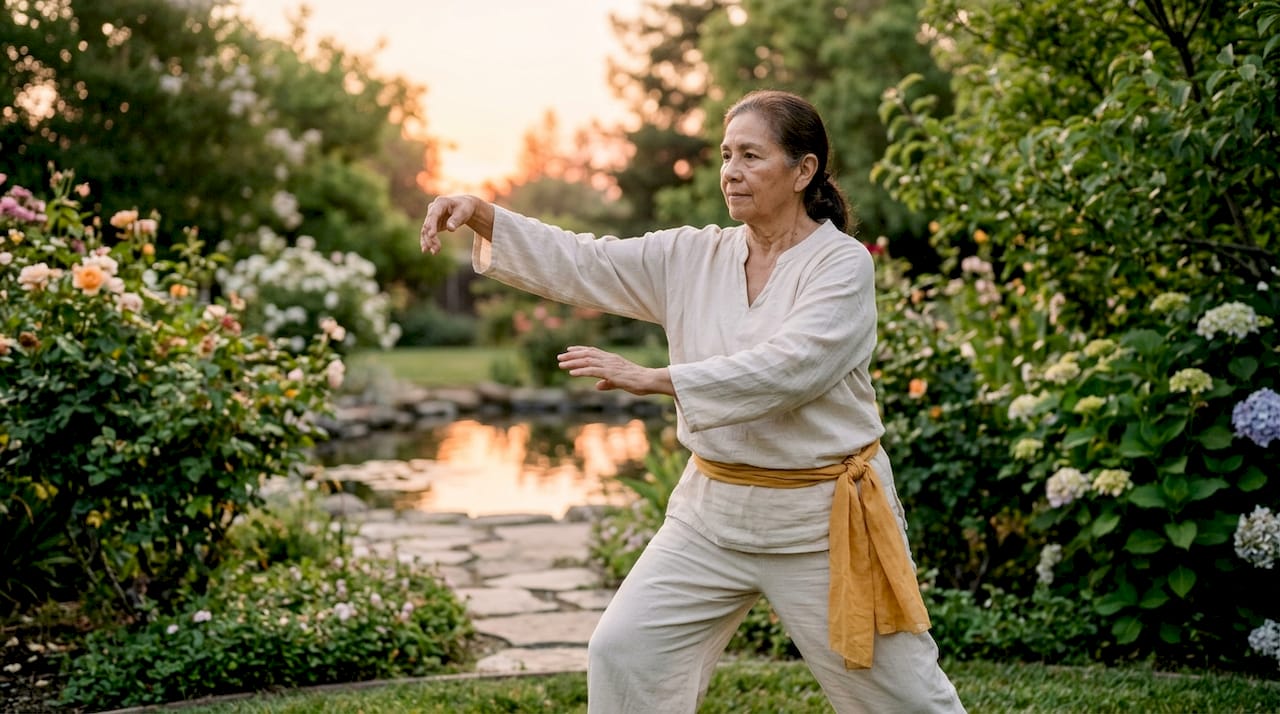
Balance training reduces falls in older adults at high risk by nearly a third. Tai chi is the gold standard here: slow, controlled, and effective at building proprioception. Modified yoga and simple drills like standing on one leg near a sturdy chair work well too. Flexibility exercises, held for 10–30 seconds after a warm-up, keep joints mobile and reduce the postural rounding that strains the spine.
Pro Tip: Stomp your feet four times on each foot, twice daily. It sounds simple, but this bone-loading drill can increase hip bone density over time with no equipment required.
Comprehensive programs that combine all four modalities produce the best outcomes. No single exercise type covers every dimension of bone health.
Which movements put your bones at risk?
The fracture risk in osteoporosis is highest at the spine, and most spinal fractures happen during forward bending. That single fact should shape how you move every day, not just during workouts.
Avoid these movements:
- Toe touches, sit-ups, and crunches (forward spinal flexion under load)
- Windmill toe touches and trunk rotation exercises (excessive twisting)
- Jumping, running, or jogging if your bone density is severely low (high-impact fracture risk)
- Bending at the waist to lift, vacuum, or do laundry
Safer alternatives:
- Replace forward bends with the hip hinge: push your hips back, keep your spine neutral, and lower by bending at the hips and knees, not the waist.
- Replace sit-ups with spinal extensor strengthening: lying prone and gently lifting your chest builds the back muscles that protect posture without loading the spine in flexion.
- If you love yoga or Pilates, work with an instructor who knows your diagnosis and can modify flexion-based poses.
The rule of thumb: if an exercise rounds your back or requires you to reach toward the floor, find a substitute.
How to choose a bone-strengthening program in Rancho Cordova
Start with a bone density scan (DEXA scan) before committing to any program. That result tells a provider whether you have osteopenia or full osteoporosis, and it determines which exercise intensities are appropriate. Professional assessment by a physical therapist or certified specialist before high-impact activities is the standard recommendation.
When evaluating a local provider, look for personalized programming, staff who understand osteoporosis-specific movement restrictions, and a clear progression plan. Group fitness classes can work well if the instructor is trained to modify for bone health. Specialized technology, like osteogenic loading devices, can deliver bone stimulus in a fraction of the time a conventional gym session requires.
Seven Rancho Cordova area providers offer relevant programs, ranging from general gyms to a center built specifically around bone density improvement.
Comparing top Rancho Cordova providers for bone health
Seven local options serve the Rancho Cordova area, each with a different approach to strength, bone health, and fitness.
| Provider | Programs Offered | Specialized Equipment or Therapies | Focus Areas | Best For | Rating |
|---|---|---|---|---|---|
| In-Shape Fitness | General strength, cardio, group classes | Standard gym equipment | General fitness, strength, cardio | Comprehensive gym access | 4.3★ (416) |
| Fit Body Boot Camp | Boot camp group classes, weight and cardio | Group training setup | Strength, cardio conditioning | Structured group workouts | 4.9★ (85) |
| Mōventous | Strength, mobility, integrative movement | Movement-focused training tools | Strength, mobility, functional fitness | Integrative strength and mobility | 5★ (50) |
| Sculpt Your Body | Body sculpting, spa wellness | Spa-style equipment | Body composition, wellness | Spa-style wellness | 5★ (41) |
| OsteoStrong Rancho Cordova East | Spectrum Circuit Training, osteogenic loading | Patented bone-loading devices, red light therapy, PEMF mats, vibration plates, hydromassage | Bone density, strength, balance, fracture prevention | Osteoporosis and bone density focus | 5★ (25) |
| AnywhereFit Rancho | General fitness, strength classes | Standard fitness equipment | General strength and fitness | Accessible general fitness | 4.9★ (21) |
| Empire Boxing & Fitness | Boxing, fitness classes | Boxing equipment | Cardio, strength, coordination | Boxing-based fitness | — |
In-Shape Fitness is the area’s largest general gym, suited to people who want a wide range of equipment and class options and are comfortable designing their own bone-health routine.
Fit Body Boot Camp delivers structured group programming with a strong cardio and strength emphasis. The format works well for people who stay consistent in a coached group environment.
Mōventous stands out for its integrative approach to movement and strength, making it a good fit for people who want functional training that addresses mobility alongside muscle building.
Sculpt Your Body focuses on spa-style body sculpting services. It suits people seeking wellness treatments with some fitness elements, though it is not a dedicated bone health program.
OsteoStrong Rancho Cordova East is the only provider on this list built specifically around bone density improvement. Its Spectrum Circuit uses patented devices to safely mimic high-impact skeletal forces in 10-minute weekly sessions, making it the clearest fit for anyone whose primary goal is fracture prevention or measurable bone density gains. The center also offers red light therapy, PEMF mats, vibration plates, and hydromassage, which complement the loading sessions.
AnywhereFit Rancho offers accessible general fitness and strength classes for people who want a straightforward training environment.
Empire Boxing & Fitness provides boxing-based cardio and conditioning. Public program details are limited, so contact the center directly for specifics.
Diet and vitamins that support bone health
Exercise does the mechanical work of stimulating bone growth, but your body needs the raw materials to actually build new bone tissue. Three nutrients matter most.
Calcium is the primary structural mineral in bone. Dairy products, fortified plant milks, leafy greens like kale, and canned salmon with bones are reliable sources. Most adults need around 1,000–1,200 mg daily, and food sources are preferable to supplements when possible.
Vitamin D is what allows your body to absorb calcium. Without adequate vitamin D, even a high-calcium diet falls short. Fatty fish, egg yolks, and fortified foods contribute, but many adults in northern latitudes or those who spend little time outdoors need a supplement. Your doctor can check your level with a simple blood test.
Vitamin K2 directs calcium into bone rather than into arteries. It is less discussed than calcium and vitamin D but plays a meaningful supporting role. Fermented foods like natto (a Japanese staple and one reason Japan has studied it extensively for bone health) and some aged cheeses contain K2. Supplements are widely available when dietary sources are insufficient.
Warning signs to watch for during exercise
Stop exercising and seek medical attention if you experience sudden, sharp back or joint pain during a workout. Bone pain that appears mid-session and differs from normal muscle fatigue can signal a stress fracture or vertebral compression fracture.
Other signs that require stopping immediately: dizziness, shortness of breath, chest pain, or any pain that radiates down a limb. Never push through pain that feels different from ordinary muscle effort. If a movement causes or increases pain, that movement is off the table until you have medical clearance.
How long before you see real results?
Bone density changes slowly, and measurable improvement on a DEXA scan typically requires many months of consistent training. Balance and strength gains tend to come faster, often within 8–12 weeks of regular training, and those improvements reduce fall risk well before bone density numbers shift.
The key word is consistent. Sporadic exercise does not accumulate the way regular sessions do. Regular weight-bearing sessions combined with resistance training several times per week is the evidence-based minimum to move the needle.
Osteostrong Rancho Cordova East: bone density in one session per week
If you want the most direct path to measurable bone density improvement in Rancho Cordova, Osteostrong Rancho Cordova East offers something no conventional gym does: a weekly 10-minute Spectrum Circuit session using patented devices that safely simulate the skeletal forces of high-impact activity, without the joint stress or fracture risk.
For people managing osteoporosis or osteopenia, that distinction matters practically. You get the osteogenic stimulus your bones need, paired with red light therapy, PEMF mats, vibration plates, and hydromassage to support recovery and overall wellness. One visit per week fits into almost any schedule, and the program is designed to be safe for people who cannot tolerate conventional high-impact exercise. Visit Osteostrong Rancho Cordova East to schedule your first session and discuss a personalized bone health plan.
Key Takeaways
Weight-bearing, resistance, balance, and flexibility exercises are the foundation of any effective bone-strengthening routine, while forward spinal flexion and forceful twisting are the movements most likely to cause vertebral fractures in people with osteoporosis.
| Point | Details |
|---|---|
| Exercise frequency target | Adults should aim for at least 150 minutes of moderate-intensity or 75 minutes of vigorous aerobic exercise per week, plus muscle-strengthening activities two times per week. |
| Resistance training intensity | Target 70%–85% of your one-rep max for 3–8 reps to effectively stimulate bone growth. |
| Movements to avoid | Skip forward spinal flexion (sit-ups, toe touches) and forceful twisting to protect vertebral integrity. |
| Timeline for results | Balance and strength improve within 8–12 weeks; measurable bone density gains typically appear within 6–12 months. |
| Osteostrong Rancho Cordova East | Offers weekly 10-minute Spectrum Circuit sessions with patented osteogenic loading devices, built specifically for bone density improvement. |