
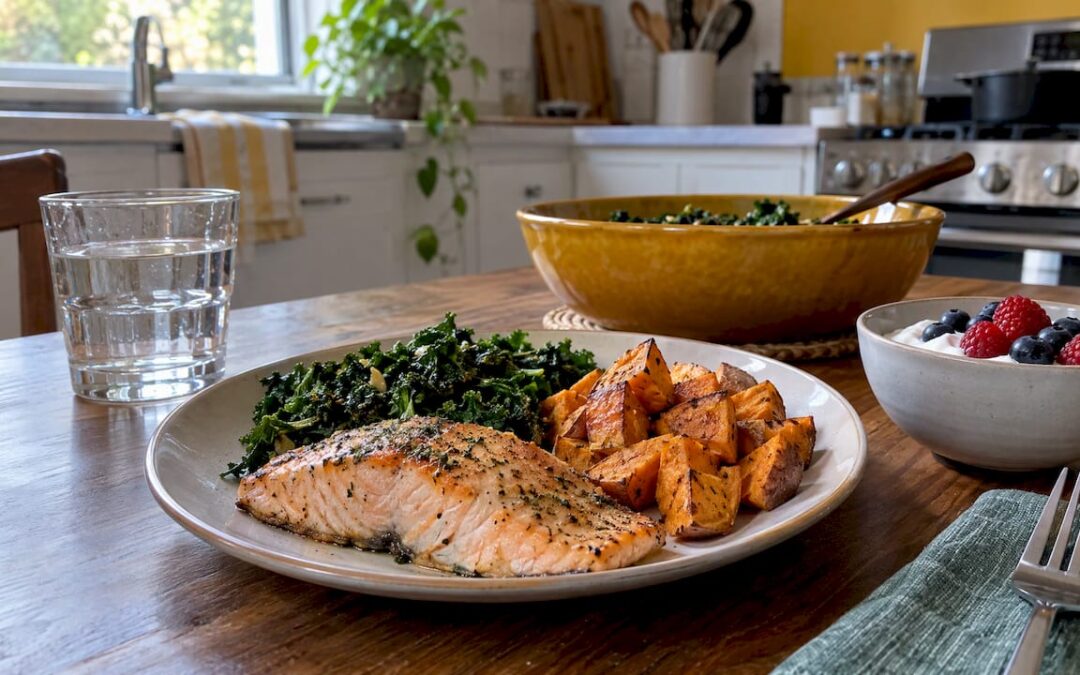
An osteoporosis meal plan is built around a few daily numbers: about 1,000 to 1,200 mg of calcium, enough vitamin D, and steady protein, spread across breakfast, lunch, dinner and snacks. Below you will find those targets, the foods that deliver them, three sample days with the calcium math shown, a shopping list and the items worth limiting. Food is one part of bone care. It works best next to your clinician’s treatment plan and regular strength-building activity.
TL;DR
- Aim for 1,000 mg of calcium a day, or 1,200 mg if you are a woman 51 or older or a man 71 or older, counting food and supplements together.
- Build each meal around a calcium source (dairy or fortified alternatives, tofu, sardines or salmon with bones, low-oxalate greens) and a protein food.
- Vitamin D, vitamin K, magnesium and vitamin C all matter, so add fatty fish, leafy greens, nuts, seeds and fruit.
- Go easy on sodium, sugary drinks, caffeine and alcohol.
- A meal plan supports your treatment. It does not replace medication your clinician has prescribed.
Table of Contents
- Your daily targets at a glance
- What belongs on the plate
- How much calcium is in common foods
- Three sample days
- A bone-friendly shopping list
- What to limit
- Perspective
- Where diet fits with treatment
- Add a weekly bone-loading session
- FAQ
- Sources
Your daily targets at a glance
Start with numbers, because they make every grocery decision easier. Guidance varies slightly between organizations, so the table shows what each US source says and you can confirm your own number with your clinician.
| Nutrient | Daily target | Source |
|---|---|---|
| Calcium | 1,000 mg for women 50 and younger and men 70 and younger; 1,200 mg for women 51+ and men 71+ (food plus supplements) | Bone Health and Osteoporosis Foundation |
| Vitamin D | 600 IU if you are 70 or younger, 800 IU if you are 71 or older | Johns Hopkins Medicine |
| Protein | About 0.4 grams per pound of body weight, so roughly 60 grams for a 140-lb woman | Johns Hopkins Medicine |
| Sodium | About 2,300 mg, or 1,500 mg with high blood pressure or prehypertension | National Institute on Aging |
Some professional bodies set the bar a little differently. The International Osteoporosis Foundation, for example, advises at least 1,000 mg of calcium and 800 IU of vitamin D for people with osteoporosis or increased fracture risk, and at least 1 g of protein per kilogram of body weight, or 1.2 g/kg in older adults. If your clinician has given you a different number, follow theirs. Vitamin D dosing in particular is individual, and our guide to vitamin D dosage for osteoporosis explains what the evidence supports.
What belongs on the plate
The National Institute on Aging suggests that adults 50 and older choose, each day, 2 to 3 cups of vegetables, 1.5 to 2 cups of fruit, 5 to 8 ounces of grains, 5 to 6.5 ounces of protein foods, 3 cups of fat-free or low-fat milk, and 5 to 7 teaspoons of oils. That is a useful frame for any osteoporosis meal plan. Within it, tilt your choices toward bone-supportive foods.
Calcium carriers
Cleveland Clinic recommends dairy such as cheese, cottage cheese, milk and yogurt, plus leafy vegetables, fatty fish, nuts and seeds, and soy products. The Bone Health and Osteoporosis Foundation also lists canned sardines and salmon with bones, and fortified juices, cereals, breads and soy or rice milk.
One detail changes which greens you pick. Cleveland Clinic notes that oxalate-rich foods like spinach and beets limit calcium absorption, so mustard greens, kale or okra are the better calcium choices. Spinach is still a fine vegetable. Just do not count on it as your calcium anchor.
The supporting cast
Calcium does not work alone. Cleveland Clinic lists vitamin C for collagen, vitamin D for calcium absorption, vitamins K1 and K2 for activating osteocalcin, magnesium, and zinc as key partners. Baylor College of Medicine points to fatty fish for vitamin D, and prunes, kale and leafy greens for vitamin K. It also names figs, sweet potato, tofu and dairy for magnesium, and oranges, berries, kiwi and peppers for vitamin C.
The practical advice from Baylor’s senior dietitian is to spread bone-supportive foods across breakfast, lunch and dinner rather than loading calcium into a single meal.
Food first, supplements second
The International Osteoporosis Foundation says dietary calcium is preferred because foods like dairy also bring protein and other nutrients, and that supplements should be considered mainly when diet falls short in people at high risk. If you do take one, it advises taking calcium with a meal for better tolerance and absorption. Ask your clinician before adding any supplement.
How much calcium is in common foods
Portion size is where plans succeed or fail. These per-serving amounts, from a registered-dietitian-reviewed nutrition guide, help you add up a day.
| Food | Serving | Calcium |
|---|---|---|
| Plain low-fat yogurt | 8 oz | 415 mg |
| Calcium-fortified orange juice | 1 cup | 349 mg |
| Part-skim mozzarella | 1.5 oz | 333 mg |
| Canned sardines with bones | 3 oz | 325 mg |
| Non-fat milk or calcium-fortified soy milk | 1 cup | 299 mg |
| Firm tofu set with calcium sulfate | 1/2 cup | 253 mg |
| Cooked soybeans | 1/2 cup | 131 mg |
| Boiled, drained spinach | 1/2 cup | 123 mg |
| Chia seeds | 1 tablespoon | 76 mg |
Fortified products vary by brand, so read the label. The National Institute on Aging also reminds readers that serving sizes are standard comparison amounts, not recommendations, and that portions in real life drift. Counting out a serving and putting the bag away is a simple way to keep them honest.
For a broader list with serving guidance, see our page on foods for bone density.

Three sample days
These are templates, not prescriptions. Calcium totals use the serving amounts in the table above and count only the items named, so vegetables, nuts and fortified foods you add on top will raise them. Swap freely for allergies, lactose intolerance or taste.
Day 1: dairy-forward
- Breakfast: 8 oz plain low-fat yogurt with berries, a tablespoon of chia seeds and a handful of almonds.
- Lunch: Mediterranean quinoa bowl with chickpeas, olive oil, cucumber and a side of steamed broccoli.
- Snack: 1.5 oz part-skim mozzarella with an orange.
- Dinner: Roasted salmon with mashed sweet potato and sauteed kale.
Calcium from the named dairy and seed items: 415 + 76 + 333 = 824 mg, before the broccoli, kale and almonds. Add a 3 oz serving of canned sardines on whole-grain toast as a second snack (325 mg) and you pass 1,100 mg.
This day follows the pattern of a 5-day osteoporosis plan from Healthline, which pairs salmon, sweet potatoes and broccoli at dinner and Greek yogurt or cottage cheese snacks with seeds and almond butter.
Day 2: dairy-free or plant-based
- Breakfast: Oatmeal made with 1 cup calcium-fortified soy milk (299 mg), topped with chia seeds and strawberries.
- Lunch: Stir-fry with 1/2 cup calcium-set tofu (253 mg), broccoli, bok choy and brown rice.
- Snack: 1 cup calcium-fortified orange juice (349 mg) with a few walnuts.
- Dinner: Tempeh and roasted sweet potato with sauteed mustard greens and olive oil.
Named items alone: 299 + 253 + 349 = 901 mg. The mustard greens, broccoli and tempeh push the day higher. Check that your tofu is set with calcium sulfate, since not all tofu is.
Day 3: simple and budget-friendly
- Breakfast: Whole-wheat bagel with peanut butter, a banana and 1 cup of milk (299 mg).
- Lunch: Tuna salad sandwich with celery, lettuce and carrots, plus an apple.
- Snack: 8 oz yogurt (415 mg) with a few prunes.
- Dinner: Spaghetti and meatballs with parmesan, and a garden salad with avocado, garbanzo beans and cheddar.
The breakfast and lunch pattern echoes the National Institute on Aging’s sample 2,000-calorie day for healthy aging. Milk and yogurt alone give 714 mg, with cheese and the rest adding more.
Hitting your protein number
If you weigh 140 pounds, the Johns Hopkins formula puts you near 60 grams of protein a day. A cup of yogurt, a palm-sized portion of fish or tofu at lunch and dinner, and eggs or nuts as a snack usually get most people there. If you are older or recovering from a fracture, ask your clinician or a registered dietitian whether your target should be higher.
A bone-friendly shopping list
- Dairy and alternatives: plain low-fat yogurt, cottage cheese, part-skim mozzarella, milk, calcium-fortified soy milk.
- Fish: canned sardines and salmon with bones, fresh salmon, mackerel, trout.
- Soy: calcium-set tofu, edamame, tempeh, natto.
- Vegetables: kale, collard greens, mustard greens, okra, broccoli, bok choy, sweet potatoes, peppers.
- Fruit: oranges, berries, kiwi, papaya, pineapple, prunes, figs.
- Nuts and seeds: almonds, chia, sesame, sunflower, walnuts.
- Pantry: whole grains, olive oil, calcium-fortified cereal or juice, chickpeas.
Every category above comes from the food lists published by Cleveland Clinic and Baylor College of Medicine.
What to limit
Cleveland Clinic advises cutting back on high-sodium foods, sugary foods and drinks, excessive caffeine and alcohol. Excess sodium and caffeine can increase calcium loss, and heavy drinking can interfere with calcium absorption and hormone balance.
Three practical rules:
- Caffeine: Baylor College of Medicine suggests about three cups of coffee a day as a moderate ceiling.
- Alcohol: The American Association of Clinical Endocrinologists recommends no more than 2 units a day and avoiding or stopping smoking.
- Sodium: Read labels on soups, deli meats, frozen meals and sauces, where most sodium hides.
For a longer rundown, see our practical guide to foods to avoid with osteoporosis. Johns Hopkins also lists low calcium, vitamin D, potassium or protein intake, inactivity, smoking and heavy alcohol use among osteoporosis risk factors, and our page on osteoporosis risk factors walks through what to watch.
Perspective
We see the same pattern with the people who come to us. They have worked hard on their plates, they are taking what their doctor prescribed, and they still want to do something active for their bones.
That is where we come in. Our approach pairs good nutrition with one brief, supervised osteogenic loading session a week. It is a non-pharmaceutical protocol, designed to stimulate bone growth, and we track measurable results over time.
Food gives your bones the raw materials. Loading gives them a reason to use those materials. We think the strongest plan has both, and we build the weekly session so it fits around real life.
Aaron
Where diet fits with treatment
This is the part to take to your appointment. The North American Menopause Society says osteoporosis management combines dietary and lifestyle changes with pharmacologic therapy for people at significant risk, and that decisions should be individualized through shared decision-making. For postmenopausal women at high fracture risk, the same statement says nutrition and activity alone cannot correct bone architecture and that medication is required.
So use your meal plan as the foundation, and keep taking prescribed medication unless your prescriber changes it. The International Osteoporosis Foundation notes that for people on osteoporosis therapy, combined calcium and vitamin D supplements are generally recommended, since most trial evidence rests on giving them together. Ask your clinician which dose suits you.
Talk to your doctor or a registered dietitian before changing your diet if you have kidney disease, a history of kidney stones, digestive conditions that affect absorption, food allergies, or if you take long-term steroids or anti-seizure drugs. Those situations change the advice.
Pair food with movement
Diet is half of what you control. The same endocrinology guidance recommends an active lifestyle including weight-bearing, balance and resistance exercises. Our osteoporosis exercise guidelines cover safe moves, and our guide to fall prevention in osteoporosis covers the other side of fracture risk.
Add a weekly bone-loading session
If you live near Rancho Cordova, El Dorado Hills or Granite Bay, you can add a supervised session to your nutrition routine. At OsteoStrong we offer osteogenic loading, one brief session a week, designed to stimulate bone growth without medication. We also offer red light therapy, PEMF mats, BioCharger sessions, vibration plates, compression therapy and hydromassage lounges.
Want to see how a session works? Visit our osteogenic loading page to find a center and get started. You can also read how weekly osteogenic loading for osteoporosis is approached with safety in mind.
FAQ
What is the best breakfast for osteoporosis?
Build it around calcium and protein: plain yogurt with berries and chia seeds, or oatmeal made with fortified soy milk. A cup of yogurt delivers about 415 mg of calcium per 8 oz, which is a third or more of a day’s target. Add fruit for vitamin C.
How much calcium do I need on an osteoporosis diet?
Most US guidance says 1,000 mg a day for women 50 and younger and men 70 and younger, and 1,200 mg for women 51 and older and men 71 and older. That total includes supplements. Your clinician may adjust it for your situation.
Can I eat spinach for calcium?
Spinach is healthy, but its oxalates limit how much calcium you absorb. For calcium, Cleveland Clinic points to mustard greens, kale and okra instead. Keep spinach in your plan for its other nutrients.
Can diet alone treat osteoporosis?
Diet is a core part of care, but it works alongside treatment. The North American Menopause Society says women at high fracture risk need pharmacologic therapy in addition to nutrition and activity. Your clinician can tell you what fits your bone density results.
Is dairy required on a meal plan for osteoporosis?
No. Fortified soy milk, calcium-set tofu, canned fish with bones, kale, mustard greens, okra, and fortified juices and cereals all contribute. Check labels for calcium content and aim for your daily total across the whole day.
Sources
- Bone Health and Osteoporosis Foundation: calcium and vitamin D requirements
- Bone Health and Osteoporosis Foundation: osteoporosis diet and nutrition
- Johns Hopkins Medicine: what you can do now to help prevent osteoporosis
- Johns Hopkins Medicine: osteoporosis, what you need to know as you age
- National Institute on Aging: Healthy Eating After 50
- National Institute on Aging: What’s On Your Plate, Smart Food Choices for Healthy Aging
- International Osteoporosis Foundation: nutrition
- Cleveland Clinic: osteoporosis diet, foods to eat and avoid
- Baylor College of Medicine: the best foods for bone health
- North American Menopause Society: 2021 osteoporosis position statement
- American Association of Clinical Endocrinologists: 2016 executive summary
- Nourish: 7-day menopause diet plan
- Healthline: 5-day osteoporosis diet plan