
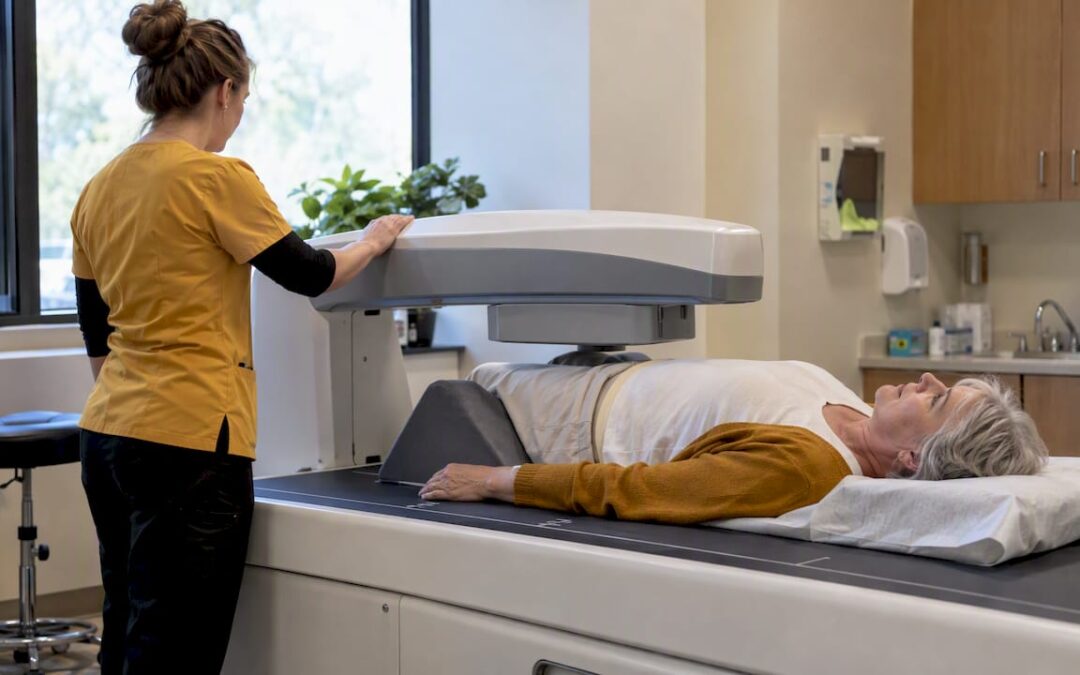
Short-term trials suggest nightly melatonin can modestly raise bone density, especially at the femoral neck, with the clearest signal at 3 mg in postmenopausal women with osteopenia. It is not an FDA-approved osteoporosis treatment, and the best results come from small studies or combination products. A 2025 observational analysis of long-term prescription use also raises heart-related safety questions.
TL;DR:
- In a trial lasting one year, 3 mg nightly raised femoral neck bone density 2.3%, compared with 0.5% at 1 mg, among postmenopausal women with osteopenia.
- MOTS reported 4.3% higher spine and 2.2% higher femoral neck density, but its combination formula prevents isolating melatonin’s effect.
- Trials measured changes in bone density, not fractures, so they have not shown that melatonin prevents hip or spine fractures.
- Prescription melatonin use lasting 12 months was associated with hazard ratios of 1.89 for heart failure, 3.44 for hospitalization, and 2.09 for death, but causation is unproven.
- If a clinician approves a trial, stay within the studied 1–3 mg nightly range and review heart conditions, sedatives, and other medications first.
Table of Contents
- What do clinical trials say about melatonin and bone density?
- How could melatonin influence bone remodeling?
- What doses and formulations have been studied?
- Is melatonin safe for bones, and what about long-term use?
- How should you fit melatonin into a bone-health plan?
- Where is the evidence still weak?
- Our perspective on melatonin and bone health
- Can supervised loading complement your supplement strategy?
- FAQ
- Sources
What do clinical trials say about melatonin and bone density?
Human data on melatonin and bone density come mainly from two randomized trials, backed by laboratory work. They point in the same direction, but neither settles the question of whether melatonin alone protects bones.
The cleanest test is the 2015 double-blind randomized trial in postmenopausal women with osteopenia, with a mean participant age of 63. Women took melatonin nightly for one year at either 1 mg or 3 mg, and a third group took placebo. Bone density at the femoral neck, the narrow section of the thigh bone just below the hip joint, rose in a dose-dependent pattern.
- 3 mg nightly: femoral neck bone mineral density (BMD) increased by 2.3%.
- 1 mg nightly: femoral neck BMD increased by 0.5%.
- Placebo: no significant change.
The second study is the Melatonin-micronutrients Osteopenia Treatment Study, known as MOTS. It tested a combination product, not melatonin alone. The formula paired melatonin with strontium citrate, vitamin D3 and vitamin K2. Over one year, the combination raised lumbar spine BMD by 4.3% and left femoral neck BMD by 2.2% compared with placebo. Bone-formation markers improved, and FRAX-estimated fracture risk trended in a favorable direction.
Key figure: In the 2015 trial, 3 mg of melatonin nightly increased femoral neck BMD by 2.3% over one year, against 0.5% at 1 mg. The gap between doses suggests a real dose response, though the study was small.
Notice the catch in the MOTS numbers. Strontium, vitamin D and vitamin K are all studied for bone on their own, so the larger spine gain cannot be credited to melatonin. A fair reading is that melatonin is a plausible contributor within a multi-nutrient package, not a proven stand-alone therapy.
Systematic reviews of melatonin and bone reach a similar verdict. They find a signal for femoral neck BMD, then add two warnings: results vary widely from study to study, and many trials combine melatonin with other agents. Both problems blur melatonin’s independent effect.

How do researchers measure bone changes?
Most trials rely on dual-energy X-ray absorptiometry (DXA), the standard scan for BMD at the spine and hip. Some use quantitative computed tomography (QCT), which separates bone types in three dimensions. Blood and urine markers add a faster read on whether bone-building or bone-breakdown activity is shifting, since BMD moves slowly. The MOTS team also tracked urinary melatonin-sulfate, and higher levels correlated with lumbar spine BMD.

Why should you treat the numbers cautiously?
Several limits apply to every study above:
- Sample sizes are small, so a few people can shift an average.
- Follow-up stops at one year, far short of the decades over which osteoporosis develops.
- Combination formulas obscure what melatonin does by itself.
- BMD is a stand-in for strength. None of these trials measured actual fractures.
For context, we describe in our guide to what trials and clinics report for osteogenic loading that supervised weekly loading is discussed in a similar 2–3% range, which shows how small single-year changes typically are in this field.
How could melatonin influence bone remodeling?
Your skeleton is never finished. Specialized cells constantly remove old bone and lay down new bone, and melatonin appears to act on both sides of that process. Reviews of the molecular work, including a recent review of melatonin as a potential osteoporosis therapy, describe several overlapping routes.
- Osteoblast support: melatonin appears to push precursor cells toward becoming bone-forming osteoblasts and to raise their activity. Pathway names that recur in the literature include Runx2, a master switch for osteoblast development, and MAPK/ERK signaling.
- Osteoclast restraint: it appears to reduce the formation of bone-resorbing osteoclasts by shifting the balance between RANKL, a signal that promotes osteoclast development, and OPG, a decoy that blocks it.
- Antioxidant and anti-inflammatory action: oxidative stress and chronic inflammation accelerate bone loss, and melatonin has antioxidant effects, with Nrf2 signaling often mentioned as part of the story.
- Circadian timing: melatonin has been described as a “skeletal clock” that helps synchronize remodeling rhythms across the day and night.
The MOTS study backed some of this in the lab. In osteoblast-osteoclast co-cultures, the combination increased osteoblast formation and decreased osteoclast formation. A separate review on postmenopausal osteoporosis notes that melatonin levels relate to bone mass, that supplementation improved bone mass in animal models, and that experimental work shows positive effects on osteoblasts.
What do animal and cell studies add, and where do they fall short?
Animal studies often show dose-dependent increases in bone density, which fits the dose pattern seen in the 2015 human trial. But these experiments frequently use doses far above what anyone takes from a drugstore bottle, and a rat’s skeleton does not respond like a 63-year-old woman’s. Treat mechanism studies as a reason the human signal is plausible, not as proof of benefit.
Why do calcium and vitamin D still matter?
Bone remodeling needs raw material. Osteoblasts can be signaled to build, but they cannot build without calcium to mineralize new bone, and vitamin D governs how well you absorb calcium. Both MOTS and the 2015 trial gave participants a foundation of these nutrients. Melatonin should be thought of as a possible nudge on a system that already has what it needs, not a substitute for the basics.
What doses and formulations have been studied?
The human evidence is narrow, and that is useful: it tells you exactly which doses have a track record.
- 1 mg nightly: produced a small femoral neck gain of 0.5% over one year in the 2015 trial.
- 3 mg nightly: produced a gain of 2.3% at the same site, the strongest melatonin-only result we have.
- Combination product: MOTS placed melatonin inside a multi-nutrient formula with strontium citrate, vitamin D3 and vitamin K2, so its results cannot be assigned to melatonin alone.
Nothing in this literature supports going higher. Animal studies use pharmacologic doses, but those figures do not translate into human recommendations. Practitioners also note that melatonin follows a non-linear dose-response pattern: extra milligrams can mean more daytime drowsiness without any added bone benefit, which matters for fall prevention.
Products on store shelves differ in ways the trials did not explore. Immediate-release tablets create a quick peak that fades within hours, while sustained-release versions are built to keep levels up through the night. The trials used nightly dosing, but how formulation changes bone outcomes has not been tested. Individual metabolism varies widely too, so the same tablet can produce very different blood levels in two people.
Pro Tip: If you and your clinician decide to try melatonin, bring the exact product label to your appointment. Strength, release type and any added ingredients all change what you are actually taking, and “3 mg” on the front can sit beside other active ingredients on the back.
Is melatonin safe for bones, and what about long-term use?
For short periods, the safety picture in studies has been reassuring. The randomized trial on balance and muscle function found that 1–3 mg nightly for 12 months did not worsen postural stability or muscle strength in postmenopausal women, and sleep quality trended better in those who started with poor sleep. That matters because falls, not bone density alone, drive many fractures. Still, these trials were small, so rare problems could easily be missed.
The longer-term signal is less comforting. A large 2025 observational analysis reported that people using prescription melatonin for 12 months or more had higher hazards of several heart outcomes.
Observational signal: Long-term prescription melatonin use was associated with a hazard ratio of 1.89 for incident heart failure, 3.44 for heart failure hospitalization, and 2.09 for all-cause mortality. These are associations, and people who receive long-term prescriptions may differ from others in ways the analysis cannot fully remove.
Observational data cannot prove melatonin caused those outcomes. People prescribed melatonin for months often have chronic insomnia, which is itself linked to poor health, and that confounding is hard to untangle. But the findings are a reason for clinical oversight, not a reason to panic.
Which cautions apply to older adults?
- Daytime drowsiness: grogginess raises fall risk in people who already have fragile bones.
- CNS depressant interactions: sedatives, sleep medicines, opioids and alcohol can stack with melatonin’s calming effect.
- Polypharmacy: older adults often take many prescriptions, and each added supplement multiplies the chances of an interaction.
- Uneven product quality: supplement strengths vary by brand, so labels may not match contents.
Review any nightly melatonin plan with a clinician who knows your full medication list before you begin, particularly if you have heart disease or take blood thinners or sedatives.
How should you fit melatonin into a bone-health plan?
Start with what has the strongest backing. Bone-health guidance, as summarized in recent clinical coverage, emphasizes calcium at 1,200 mg per day for women 51 and older and men 71 and older, plus vitamin D at 800–1,000 IU per day for adults 50 and older. The same coverage treats melatonin as research-stage and not an FDA-approved osteoporosis treatment. Food matters here as well: dietary patterns such as the Mediterranean diet are discussed in the context of aging and antioxidant support, which overlaps with the nutrition side of bone care.
A sensible sequence looks like this:
- Confirm your baseline. Ask for your most recent DXA result and your fracture risk estimate so you know whether you have osteopenia or osteoporosis.
- Secure the foundations. Meet calcium and vitamin D targets through food first, then supplements if you fall short, and keep up weight-bearing and resistance activity.
- Talk to your clinician before adding melatonin. Bring your medication list, your sleep history and any heart conditions.
- If you proceed, stay in the studied range. The trials used 1–3 mg nightly, and there is no evidence that more helps.
- Monitor. Track sleep, daytime alertness, balance and any new symptoms, and plan a recheck of BMD and your overall regimen instead of taking it indefinitely by default.
- Know when supplements are not enough. If your fracture risk is high, proven prescription osteoporosis therapy remains the priority.
Clinical experts quoted in that coverage stress that osteoporosis is chronic and requires lifelong management, and that supplements should not replace proven pharmacologic therapy in patients at high fracture risk. For low-risk osteopenia, melatonin could reasonably be one piece of a multi-component approach, never the whole plan.
Pro Tip: Take your sleep seriously as a bone issue too. If poor sleep is the reason you are considering melatonin, fix the basics first: a consistent schedule, a dark and cool room, and less evening screen time. We cover a gentler option in our piece on dim red light and sleep.
Where is the evidence still weak?
The honest answer to “does melatonin improve bone health?” is “possibly, a little, and we need better studies.” The gaps are specific.
- No fracture trials. Nobody has shown that melatonin prevents hip or spine fractures, which is the outcome that matters most.
- Short follow-up. Trials run about a year, while osteoporosis plays out over decades.
- Small samples and combination products. Melatonin’s independent effect is still unclear because the strongest spine result came from a multi-ingredient formula.
- Unconfirmed safety signals. The long-term heart findings come from observational data that need replication and better control of confounders.
- Narrow populations. Most data come from postmenopausal women with osteopenia, with little evidence for men or other groups.
Priorities for future research are easy to name: multi-arm randomized trials comparing melatonin alone, melatonin in combination and placebo, longer follow-up, and enrollment of more diverse participants.
Our perspective on melatonin and bone health
When people ask us about melatonin, we tell them it is an interesting lead, not a plan. A 2.3% femoral neck gain from a small trial is encouraging, and we would rather see it tested properly than dismissed or oversold. What worries us is the pattern we see often: someone with thinning bones buys a sleep supplement, feels they have “done something,” and skips the harder work of loading the skeleton and fixing nutrition.
Bone responds to mechanical demand. That is why we built our approach around supervised osteogenic loading, done alongside nutrition and lifestyle measures. In that framework, melatonin could be an adjunct for selected people under clinician oversight, never the centerpiece. If you are weighing non-pharmacologic options, talk with your clinician, and consider an assessment so you know where your bones actually stand.
— Aaron
Can supervised loading complement your supplement strategy?
Supplements work on the chemistry of bone. Our sessions work on the mechanics. At our centers, you come in once a week for supervised osteogenic loading, a brief session designed to stimulate bone growth. We offer it alongside foundational bone care, so it fits next to whatever your doctor recommends.

If you are considering melatonin, loading does not compete with it. Here is what a weekly routine with us includes:
- One short, supervised osteogenic loading session each week.
- Optional recovery and wellness therapies such as red light therapy, PEMF mats and compression therapy.
To see how it works and to book a consultation, visit our Osteogenic Loading page. Current prices are on our website.
FAQ
Does melatonin improve bone health?
It may modestly improve bone density in postmenopausal women with osteopenia, according to small trials. In the 2015 randomized trial, 3 mg nightly raised femoral neck density more than 1 mg or placebo. No trial has shown fewer fractures, so melatonin is not a proven osteoporosis treatment.
Is it safe for seniors to take melatonin every night?
Short-term use at low doses looked well tolerated in trials, including no decline in balance over a year. Long-term prescription use has been linked to heart-related outcomes in observational data, so older adults should review nightly use with a clinician, especially if they take sedatives or have heart disease.
Can melatonin replace osteoporosis medication?
No. Experts stress that osteoporosis needs lifelong management and that supplements should not replace proven drug therapy for people at high fracture risk. Melatonin is research-stage for bone health and, at most, a possible add-on discussed with your doctor.
What is the basic foundation for rebuilding bone density?
Adequate calcium and vitamin D come first. Guidance recommends 1,200 mg of calcium per day for women 51 and older and men 71 and older, plus 800–1,000 IU of vitamin D per day for adults 50 and older, alongside regular weight-bearing and resistance activity.
Sources
- Melatonin improves bone mineral density at the femoral neck in postmenopausal women with osteopenia: a randomized controlled trial
- Pubmed
- Medpagetoday
- Acc