
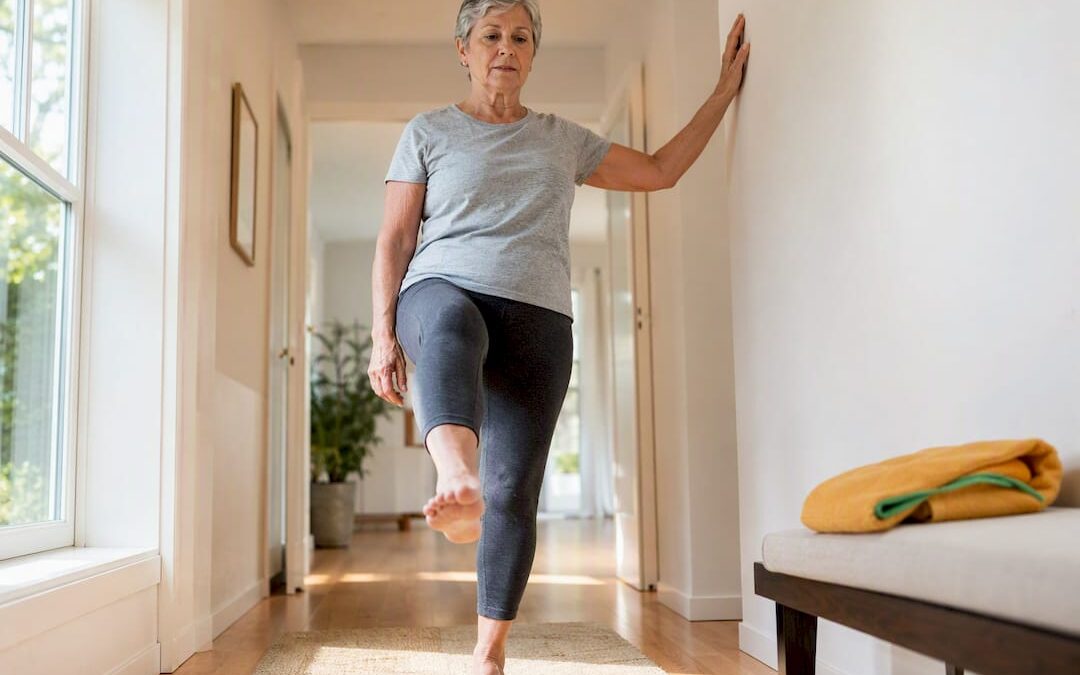
The three moves that actually lower your risk of a fall-related fracture are balance and strength exercise, a clinician-led medication and bone review, and specific home fixes. About 1 in 3 adults over 65 fall every year, and if your bone density is already low, the same fall tends to cause a worse injury. Start those three actions this month, then loop in your provider for screening and follow-up.
TL;DR:
- Regular medication review helps identify drugs that cause dizziness or low blood pressure, reducing fall risk in older adults.
- Combining balance and resistance exercises, especially supervised sessions totaling around 3 hours a week, significantly lowers fall-related fractures.
- Home safety modifications like grab bars, non-slip mats, and clutter removal are low-cost, high-impact steps to minimize walking hazards.
- Medical screening with a DXA scan and fracture risk calculation guides personalized treatment plans, including medication decisions.
- Maintaining ongoing routines of exercise, medication review, and home fixes prevents the cycle of fear and deconditioning that increases fall likelihood.
Table of Contents
- Your 7 to 30 Day Fall Prevention Osteoporosis Checklist
- Which Exercises Actually Reduce Falls With Osteoporosis?
- What Medical Screening Lowers Osteoporosis Fall Risk?
- How Do You Fall-Proof Your Home Room by Room?
- When Should You See a Fall Specialist?
- What Do Supervised Bone-Strengthening Clinic Programs Offer?
- Does Diet Matter Beyond Calcium and Vitamin D?
- Why Does Fear of Falling Sometimes Cause More Falls?
- How Do Health Conditions Like Parkinson’s Change Fall Prevention?
- Should You Use a Medical Alert System or Other Fall Tech?
- How Do You Make Fall Prevention a Daily Habit, Not a One-Time Fix?
- An Editorial Take on Realistic Priorities
- Sources
- FAQ
Your 7 to 30 Day Fall Prevention Osteoporosis Checklist
Fall prevention osteoporosis planning works best when you break it into small, dated tasks instead of one overwhelming resolution. Here’s a sequence you can actually finish in a month.
- Book a medication review this week. Bring a current med list to your clinician or pharmacist and ask specifically about drugs that cause dizziness or low blood pressure.
- Start a supervised balance or strength activity. Even two sessions a week of tai chi or a guided strength class counts as progress.
- Schedule an eye exam. Uncorrected vision and certain progressive lenses distort depth perception on stairs.
- Walk through your home and clear obvious trip hazards. Loose rugs, cords, and clutter near walkways are the easiest wins.
- Ask about a DXA scan if you haven’t had one recently. This is the standard test for bone mineral density.
- Replace unstable footwear. Skip loose slippers in favor of low-heeled, nonskid shoes.
- Write down any near-falls or falls from the last six months, including what you were doing and where. Bring that log to your next appointment.
The CDC’s falls prevention framework and the National Institute on Aging both point to this same combination: medication review, exercise, vision checks, and home safety, done together rather than one at a time.
Which Exercises Actually Reduce Falls With Osteoporosis?
Balance training does the heaviest lifting for fall prevention osteoporosis programs, but it works best paired with strength work, not alone. Tai chi and single-leg standing drills retrain the reflexes that catch you before a stumble becomes a fall. Resistance training with bands or progressively heavier loads build the muscle that supports your joints and spine during those catches. Weight-bearing activity like brisk walking or stair climbing adds a bone-loading benefit on top of the balance and strength gains.
The evidence points toward combined programs, not single-focus routines. Clinical research on osteoporosis patients shows that postural instability correlates directly with fall risk, and exercise interventions that improve balance and strength together reduce that risk more than either alone. Programs delivering roughly 3 hours a week of combined resistance, balance, aerobic, and impact work, especially when supervised, tend to show the strongest results and better adherence than short, occasional sessions.
Safety matters as much as the exercise selection itself:
- If you have a history of vertebral fracture, avoid deep forward spinal flexion (the kind of forward crunch or toe-touch move common in older exercise videos).
- Get clearance from a physical therapist or physician before starting a new program, especially if you’ve had a recent fracture.
- Progress slowly. Adding load or difficulty too fast is a common way people get discouraged or hurt.
- Favor supervised classes over solo YouTube routines for the first several weeks, until your form is solid.
Pro Tip: Ask your physical therapist to demonstrate a modified version of any move that involves bending forward. A small hip-hinge substitution can protect your spine without cutting you out of the exercise entirely.
For structured routines you can build on, Osteostrong’s Rancho Cordova East center offers guidance on pairing supervised sessions with the kind of balance and strength work described above.
What Medical Screening Lowers Osteoporosis Fall Risk?
A DXA scan measures bone mineral density, but the number alone doesn’t decide treatment. Your clinician combines it with a FRAX score, which estimates your 10-year fracture probability using age, prior fractures, family history, and other factors. Fracture risk, not the DXA number in isolation, is what should guide whether medication gets added to your plan.
If your risk is high enough, your clinician may discuss two broad categories of osteoporosis medication: antiresorptive drugs, which slow bone breakdown, and anabolic agents, which stimulate new bone formation. Each carries different benefits, timelines, and side-effect profiles, and the right choice depends on your fracture history, kidney function, and other conditions. This decision belongs with your prescriber, not a checklist.
1 in 3 adults over 65 fall each year, and genetic evidence links low bone density to higher fall risk itself, not just worse outcomes once a fall happens.
Medication review deserves equal attention alongside bone-specific treatment. Sedatives, certain blood pressure drugs, and combinations of multiple prescriptions (polypharmacy) raise fall risk independent of your bones. A pharmacist-led or clinician-led review, especially if you take five or more medications, often catches interactions your individual prescribers might miss.
Vitamin D and calcium remain part of the foundation, not the whole plan:
- Ask for a serum calcium and 25-hydroxyvitamin D lab check if you haven’t had one recently, especially before starting supplements.
- Calcium needs vary by age and sex, and your clinician can set a target based on diet plus supplementation.
- Correcting a vitamin D deficiency can improve muscle function, which has a downstream effect on balance.
How Do You Fall-Proof Your Home Room by Room?
Home modifications catch the falls that exercise and medication review don’t. Occupational therapy-led home safety changes reduce fall risk in people living independently, and most of the highest-value fixes cost very little.
- Bathroom: Install grab bars near the toilet and inside the shower, add a non-slip mat, and consider a shower seat if standing balance is shaky.
- Walkways and living areas: Clear clutter, tape down or remove loose rugs, and route cords away from foot traffic.
- Lighting: Add nightlights in hallways and bathrooms, and make sure light switches are reachable before you enter a dark room.
- Stairs: Secure handrails on both sides where possible, and mark step edges if lighting is dim.
- Footwear: Choose low-heeled shoes with nonskid soles indoors and out; replace shoes once the soles wear smooth.
Assistive devices need professional fitting, not guesswork. A cane or walker sized wrong, or borrowed from a relative, can throw off your gait and increase fall risk rather than reduce it. A physical therapist or occupational therapist measures your height, grip, and gait pattern, then trains you to use the device correctly.
Hip protectors come up often in osteoporosis fall discussions, but the evidence for people living independently is limited. They show more consistent benefit in nursing home and care-facility settings, so ask your clinician whether your specific situation warrants one rather than assuming they help everyone equally.
When Should You See a Fall Specialist?
Certain warning signs mean it’s time to move past self-management and get a professional assessment.
- Any fall that causes injury, even a minor one, deserves a call to your provider.
- Recurrent falls, meaning two or more in the past six to twelve months, signal it’s time for a full workup.
- New or worsening dizziness, especially when standing up, points to possible orthostatic hypotension.
- A noticeable change in your gait or walking speed often shows up before a fall does, not after.
- A fracture from minor trauma, like a stumble that shouldn’t have broken anything, is itself a red flag for undiagnosed low bone density.
A physical therapist focuses on gait and balance retraining plus a tailored exercise prescription. An occupational therapist evaluates your home environment and daily activities for safer alternatives. A fall-risk clinic combines both plus a medical review in one visit. Most start with a Timed Up-and-Go test, a simple timed walk-and-turn that flags mobility concerns in under a minute. Bring your medication list and fall log to make the visit count.
What Do Supervised Bone-Strengthening Clinic Programs Offer?
Supervised clinic programs sit alongside exercise and medical management as a third option some readers with osteoporosis explore. These typically involve a brief, weekly session of targeted mechanical loading designed to stimulate bone-building response, sometimes paired with adjunct therapies like vibration, compression, or light-based recovery tools.
Some health and wellness centers use a weekly osteogenic loading model as their core offering, sometimes along with tools like red light therapy and PEMF mats as complementary support. The evidence base for osteogenic loading specifically is still developing compared to decades of data behind resistance exercise and pharmacologic treatment, so it’s worth discussing with your physician and asking any clinic for whatever outcome data they can share before enrolling.
- Ask what “supervised loading” actually measures session to session.
- Request any published or internal data on bone density change over time.
- Confirm the program is positioned as a complement to, not a replacement for, your prescribed medication and PT-directed exercise.
- Check whether staff coordinate with your existing care team or work in isolation.
Does Diet Matter Beyond Calcium and Vitamin D?
Protein intake plays a bigger role in fall prevention than most osteoporosis guidance mentions. Muscle mass supports the reflexes and strength that catch a stumble before it becomes a fall, and inadequate protein accelerates the age-related muscle loss called sarcopenia. Older adults generally need more protein per pound of body weight than younger adults, spread across meals rather than loaded into one dinner, since the body uses protein for muscle repair more efficiently in smaller, regular doses.
Magnesium supports both bone mineralization and normal muscle and nerve function, meaning a deficiency can show up as muscle cramping or weakness that indirectly raises fall risk. Leafy greens, nuts, seeds, and whole grains are reliable sources, though your clinician should check whether a supplement makes sense given any kidney conditions or medications you take.
Vitamin K, particularly the K2 form, works alongside vitamin D to help direct calcium to bone rather than soft tissue. It shows up naturally in fermented foods and leafy vegetables, and while it hasn’t reached the same level of clinical consensus as calcium and vitamin D, it’s a reasonable piece of a broader nutrition strategy rather than a stand-alone fix.
The bigger point: no single nutrient replaces exercise or medication review. Think of nutrition as reinforcing the muscle and bone foundation those other interventions are already building. A meal pattern heavy in processed foods and light on protein undercuts even a strong exercise routine, while a nutrient-dense diet gives your muscles and bones more to work with during strength training.
Why Does Fear of Falling Sometimes Cause More Falls?
Fear of falling creates a paradox: the more anxious you feel about falling, the more you restrict movement, and the less movement you get, the weaker your balance and strength become. That decline then makes an actual fall more likely, which reinforces the fear. Clinicians sometimes call this the fear-avoidance cycle, and it hits people with osteoporosis particularly hard because a fracture history gives the fear real weight.
The instinct to move less after a fall or a diagnosis feels protective, but it usually backfires. Reduced activity leads to deconditioning, and deconditioning is itself a major fall risk factor. Breaking the cycle means gradually rebuilding confidence through supervised, incremental exercise rather than avoiding movement altogether.
A few strategies help specifically with the psychological side:
- Start smaller than feels necessary. A few minutes of supervised balance work builds confidence faster than an ambitious program you abandon after one hard day.
- Track small wins, like standing longer on one leg or walking farther without resting, to counter the mental narrative that you’re getting weaker.
- Talk to your clinician about the fear itself, not just the physical risk. Some people benefit from a short course of cognitive behavioral strategies aimed specifically at fall-related anxiety.
- Use a fall log to separate fact from fear. If you haven’t actually fallen in months, that data point matters more than the anxious feeling that you might.
Confidence rebuilds gradually, and supervised exercise settings help because a trained eye can catch and correct problems before they become falls, which does more for your fear than reassurance alone.
How Do Health Conditions Like Parkinson’s Change Fall Prevention?
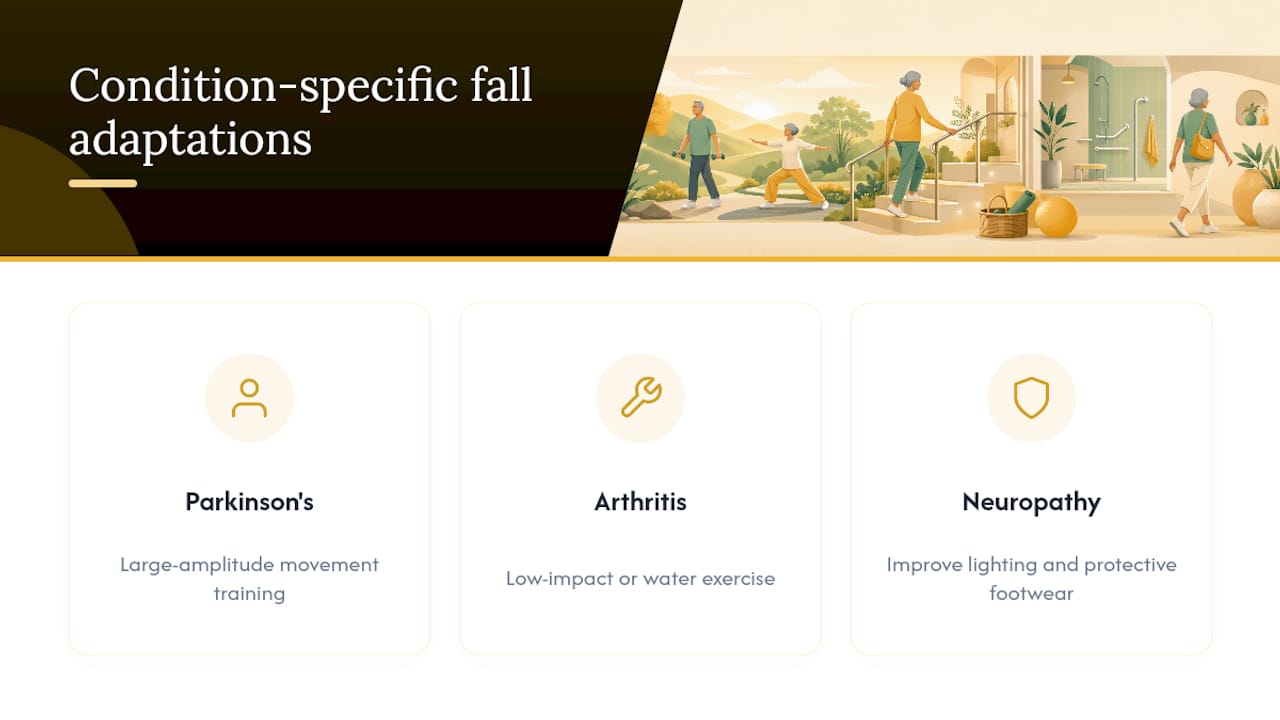
Osteoporosis rarely travels alone, and the conditions that often come with it change what fall prevention should look like. Parkinson’s disease affects gait initiation and balance reflexes in ways that generic balance exercises don’t fully address, so a physical therapist familiar with Parkinson’s-specific protocols, like larger-amplitude movement training, often gets better results than a standard class.
Arthritis complicates the exercise recommendations at the center of most fall prevention osteoporosis guidance. Joint pain can discourage the very strength and balance work that lowers fall risk, creating a similar avoidance cycle to fear of falling. Low-impact modifications, water-based exercise, or shorter, more frequent sessions often let people with arthritis stay consistent without flaring painful joints.
Peripheral neuropathy, common with diabetes, reduces sensation in the feet, which means the body gets less feedback about uneven ground or shifting weight. People with neuropathy benefit from extra attention to lighting and footwear, since they can’t rely on feeling a hazard underfoot the way someone with full sensation can.
The takeaway across all three: a generic fall prevention plan built for a healthy 70-year-old doesn’t automatically fit someone managing osteoporosis alongside a neurological or joint condition. Tell your physical therapist and physician about every diagnosis you’re managing, not just the bone density result, so your program gets built around your actual combination of risks rather than a one-size template.
Should You Use a Medical Alert System or Other Fall Tech?
Personal emergency response systems, the wearable pendants and wristbands that summon help with one press, matter most for what happens after a fall rather than preventing the fall itself. If you live alone, the ability to call for help within seconds of hitting the floor can be the difference between a bruise and a long, dangerous wait on the ground that leads to complications like dehydration or pressure injuries.
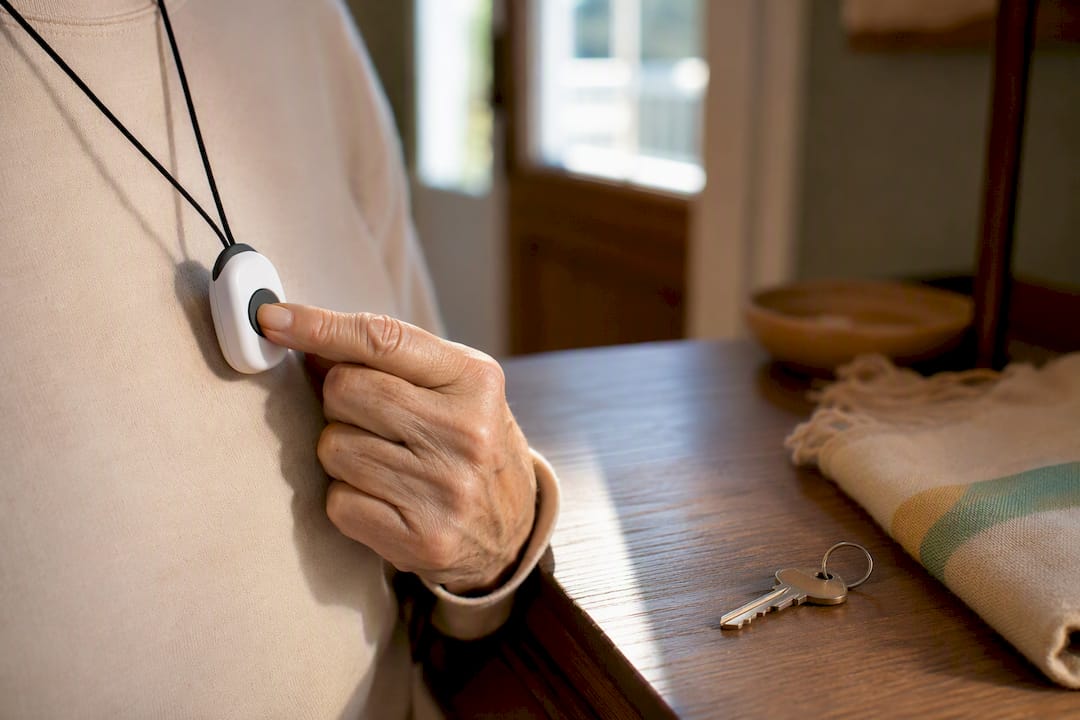
Newer versions add automatic fall detection, sensors that sense a hard, sudden change in orientation and call for help even if you can’t press the button yourself. These aren’t perfect. Some fail to detect slower falls, like sliding out of a chair, and some trigger false alarms during normal activity like sitting down quickly. Ask any device vendor about their detection accuracy and whether the system requires a monthly monitoring fee before committing.
Beyond personal emergency systems, motion-sensor nightlights that trigger automatically when you get out of bed, bed rails for people with significant mobility limits, and smart home hubs that let a caregiver check in remotely all fill smaller gaps in a fall prevention plan. None of these substitute for the exercise, medication review, and home fixes described earlier. They’re a safety net underneath those efforts, not a replacement for them.
If you’re evaluating a system, involve your occupational therapist in the decision. They can tell you whether your specific mobility pattern and home layout make automatic fall detection worth the cost, or whether a simpler manual-press pendant covers your actual risk just as well.
How Do You Make Fall Prevention a Daily Habit, Not a One-Time Fix?
Fall prevention osteoporosis strategies fail most often not because the advice is wrong, but because people treat it as a one-time project instead of an ongoing routine. A home safety sweep done once in January doesn’t account for the rug someone brings home in June, and a strength program started with enthusiasm often fades without a structure to sustain it.
Anchoring new habits to existing routines works better than adding them as separate to-dos. Doing balance exercises right after brushing your teeth, or pausing for a few seconds before standing up from every meal to avoid orthostatic dizziness, turns prevention into something automatic rather than another item on a list you might skip on a busy day.
Regular reassessment matters as much as the initial setup. Annual vision checks, periodic medication reviews, and a home safety walk-through every six months catch new risks before they cause a fall, since your health and your living space both keep changing. Treating fall prevention as ongoing maintenance, similar to how you’d think about routine dental checkups, keeps the plan relevant instead of letting it go stale a year after you set it up.
Small, consistent habits tend to outlast ambitious short-term pushes. Pausing before you stand, keeping a single pair of glasses by the door for walks, and doing a two-minute balance check each morning cost almost nothing and rarely get abandoned the way a demanding new gym routine does.
An Editorial Take on Realistic Priorities
If you take away three things from everything above, make them these: get your medications reviewed, keep exercising consistently, and fix your home. Everything else, the supplements, the wearable tech, the specialty clinics, matters, but it’s secondary to those three.
Here’s what I think gets lost in most osteoporosis fall prevention advice: it’s framed like there’s a finish line, some point where you’ve “solved” fall risk. There isn’t. Combined interventions reduce your odds meaningfully, but they don’t zero them out, and treating any single tactic as a guarantee sets you up for false confidence. The realistic goal isn’t eliminating risk. It’s protecting your independence long enough that a bad fall doesn’t decide your next five years for you.
— Aaron
Sources
- The impact of bone mineral density on the risk of falling: evidence from genetic correlation and Mendelian randomization analysis
- Assessing fall risk in osteoporosis patients: comparative studies and exercise intervention evidence (PMC)
- Fall prevention: Simple tips to prevent falls | Mayo Clinic
For readers exploring supervised bone-strengthening options alongside these medical and exercise recommendations, Osteostrong’s osteogenic loading sessions are worth discussing with your physician as one piece of a broader plan.
This article is general information, not a substitute for advice from a qualified doctor. Consult a qualified healthcare professional about your own circumstances before acting on anything here.
FAQ
What Is the Most Effective Medication for Osteoporosis?
There’s no single “most effective” medication for everyone. Antiresorptive drugs and anabolic agents work differently and suit different fracture risk levels, so the right choice depends on your FRAX score, fracture history, and other health conditions discussed directly with your prescriber.
What Are the “Five P’s” of Fall Prevention?
Definitions of this framework vary by source, so there’s no single agreed-upon version worth repeating as fact. The consistent, evidence-backed priorities across major health authorities are exercise, medication review, vision checks, home safety, and clinical screening.
What Exercises Build Bone Density Best?
Weight-bearing activities like walking and stair climbing, combined with resistance training using bands or progressive loads, build bone density most effectively. Balance work like tai chi doesn’t build bone directly but prevents the falls that turn low density into a fracture.
What Foods Provide Calcium for People With Osteoporosis?
Dairy products, fortified plant milks, leafy greens like kale, and canned fish with bones such as sardines are reliable calcium sources. Your clinician can set a specific daily target based on your age, sex, and any calcium you already get from supplements.
How Often Should I Exercise to Reduce Fall Risk?
Research on combined balance, strength, and aerobic programs points to roughly 3 hours per week as the level most associated with meaningful fall reduction, ideally in a supervised setting, especially when you’re just starting out.
Trackbacks/Pingbacks