
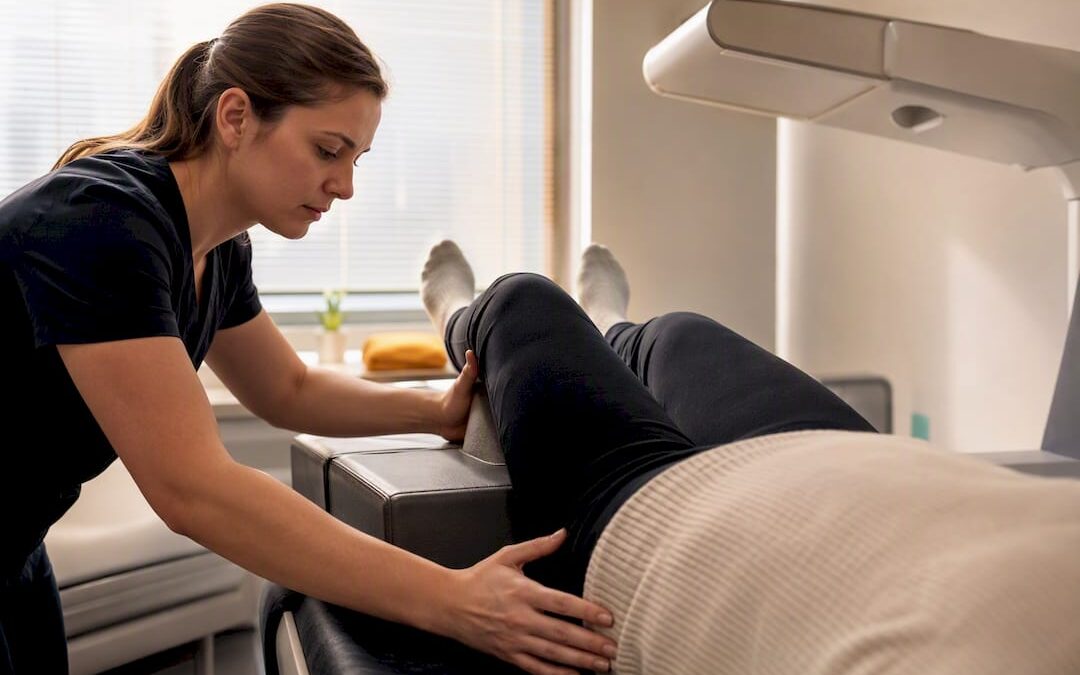
Yes, T-scores can improve, though results vary by person and by bone. The most reliable gains come from four things working together: clinician-prescribed medication when your fracture risk warrants it, progressive resistance training with safe impact, adequate calcium and vitamin D, and regular DXA monitoring to track what’s actually happening in your skeleton. Expect months, not weeks, before a scan shows the difference.
TL;DR:
- T-score improvements depend on a combination of medication, targeted resistance training, adequate calcium and vitamin D intake, and regular bone scans, with months required to see tangible progress.
- Bone density response varies across skeletal sites and individuals, with some experiencing meaningful gains and others maintaining stability, especially when multiple interventions are combined.
- Medications like bisphosphonates, denosumab, and romosozumab are prescribed based on fracture history and T-score severity, but require monitoring due to potential side effects.
- Progressive, high-intensity resistance exercise with safe impact activities, guided by a healthcare professional, effectively stimulates bone remodeling, especially when combined with balance and fall-prevention training.
- Patience is essential, as noticeable strength and balance improvements often precede measurable T-score changes, which typically take 6 to 18 months to manifest on DXA scans.
Table of Contents
- What Does a T-Score Actually Mean?
- Can T-Scores Actually Improve? Evidence and Case Reports
- Medical Treatments That Can Raise or Preserve Bone Density
- What Exercise Program Actually Moves a T-Score?
- Nutrition and Lifestyle Choices That Support T-Score Gains
- When Will You See T-Score Changes on a DXA Scan?
- Safety Precautions If You Have a Low T-Score
- Where Weekly Osteogenic Loading Fits Into Bone Health Care
- What Patients Notice First, and Why Patience Pays Off
- Ready to Combine Medical Care With Supervised Loading?
- Where to Go for Further Verification
- Sources
What Does a T-Score Actually Mean?
A T-score compares your bone mineral density (BMD) to that of a healthy 30-year-old of the same sex, the point in life when most people hit peak bone mass. The number tells you how many standard deviations above or below that peak your bones currently measure, and it drives every diagnostic decision that follows.
The standard diagnostic thresholds break down like this:
- Normal: T-score of -1.0 or higher
- Osteopenia (low bone density): T-score between -1.0 and -2.5
- Osteoporosis: T-score of -2.5 or lower
A T-score is not the same as a Z-score, even though both come off the same DXA printout. The Z-score compares you to people your own age, sex, and often ethnicity, which makes it more useful for spotting unusual bone loss in younger patients or flagging a secondary cause. Your T-score is the one that determines osteoporosis diagnosis and treatment eligibility.
Small changes matter more than they look on paper. A shift from a T-score of -2.6 to -2.3 might seem minor, but it can represent a meaningful reduction in fracture risk, since each standard deviation drop in BMD correlates with a step up in fracture risk. DXA results also vary somewhat by machine calibration, scan site, and even how a technician positions your hip or spine, which is why comparing scans from two different facilities can be misleading. Stick with the same machine and clinic when you can.
Can T-Scores Actually Improve? Evidence and Case Reports
The evidence says yes, though it’s not universal and it’s not always dramatic. Peer-reviewed case reports have documented real, measurable T-score gains at multiple skeletal sites in patients who combined lifestyle changes with a structured strength-loading program. One published case report tracked BMD improvements at more than one skeletal site following a multi-modal approach to lifestyle and progressive loading. Notably, the patient’s spine and femoral neck responded differently, and one site remained in the osteoporotic range even as others improved. That pattern shows up again and again in the literature: bone doesn’t improve uniformly across your whole skeleton, and where you started matters as much as what you do next.
The gap between a single case report and a randomized trial matters here. A case report tells you improvement is possible in at least one person under specific conditions. It doesn’t tell you how often that result repeats across a broader population, what dose of exercise or nutrition mattered most, or whether confounding factors like medication use played a role. Larger trials on resistance training and bone density tend to show more modest average gains, with wide variation between individual participants. Some people are strong responders. Others hold steady, which in osteoporosis is still a win, since the natural trajectory without intervention is decline.
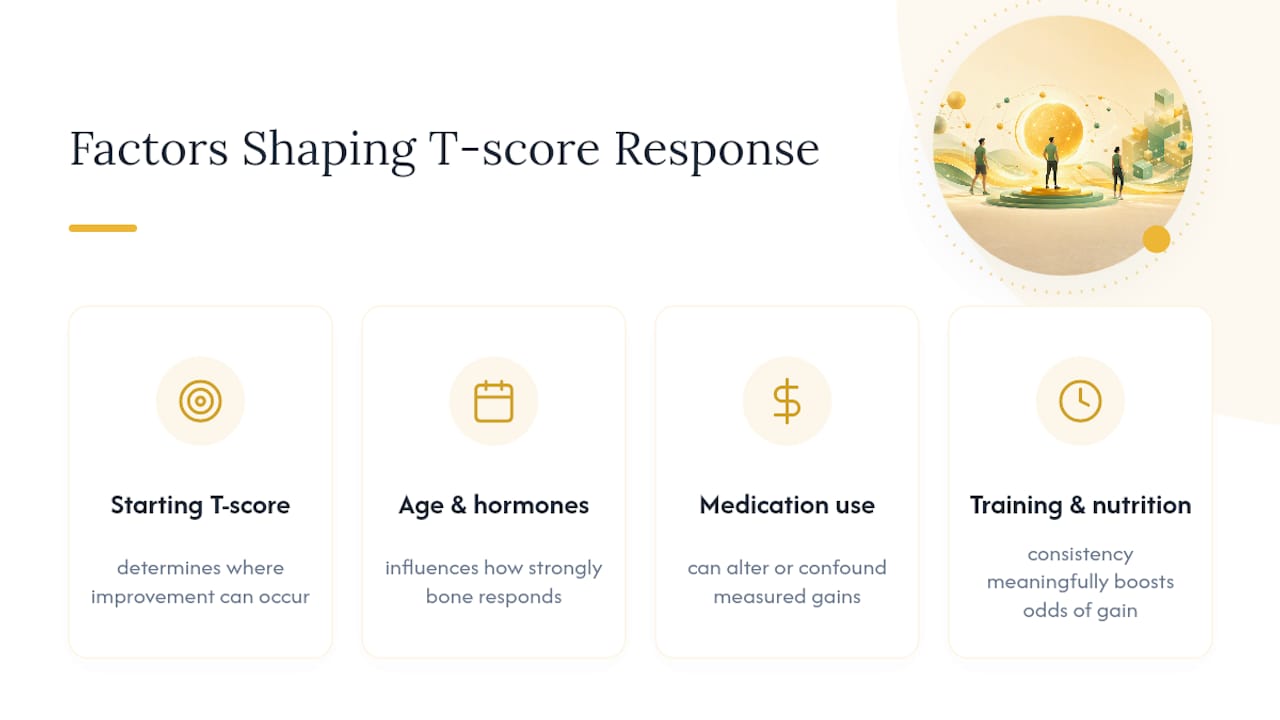
The practical takeaway: improvement is realistic, but it’s individualized. Your starting T-score, your age, your hormonal status, whether you’re on medication, and how consistently you train and eat all shape the outcome. Nobody can promise you a specific number on your next scan. What the evidence supports is that the right combination of interventions shifts the odds meaningfully in your favor, particularly when you stack more than one strategy rather than relying on a single fix.
Medical Treatments That Can Raise or Preserve Bone Density
Medication is often the fastest lever for people with significant fracture risk, and it works through two different mechanisms. Antiresorptive drugs slow the cells that break down bone. Bone-forming agents actively stimulate new bone growth. Both categories require a prescriber, regular monitoring, and a clear clinical rationale.
Common options include:
- Oral bisphosphonates (like alendronate or risedronate), typically the first-line antiresorptive choice for many patients with osteoporosis.
- Denosumab, an injectable antiresorptive given twice yearly, often used when oral bisphosphonates aren’t tolerated or aren’t effective enough.
- Romosozumab, a newer injectable that both builds bone and limits breakdown, generally reserved for higher-risk patients, often prescribed for a limited treatment window before switching to a maintenance therapy.
These medications are commonly prescribed based on fracture history, T-score severity, and overall fracture-risk calculations like FRAX scores. A patient with a T-score of -2.6 and no prior fracture may get a very different recommendation than one with a T-score of -2.2 and a previous hip fracture, because the second scenario carries a demonstrated risk that changes the risk-benefit math.
Side effects and monitoring protocols differ by drug class, ranging from gastrointestinal issues with oral bisphosphonates to rare but serious concerns like atypical femur fractures or jaw complications with long-term antiresorptive use. None of this is a reason to self-diagnose or self-treat. This is a decision for you and your prescriber, made with your full fracture history and lab work in hand, not something to reverse-engineer from a blog post or a friend’s treatment plan.
What Exercise Program Actually Moves a T-Score?
Bone is living tissue that responds to mechanical stress the same way muscle responds to a barbell. Load it appropriately and consistently, and it remodels stronger. Ignore it, and it keeps losing density year after year. Expert reviews on exercise and bone health consistently point to progressive high-intensity resistance training, combined with safe impact loading where a clinician has cleared it, as the combination most reliably linked to BMD gains. Walking and light cardio are good for cardiovascular health, but they rarely provide enough mechanical stimulus to meaningfully change bone density on their own.
Here’s a workable program blueprint many clinicians and exercise specialists build from:
- Start with compound movements — squats, deadlift variations, presses — using light loads to nail form before adding weight.
- Progress load gradually over months, tracking strength gains the same way a physical therapist would, not by feel.
- Add safe impact activities (like brisk stair climbing or supervised jumping drills) only once a clinician has confirmed it’s appropriate for your fracture risk.
- Layer in balance and fall-prevention work two or three times weekly, since a fall is often the actual event that turns low density into a fracture.
- Train the targeted areas two to three times per week, allowing 48 hours between sessions hitting the same muscle groups for recovery and adaptation.
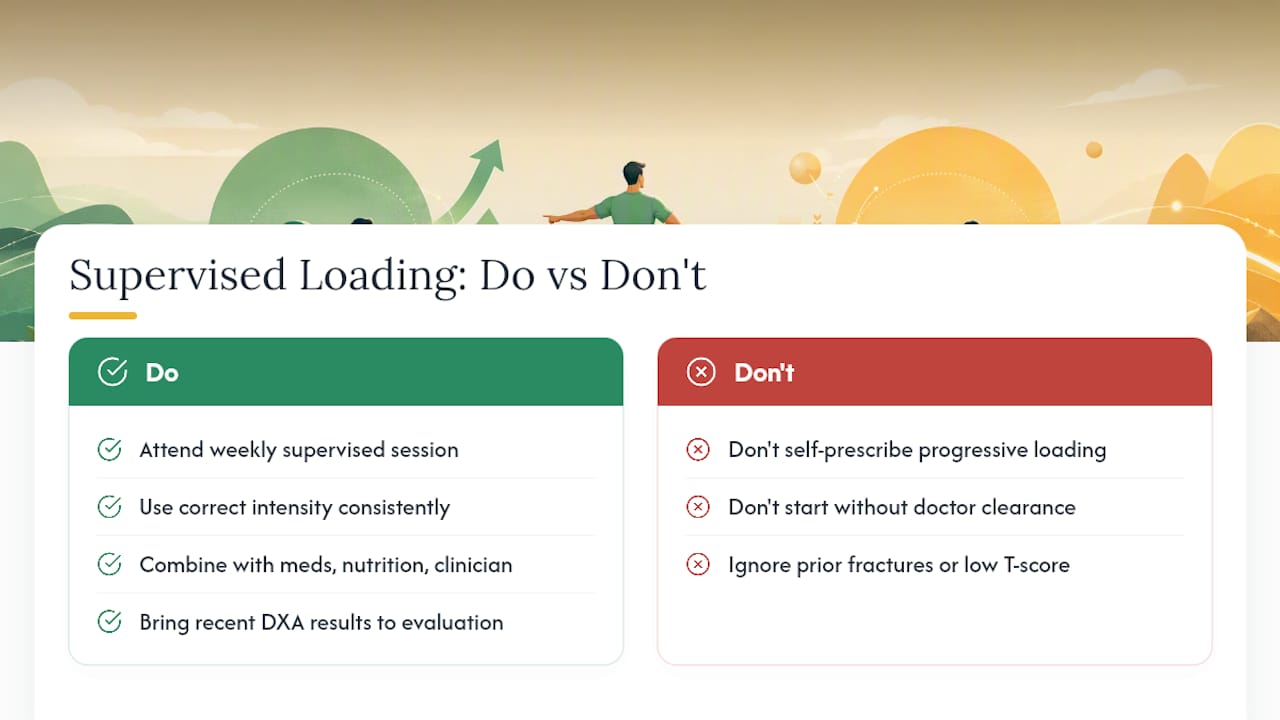
Safety has to come first, especially if you already have a low T-score or a prior fracture. Avoid loaded spinal flexion, meaning any movement that combines forward bending with resistance, and be especially cautious of any exercise that combines twisting with bending under load, since that combination is strongly associated with vertebral compression fractures in people with fragile spines. Start with technique, not weight. A qualified trainer or physical therapist experienced in osteoporosis programming should be part of this, particularly in the first several months.
Pro Tip: Track your 5-rep max on key lifts every four to six weeks instead of counting reps. A rising 5RM is a concrete, measurable sign that your bones and muscles are adapting, and it gives you something encouraging to look at long before your next DXA scan.
One common misconception is that people with low bone density should avoid demanding physical activity altogether. The opposite tends to be true: appropriately dosed, progressive loading is one of the more effective tools for reducing fracture risk over time, not something to fear.
Nutrition and Lifestyle Choices That Support T-Score Gains
Exercise builds the demand for stronger bone. Nutrition supplies the raw material. Skip one and the other underperforms.
Most adults need roughly 1,000 to 1,200 mg of calcium daily and about 800 to 1,000 IU of vitamin D, though the right number depends on your age, sex, and current vitamin D blood levels. Getting a vitamin D test is worth asking your doctor about before assuming you need a supplement. Food sources, like dairy, fortified plant milks, leafy greens, and fatty fish, should do the heavy lifting first, with supplements filling gaps your diet doesn’t cover.
A few other pieces matter more than people expect:
- Protein intake supports the collagen matrix bone is built on, and inadequate protein undermines both muscle and skeletal health.
- Maintaining a healthy weight, or gaining weight carefully if you’re underweight, since being significantly underweight is itself a risk factor for low bone density.
- Quitting smoking, which interferes with bone-building cells directly and is one of the more modifiable risks on this list.
- Limiting alcohol to moderate levels, since heavy drinking disrupts calcium absorption and increases fall risk.
- Keeping up regular weight-bearing activity even on days you’re not doing structured resistance training.
None of this replaces medication when medication is indicated, and it doesn’t replace supervised loading when that’s what your body needs. It’s the foundation the other interventions build on.
When Will You See T-Score Changes on a DXA Scan?
Patience matters more than most people expect going into this. Strength and balance improvements often show up within weeks of starting a consistent program, but bone remodeling is a slower process, and measurable DXA changes typically take 6 to 18 months of steady effort.
- Weeks 1 to 8: You’ll likely notice better strength, balance, and confidence moving. This is real progress even though it won’t show on a scan yet.
- Months 6 to 12: Enough remodeling has usually occurred for a repeat DXA to detect meaningful change, if you’ve stayed consistent.
- Repeat scans: Clinicians commonly space DXA testing 1 to 2 years apart, though they may test sooner if you’re starting a new medication and need earlier feedback on how you’re responding.
Don’t judge your progress by the scale or the scan alone in month three. The strength gains and steadier balance you feel are the leading indicators. The DXA is the lagging one.
Safety Precautions If You Have a Low T-Score
A few categories of movement deserve real caution if your T-score is low or you’ve fractured before. Loaded spinal flexion, forward bending combined with resistance, tops the list, along with any exercise pairing twisting with bending under load. New high-impact activity right after a recent fracture is also off the table until a clinician clears you.
Watch for these red flags and get care promptly if they show up:
- Acute, severe back pain, especially if it starts suddenly without an obvious cause.
- New neurological symptoms, like numbness, tingling, or weakness in your legs.
- A fall resulting in any injury, even one that seems minor at first.
Two people can share an identical T-score and need completely different programs, because biomechanics, mobility limitations, and fracture history vary so much between individuals. A generic exercise handout is a starting point, not a finished plan. Work with someone who can adjust it to you specifically.
Where Weekly Osteogenic Loading Fits Into Bone Health Care
A weekly osteogenic loading session is a brief, supervised bout of high-intensity mechanical loading designed to deliver the kind of stimulus bone responds to, without the extended time commitment of a traditional gym program. Sessions are paired with complementary modalities that support recovery and overall wellness:
- Red light therapy for tissue support
- PEMF mats
- BioCharger sessions
- The PureWave VEMI lounge
- Compression therapy and vibration plates
- Hydromassage lounges
None of these complementary tools replace medication or a physician-directed nutrition plan. They’re designed to sit alongside clinician-directed care, not instead of it. A once-weekly, supervised loading structure can appeal to people who want consistency without the complexity of programming their own progressive resistance routine, particularly early on when learning safe movement patterns matters most.
What Patients Notice First, and Why Patience Pays Off
People almost always feel stronger and steadier on their feet before a single number changes on a scan. That earlier win is real, and it’s worth celebrating on its own, because it usually means the harder, slower work of rebuilding bone is already underway underneath it.
Stick with your clinician, keep showing up to your training sessions, and give the process the months it actually needs. The scan will catch up to what your body already knows.
— Aaron
Ready to Combine Medical Care With Supervised Loading?
A weekly, supervised osteogenic loading session can deliver a meaningful mechanical stimulus in minutes, without having to design or police your own progressive resistance program.
If you’ve read this far, you already know that consistency and the right intensity are what move a T-score, and figuring both out alone is where most self-directed plans stall. A structured weekly session removes that guesswork while still leaving room for the medication, nutrition, and clinician oversight your care plan already includes. Sessions are available alongside complementary therapies like red light and PEMF for recovery support between visits.
Talk to your doctor before starting any new loading program, especially if you have a prior fracture or a T-score in the osteoporosis range. When you’re ready to see what a supervised session looks like in practice, book an evaluation at OsteoStrong Rancho Cordova East and bring your most recent DXA results to the conversation.
Where to Go for Further Verification
For primary guidance beyond this article, the NIAMS osteoporosis overview covers diagnostic criteria in depth, Johns Hopkins Medicine explains DXA scanning mechanics and scan intervals, and the published case report on lifestyle-driven BMD reversal offers a real-world look at measurable T-score change.
This article is general information, not a substitute for advice from a qualified doctor. Consult a qualified healthcare professional about your own circumstances before acting on anything here.
Sources
- Reversal of Bone Mineral Density Loss Through Lifestyle Changes: A Case Report (PMC)
- Calcium and vitamin D — MedlinePlus patient information
- Exercise and bone health — PubMed (expert perspective review)