

Bisphosphonates cause common, usually mild reactions in a meaningful share of patients and rare, serious harms in a very small fraction of them, but for most people with osteoporosis, the fracture-prevention benefit still wins out during the first several years of treatment. If you are currently taking one, keep taking it as prescribed unless you have a red-flag symptom described below. Follow the administration rules for oral tablets, and if your doctor recommended a dental exam or baseline labs before you started, get those done.
That framing lines up with FDA-reviewed prescribing information, a detailed NCBI clinical review, and patient guidance from the Cleveland Clinic, all of which describe the same pattern: mild, manageable issues are common; the scary stuff is rare.
Right now, your action list is short:
- Take your medication as directed. Do not stop on your own because of something you read.
- Watch for the urgent symptoms covered later in this guide and call your doctor if they show up.
- If you have not had a dental checkup since starting, schedule one.
Pro Tip: Keep a simple log of any new symptoms and when they started. If you ever need to describe a reaction to your doctor, “started three days after my infusion, lasted about 48 hours” is far more useful than “I felt off for a while.”
Key Takeaways
For most people with osteoporosis, bisphosphonates prevent far more fractures than the rare serious side effects they cause, provided patients follow administration rules and report red-flag symptoms promptly.
| Point | Details |
|---|---|
| Common effects are manageable | Oral tablets often cause heartburn and stomach upset; IV infusions can trigger flu-like symptoms in 10% to 30% of first-time patients. |
| Serious harms are rare | Atypical femoral fractures affect roughly 113 per 100,000 person-years even after long-term use, and jaw complications remain under 0.04% in osteoporosis patients on oral therapy. |
| Technique lowers risk | Taking oral tablets with a full glass of water and staying upright for 30 to 60 minutes significantly cuts esophageal injury risk. |
| Duration matters | Benefits likely outweigh harms in the first 3 years; that balance should be reassessed with your doctor after that point. |
| Osteostrong complements, not replace | Weekly osteogenic loading sessions can support skeletal health alongside prescribed bisphosphonate therapy, with your prescriber’s input. |
Table of Contents
- Common Bisphosphonate Reactions: What to Expect Early On
- Serious Bisphosphonate Treatment Complications You Should Recognize
- How Likely Are Serious Bisphosphonate Risks, Really?
- Who Faces Higher Risk From Bisphosphonate Adverse Effects?
- Taking Your Bisphosphonate Correctly to Lower Your Risk
- Monitoring, Follow-Up, and the Idea of a Drug Holiday
- When to Call Your Doctor Immediately
- Where Mechanical Bone Loading Fits Alongside Your Medication
- A Provider’s View on Weighing Risk and Benefit
- Support Your Bones Alongside Your Prescribed Treatment
- Sources
Common Bisphosphonate Reactions: What to Expect Early On
The side effects you are most likely to notice depend heavily on whether you take your bisphosphonate by mouth or receive it through an IV.
Oral bisphosphonates like alendronate (Fosamax), risedronate (Actonel), and ibandronate (Boniva) primarily cause upper digestive complaints. Heartburn, nausea, abdominal discomfort, and dyspepsia are the most frequently reported issues, and esophageal irritation can develop if the tablet lingers in the esophagus too long. Mayo Clinic’s drug reference lists these upper GI effects as the most common category of complaint tied to oral dosing.

IV formulations like zoledronic acid (Reclast) and ibandronate work differently. Instead of stomach upset, they trigger what is called an acute-phase reaction: flu-like symptoms, fever, and muscle or joint aches that typically start within a day or two of infusion. This happens in roughly 10% to 30% of patients after their first infusion, and it becomes far less common with each subsequent dose.
Managing both is mostly a matter of technique and timing:
- Take oral tablets first thing in the morning on an empty stomach with a full glass of plain water, then stay upright.
- Avoid lying down or eating for at least 30 minutes afterward (60 minutes for some formulations, so check your specific instructions).
- For infusion reactions, over-the-counter acetaminophen before or after your appointment often blunts the flu-like symptoms.
- Report persistent heartburn to your doctor. Do not just self-treat indefinitely with antacids.
Most people find these effects fade with time or better technique. If reflux or stomach pain does not improve, talk to your doctor about a proton pump inhibitor, a different oral bisphosphonate, or switching to an IV formulation that bypasses the stomach entirely.
Pro Tip: If the flu-like reaction after your first zoledronic acid infusion catches you off guard, know that it is usually a one-time hurdle. Patients rarely report the same intensity after their second dose.
Serious Bisphosphonate Treatment Complications You Should Recognize
The rare, high-consequence risks are what actually keep people up at night, and they deserve a clear-eyed look, not a scary headline without context.
Medication-related osteonecrosis of the jaw (MRONJ or ONJ) is a condition where a section of jawbone loses its blood supply and fails to heal, usually after a dental extraction or other invasive oral procedure. It is not random. The overwhelming majority of cases follow dental trauma in someone already on bisphosphonate therapy, which is exactly why a dental exam before starting treatment matters so much. Incidence varies enormously by patient population. In people taking oral bisphosphonates for osteoporosis, MRONJ occurs in a very small fraction of patients, a genuinely rare event. In cancer patients receiving high-dose IV bisphosphonates for bone metastases, that figure climbs to 1% to 10%, reflecting the much higher doses and more frequent dosing schedules used in oncology. That gap in ONJ incidence between osteoporosis-dose and cancer-dose IV therapy is one of the most consistent findings in the literature.
Atypical femoral fractures (AFF) are a different animal entirely from the hip fractures bisphosphonates are meant to prevent. Rather than a sudden break from a fall, AFF tends to develop as a stress fracture in the thigh bone with little or no trauma, and it often announces itself in advance. Dull, aching pain in the thigh, hip, or groin that shows up weeks or months before the fracture is a recognized warning sign, and any patient with a history of bisphosphonate use who develops new, unexplained thigh pain deserves imaging to rule this out. Risk rises with cumulative exposure. Estimates range from about 3.2 to 50 cases per 100,000 person-years with shorter-term use, climbing to roughly 113 per 100,000 person-years with long-term therapy.
Esophageal injury ranges from irritation to, in rare cases, ulceration or stricture, almost always tied to swallowing the tablet incorrectly or lying down too soon afterward. There has also been an investigated signal for esophageal cancer with long-term oral bisphosphonate use, though the data on causation remains genuinely uncertain. Manufacturer labeling for Fosamax lists esophageal problems among its serious warnings, and correct administration technique is the single biggest factor in avoiding them, since failing to follow upright-posture instructions is a well-documented cause of preventable esophagitis.
A handful of other serious but uncommon events round out the list: symptomatic hypocalcemia (low blood calcium, which can cause muscle spasms and numbness around the mouth), renal toxicity that shows up mainly with IV zoledronic acid in patients with existing kidney impairment, and rare cases of eye inflammation.
Save this checklist. If you notice any of the following, contact your doctor rather than waiting for your next visit:
- Jaw pain, loose teeth, or a mouth sore that will not heal
- New, unexplained thigh, hip, or groin pain
- Difficulty or pain when swallowing
- Black or tarry stools
- Muscle spasms, twitching, or numbness around your mouth or fingertips
Pro Tip: Thigh pain gets dismissed as “just getting older” far too often. If you have been on a bisphosphonate for several years and develop new aching in that area, mention the medication by name when you call your doctor. It changes what they look for on imaging.
How Likely Are Serious Bisphosphonate Risks, Really?
Here is the number that matters most: even at the higher end of long-term exposure, atypical femoral fractures affect roughly 113 out of every 100,000 person-years of use. That means well over 99.8% of long-term users will never experience one. MRONJ in osteoporosis patients on oral therapy sits even lower, under 0.04% in most estimates.
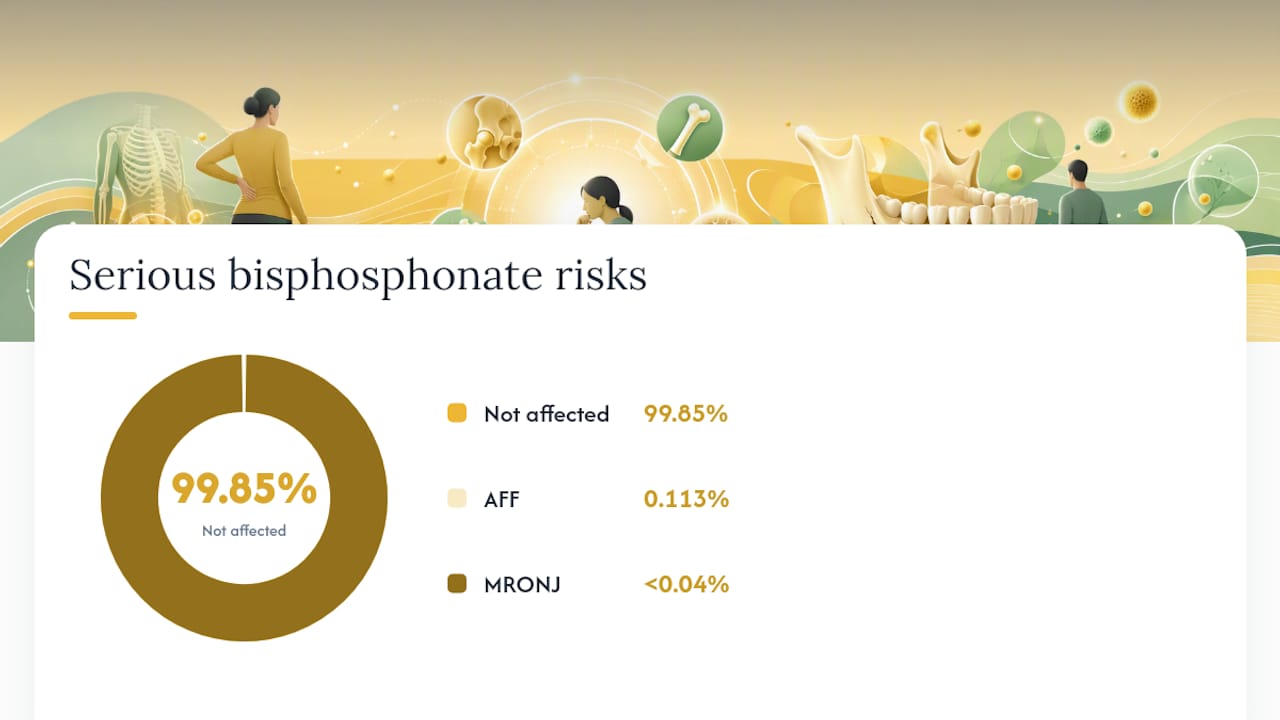
Relative risk numbers can distort this picture badly. A headline claiming a drug “doubles” or “triples” your risk of some rare event sounds alarming until you realize you are doubling a number close to zero. Going from 1 in 20,000 to 2 in 20,000 is technically a 100% increase in relative risk, and it is also still an extremely small absolute chance. Absolute risk, the actual number of affected people out of everyone treated, is the figure that should drive your decision-making, not the relative comparison.
Duration changes the calculus. A systematic review of bisphosphonate harms found that in secondary fracture prevention, the modest benefits of continued treatment likely outweigh the harms during the first three years, but that balance can flip after that, with harms starting to outweigh benefits beyond three years for some patients. This is exactly why your doctor may revisit your treatment plan periodically rather than leaving you on the same drug indefinitely.
- Short-term use (under 3 years): benefits clearly dominate for most osteoporosis patients.
- Long-term use (5+ years): fracture-prevention benefit continues, but AFF and MRONJ risk both climb, making periodic reassessment worthwhile.
- IV cancer-dose therapy: carries meaningfully higher MRONJ risk than oral osteoporosis-dose therapy, reflecting dose and frequency differences, not the drug class itself.
A simple graphic plotting fracture-prevention benefit against AFF/MRONJ risk across years of treatment would make this tradeoff far easier to visualize than any paragraph of numbers.
Who Faces Higher Risk From Bisphosphonate Adverse Effects?
Risk is not distributed evenly. Certain patients carry a meaningfully higher chance of complications, and knowing where you fall on this list is worth a direct conversation with your prescriber.
Factors that raise risk include cancer with bone metastases treated with high-dose IV bisphosphonates, dental disease or an upcoming tooth extraction, having taken a bisphosphonate for many years without reassessment, impaired kidney function, low vitamin D levels, and concurrent use of corticosteroids or antiangiogenic cancer drugs. Smoking and poorly controlled diabetes also compound risk, particularly for jaw complications, and renal dysfunction, dental disease, and concomitant glucocorticoid therapy are all recognized major contributors to adverse outcomes.
Some situations rule bisphosphonates out entirely, or at least the oral form. Unresolved low blood calcium must be corrected before starting any bisphosphonate. Severe esophageal disorders, such as strictures or achalasia, are a contraindication for oral tablets specifically, since the drug cannot safely pass through. Certain IV bisphosphonates carry a hard cutoff based on creatinine clearance, below which the kidney risk becomes unacceptable.
Bring these questions to your next appointment: Do I have any of these risk factors? Should I have a dental clearance before continuing? Is my kidney function being monitored appropriately for the formulation I am on?
Taking Your Bisphosphonate Correctly to Lower Your Risk
Technique genuinely changes outcomes with these drugs, more than with most medications you have probably taken.
- Take oral tablets first thing in the morning, at least 30 minutes before any food, drink, or other medication.
- Swallow with a full glass of plain water, not coffee, juice, or mineral water, which can reduce absorption.
- Stay upright, sitting or standing, for 30 to 60 minutes afterward, and do not lie back down.
- For IV infusions, make sure you are well hydrated beforehand and that your kidney function has been checked recently if your clinic requires it.
- Get a dental exam before starting therapy if your doctor recommends one, and address any needed extractions or major work first.
- Confirm your vitamin D and calcium levels are adequate before you begin, since deficiency compounds several of the risks above.
Pro Tip: If you need a tooth extraction after you have already started a bisphosphonate, do not schedule it without looping in your prescribing doctor first. A brief phone call between your dentist and physician can change the timing or approach in ways that meaningfully lower your MRONJ risk.
Monitoring, Follow-Up, and the Idea of a Drug Holiday
Ongoing bisphosphonate therapy comes with a monitoring rhythm most patients are not told about upfront.
- Baseline dental exam before or shortly after starting.
- Periodic calcium and vitamin D level checks.
- Kidney function testing, especially for anyone on IV zoledronic acid.
- A symptom review at each follow-up visit, specifically asking about jaw pain, thigh pain, and swallowing difficulty.
After several years, many clinicians raise the idea of a drug holiday, a planned pause in therapy. This is not abandoning treatment. It reflects the reality that bisphosphonates continue working in bone tissue for a long time after the last dose, so a temporary break can maintain fracture protection while giving AFF and MRONJ risk a chance to decline. The American College of Rheumatology’s patient guidance emphasizes baseline testing and consistent follow-up as the backbone of safe long-term use.
Bring these points to that conversation:
- How many years have I been on this medication?
- Have I had a fracture while on treatment, or before starting?
- What does my most recent bone density scan show?
- Do I still have active risk factors, like ongoing steroid use, that argue against a pause?
When to Call Your Doctor Immediately
Most bisphosphonate side effects are mild and manageable. A few are not, and they need same-day attention rather than a “mention it at my next appointment” approach.
- New or worsening pain in your thigh, hip, or groin, especially if it developed gradually with no injury.
- Jaw pain, a loose tooth, or a sore in your mouth that will not heal within a week or two.
- Pain or difficulty swallowing, particularly if it is new since starting the medication.
- Severe heartburn accompanied by vomiting blood or black, tarry stools.
- Muscle spasms, cramping, or numbness and tingling around your mouth or in your fingers, which can signal low calcium.
If you suspect esophageal injury, such as severe chest pain or trouble swallowing right after taking a tablet, stop taking the oral medication and call your doctor the same day rather than waiting to see if it passes. Similarly, hold off on any elective dental work until jaw pain or a nonhealing sore has been evaluated. MedlinePlus’s patient drug information lists this same set of red flags as reasons to stop and seek care immediately. Save this list somewhere accessible. A screenshot on your phone works fine.
Where Mechanical Bone Loading Fits Alongside Your Medication
Bisphosphonates slow bone breakdown, but they do not build new bone the way mechanical loading does. That is where adjunctive, clinic-based approaches earn a place in a broader bone-health plan, not as a replacement for your prescription, but as a complement to it.
Targeted high-impact or resistance exercise, and specialized loading protocols like osteogenic loading, work through an entirely different mechanism: they stimulate the skeleton directly through mechanical stress, prompting the body’s own bone-building response. Supportive modalities like red light therapy and PEMF are sometimes layered in as well, though their role is adjunctive at best. None of this replaces your prescribed drug therapy.

Before starting any new high-impact program, check with your prescribing doctor, especially if you have significant osteoporosis, a recent fracture, or unaddressed dental or metabolic risk factors from the sections above. A useful way to raise this with your prescriber: “I’m considering adding a mechanical loading program. Given my bone density and current medication, is there anything I should modify or watch for?”
Pro Tip: If your doctor is unfamiliar with osteogenic loading specifically, describe it as a brief, weekly, clinic-supervised loading session designed to stimulate bone density, distinct from general gym-based resistance training. That distinction usually answers their first question before they ask it.
A Provider’s View on Weighing Risk and Benefit
The conversation I have most often with patients starting a bisphosphonate is not about the drug itself. It is about what happens if we do nothing. Untreated osteoporosis carries its own serious fracture risk, and that risk is usually far higher than anything on the bisphosphonate side effect list. The job is not to scare you away from an effective medication or to wave away legitimate concerns. It is to look at your specific history: your fracture risk, your dental health, your kidney function, how long you have already been on treatment, and figure out where the balance actually sits for you, not for the average patient in a study.
That is genuinely individualized work. Ask your prescriber about dental clearance before you start, ask what labs they are tracking and how often, and ask when they would revisit a drug holiday given your specific case. Those three questions get you further than any amount of independent research.
Support Your Bones Alongside Your Prescribed Treatment
Bisphosphonates slow bone loss chemically. Osteostrong works differently, applying brief, targeted mechanical loading through a weekly session that stimulates the body’s own bone-building signals, the kind of stimulus that pharmacologic treatment alone does not provide. It is not a substitute for your prescribed medication, and it should not replace conversations with your doctor about dosing, monitoring, or duration.

If you are managing osteoporosis or osteopenia and want to explore a supportive, in-clinic addition to your treatment plan, talk to your prescribing doctor first about whether a loading-based program fits your situation. From there, you can learn more about how the sessions work and what osteogenic loading involves at home as a starting point, or reach out to a location near you, such as OsteoStrong Rancho Cordova East, to schedule a baseline assessment and see whether it makes sense alongside your current care.
Sources
For prescribing details and official warnings, the Fosamax medication guide on DailyMed and Organon’s full prescribing information are the primary references. For incidence data and mechanism detail, the NCBI StatPearls review of bisphosphonate toxicity and the PMC review of benefits and risks offer the most complete numbers. For patient-friendly summaries, see MedlinePlus and the Cleveland Clinic. For dental screening context relevant to jaw complications, Y-Brush’s overview of oral cancer risk factors is a useful consumer resource on maintaining oral health during long-term medication use.
- Bisphosphonate Toxicity – StatPearls – NCBI Bookshelf
- Bisphosphonates: review of benefits and risks – PMC article
- FOSAMAX (alendronate) medication guide – DailyMed