
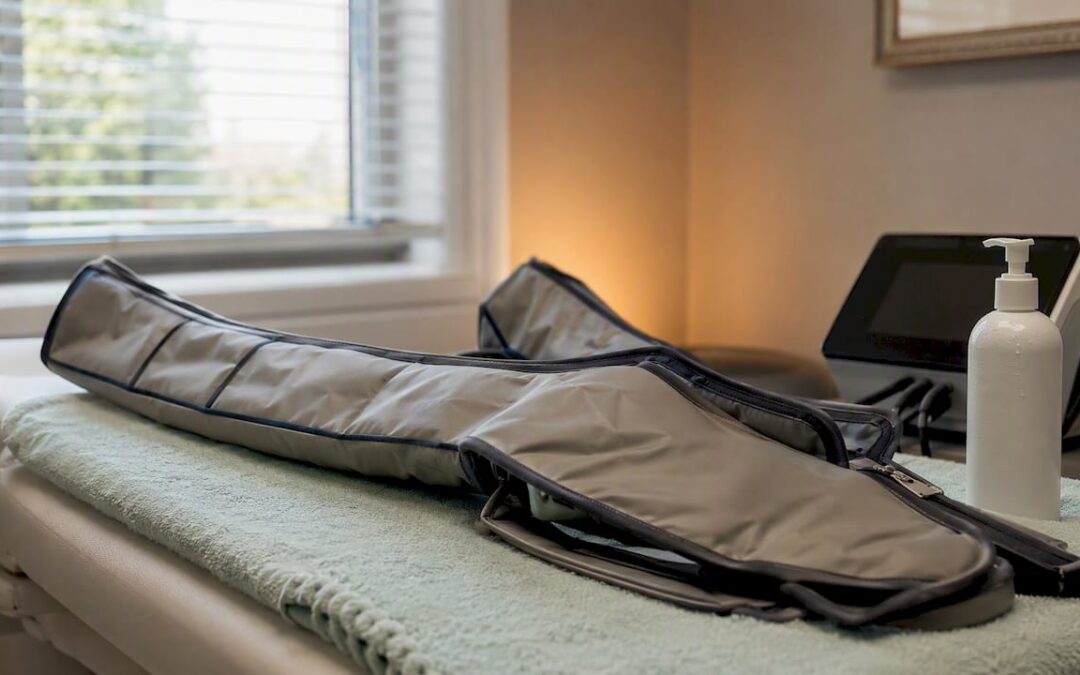
Lymphatic compression therapy uses external pressure, applied through graduated garments, multilayer bandages, or pneumatic devices, to push lymph and venous fluid out of congested tissue and back toward the heart. Clinicians use it to manage lymphedema, treat chronic venous disease, prevent deep vein thrombosis after surgery, and support athletic recovery. Before starting, note this: anyone with a suspected acute DVT, active skin infection, or severe peripheral arterial disease should stop and consult a clinician before using any compression device.
Primary uses at a glance:
- Lymphedema management (primary and secondary, including cancer-related)
- Chronic venous disease and leg swelling (varicose veins, venous insufficiency)
- Post-operative DVT prevention (especially orthopedic and abdominal surgery)
- Athletic and general wellness recovery (soreness reduction, fluid clearance)
Key Takeaways
Compression therapy is most effective when it is prescribed, properly fitted, and combined with exercise, skin care, and manual lymphatic drainage rather than used as a standalone treatment.
| Point | Details |
|---|---|
| Core mechanism | External pressure raises interstitial pressure and drives fluid proximally through lymphatic and venous vessels. |
| Three main types | Graduated garments, multilayer short-stretch bandaging, and intermittent pneumatic compression devices each suit different conditions and phases. |
| Safety red flags | Acute DVT, active infection, severe peripheral arterial disease, and uncontrolled heart failure are contraindications; get vascular clearance first. |
| Athletic recovery protocol | Evidence supports 20–30 minute sessions near 80 mmHg for small-to-moderate soreness reduction; effects on muscle function are mixed. |
| Osteostrong integration | Osteostrong offers compression therapy alongside osteogenic loading, red light therapy, PEMF, and hydromassage at U.S. centers. |
Table of Contents
- How does lymphatic compression therapy move fluid?
- What types of compression are available?
- What conditions does compression therapy actually treat?
- Who should and shouldn’t use compression therapy?
- What happens during a session?
- What do typical protocols look like?
- Cost, insurance, and finding a provider in the United States
- How Osteostrong integrates compression therapy into your wellness plan
- What side effects should you watch for?
- How to maintain home devices and compression garments
- Signs that compression therapy may help you
- How do different compression types compare for specific conditions?
- How to integrate compression with other treatments
- What compression therapy actually demands from you
- Compression therapy is available at Osteostrong centers near you
- Sources
How does lymphatic compression therapy move fluid?
The therapy works by raising interstitial pressure around a limb, which steepens the pressure gradient between congested tissue and the lymphatic and venous vessels draining it. Lymph capillaries are thin-walled and valve-dependent; they rely on surrounding tissue pressure and muscle contractions to propel fluid proximally. When those pumps are impaired, as they are in lymphedema or after prolonged immobility, external compression substitutes for that mechanical force.
Sequential pneumatic compression takes this a step further. Chambers inflate from distal to proximal in a timed wave, mimicking the natural milking action of the calf muscle pump. The result is a coordinated push of fluid toward the trunk rather than a uniform squeeze that could simply redistribute fluid within the limb.
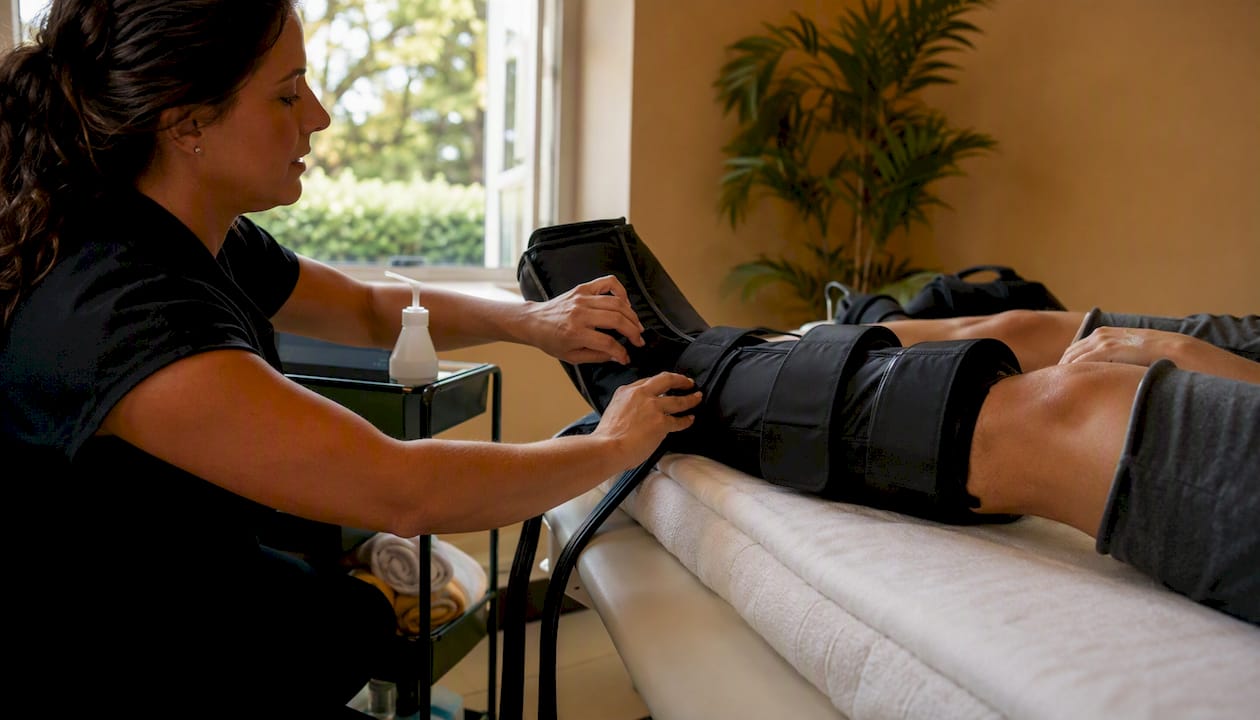
The mechanical effects, summarized:
| Mechanical Effect | What It Does |
|---|---|
| Increases interstitial pressure | Drives fluid from tissue into lymphatic capillaries |
| Sequential distal-to-proximal inflation | Mimics muscle pump; moves fluid toward trunk |
| Sustained external compression | Reduces capillary filtration and limits re-accumulation |
| Supports venous return | Reduces venous pooling and lowers risk of stasis |
What types of compression are available?
Three broad categories cover most of what you will encounter in clinics and pharmacies: graduated compression garments, multilayer short-stretch bandaging, and intermittent pneumatic compression (IPC) devices.
- Graduated compression garments (stockings, sleeves, gloves): apply the highest pressure at the distal end and progressively less toward the trunk. They are worn continuously during waking hours for maintenance and are available over the counter at lower compression classes or by prescription at higher ones. Comfortable enough for daily wear, though fitting matters enormously.
- Multilayer short-stretch bandaging: used primarily in the intensive decongestion phase of lymphedema treatment. Therapists apply multiple layers of low-stretch bandages that create high working pressure during movement and low resting pressure, protecting skin at rest. Bulky and not self-applied by most patients, but clinically central to lymphedema management.
- Intermittent pneumatic compression (IPC) devices (boots, sleeves, suits): motorized pumps inflate multi-chamber garments in a programmed sequence. Used in hospitals for DVT prevention, in lymphedema clinics as an adjunct or substitute for manual lymphatic drainage, and increasingly in wellness settings for recovery. Home versions are widely available; clinic-grade systems offer more chambers and finer pressure control.
Pro Tip: Compression is measured in millimeters of mercury (mmHg) and grouped into classes. Over-the-counter options typically run 8–20 mmHg (mild support). Prescription classes reach 30–40+ mmHg and are used for venous ulcers and moderate-to-severe lymphedema. The Cleveland Clinic notes that higher medically prescribed compression is available by prescription and that garment type and pressure should match the clinical indication, not just patient preference.
Custom-fitted garments and high-pressure IPC systems generally require a clinician’s prescription and professional fitting. Off-the-shelf stockings at lower compression classes do not, but a clinician should still confirm the indication before long-term use.
What conditions does compression therapy actually treat?
Compression therapy is a core component of lymphedema management and an evidence-supported adjunct for venous disease and DVT prevention. Athletic recovery evidence is real but more variable.
Lymphedema. Complete decongestive therapy (CDT) is the standard approach: an intensive phase of daily manual lymphatic drainage (MLD) and short-stretch bandaging, followed by a maintenance phase using compression garments during waking hours. UpToDate’s clinical guidance describes the intensive phase as typically two to four weeks of daily therapy, with IPC added when expected volume reductions are not achieved with bandaging and MLD alone. The International Lymphoedema Framework is direct: bandaging combined with hosiery outperforms hosiery alone for volume control.
Chronic venous disease and DVT prevention. Graduated stockings reduce venous pooling and are a first-line recommendation for symptomatic chronic venous insufficiency. For surgical patients, Johns Hopkins Medicine describes IPC devices as a standard perioperative tool: sequential cuff inflation increases venous flow velocity and reduces stasis, the primary mechanism behind post-operative DVT.
Athletic recovery. A 2024 evidence synthesis found that sport protocols commonly use sessions of moderate duration with moderate pressure and show some benefits for soreness, with varied effects on muscle function recovery. Useful, but not a substitute for sleep and progressive training load management.
| Indication | Evidence Strength | Typical Protocol |
|---|---|---|
| Lymphedema (intensive phase) | Strong (guideline-supported) | Daily bandaging + MLD, 2–4 weeks |
| Lymphedema (maintenance) | Strong | Garments during waking hours |
| Chronic venous disease | Strong | Graduated stockings, daily wear |
| Post-op DVT prevention | Strong | IPC during and after surgery |
| Athletic recovery | Moderate/mixed | Moderate duration, moderate pressure per session |
Who should and shouldn’t use compression therapy?
Primary indications: documented lymphedema, symptomatic chronic venous insufficiency, post-operative DVT prophylaxis, and selected wellness or recovery use in otherwise healthy adults.
Major contraindications — stop and see a clinician:
- Suspected or confirmed acute DVT (compression can dislodge a clot)
- Active skin infection or cellulitis over the treatment area
- Severe peripheral arterial disease (PAD) with inadequate blood supply
- Uncontrolled congestive heart failure (fluid redistribution can overload the heart)
- Open wounds or fragile skin that cannot tolerate pressure
Relative contraindications requiring clinician assessment:
- Mild-to-moderate PAD (ankle-brachial index below 0.8 typically requires vascular clearance before compression)
- Uncontrolled or poorly managed hypertension
- Neuropathy that impairs sensation and pain response
- Pregnancy (lower-limb compression is often safe but requires obstetric guidance)
- Recent skin grafts or radiation-damaged skin
Before starting, work through this checklist with your clinician:
- Has a vascular assessment (ABI) been done if PAD is possible?
- Do you have a diagnosis code and prescription for insurance documentation?
- Has a certified lymphedema therapist or vascular specialist fitted your garment or device?
- What frequency and pressure has been prescribed for your specific condition?
- Do you know the warning signs that mean you should stop immediately?
What happens during a session?
A clinic session follows a consistent arc regardless of the device used. The clinician starts with a brief assessment: reviewing your history, measuring limb circumference or volume, and checking skin integrity. Garments or pneumatic sleeves are then fitted, and the device is programmed for pressure level, inflation sequence, and session duration. During treatment you lie or sit still while the device cycles. Most people describe the sensation as a firm, rhythmic squeeze that is mildly uncomfortable at first and becomes easier to tolerate within a few minutes.
Home devices follow the same basic sequence, with the user handling setup and monitoring independently. That independence is convenient but carries a responsibility: you need to know when to stop.
Stop the session and contact your clinician if you experience new or worsening pain, numbness or tingling, sudden increased swelling, skin color changes, or any signs of infection such as warmth, redness, or fever.
Pro Tip: Wear a thin, moisture-wicking layer under pneumatic sleeves. Bare skin against the garment can cause friction and skin breakdown, especially in patients with compromised circulation or fragile skin from radiation.
What do typical protocols look like?
Protocols vary significantly by goal, and the ranges below are starting points for a clinician conversation, not self-prescriptions.
- Athletic recovery: 20–30 minutes per session, pressure near 80 mmHg, used after training or competition. Evidence supports small-to-moderate soreness reduction at these parameters.
- Lymphedema maintenance: garments worn during all waking hours; IPC sessions of 30–60 minutes added when garments alone are insufficient, frequency individualized.
- Intensive decongestive therapy: daily sessions for two to four weeks, combining short-stretch bandaging and MLD; IPC may supplement but rarely replaces bandaging in this phase.
- Post-operative DVT prophylaxis: IPC applied in the operating room or recovery area and continued until the patient is ambulatory; duration and pressure set by the surgical team.
Pro Tip: Clinicians adjust pressure based on vascular status, skin integrity, and patient tolerance, not just diagnosis. A pressure that is appropriate for a healthy athlete is not automatically safe for someone with peripheral arterial disease or fragile post-radiation skin. Always follow a written prescription rather than self-adjusting based on how a session feels.
Cost, insurance, and finding a provider in the United States
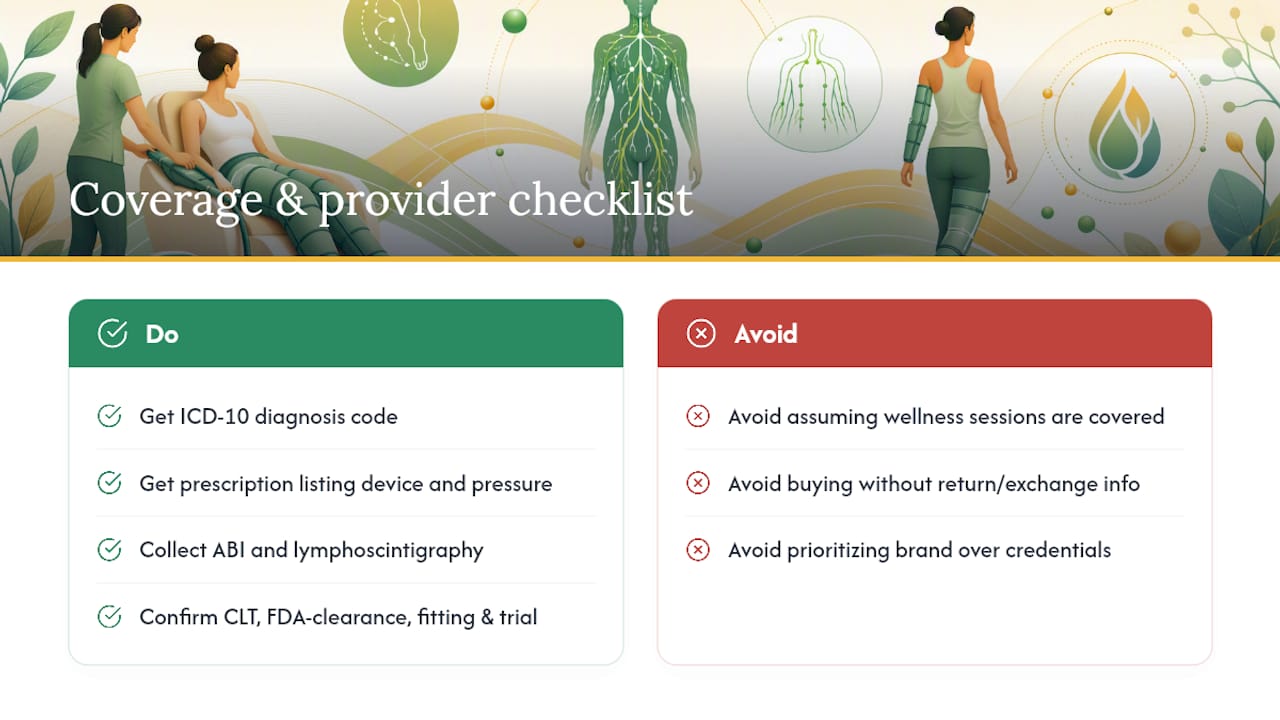
Coverage and out-of-pocket cost vary widely. Custom compression garments and durable medical equipment (DME) such as home IPC devices may be covered by Medicare, Medicaid, or private insurance when supported by a documented diagnosis, a physician’s prescription, and, where required, vascular clearance documentation. Elective wellness sessions, such as recovery boots at a gym or spa, are almost always out-of-pocket.
To support an insurance claim, ask your clinician for: the relevant ICD-10 diagnosis code, a written prescription specifying device type and pressure class, and any supporting test results (ABI measurements, lymphoscintigraphy reports). Submit a letter of medical necessity if your insurer requires one.
When evaluating a provider or DME supplier, ask specifically: Is the therapist certified in lymphedema treatment (CLT or CLT-LANA credential)? Is the device FDA-cleared? Does the clinic offer professional fitting and follow-up adjustments? Is there a trial or demo period before purchase?
When comparing providers, credentials matter more than equipment brand. A certified lymphedema therapist with a well-maintained standard device will consistently outperform an uncredentialed practitioner with premium hardware.
Pro Tip: If you are purchasing a home IPC device, ask the supplier about their return and exchange policy before committing. Fit issues that are not caught at the time of purchase can make a device unusable, and some insurers will not cover a replacement.
How Osteostrong integrates compression therapy into your wellness plan
Osteostrong offers compression therapy as part of a broader recovery and wellness menu that includes osteogenic loading, red light therapy, PEMF mats, BioCharger sessions, PureWave VEMI lounge, vibration plates, and hydromassage lounges. Compression fits naturally into the post-session recovery window: after osteogenic loading stimulates bone and muscle tissue, compression can support fluid clearance and reduce residual soreness.
Services that commonly pair with compression at Osteostrong:
- Osteogenic loading: the core weekly session; compression afterward supports recovery
- Red light therapy: often used for tissue recovery and inflammation; complements compression’s fluid-clearance effect
- PEMF mats and PureWave VEMI lounge: passive recovery modalities that pair well with compression in a single visit
- Hydromassage lounges: another post-loading recovery option that members rotate with compression
Osteostrong centers operate across the United States, including locations in Tysons, VA; Rancho Cordova, CA; El Dorado Hills, CA; and Granite Bay, CA, among others. Check your nearest center for local availability and current service offerings.
When booking, bring any relevant medical notes or prescriptions, a list of current medications, and comfortable, loose-fitting clothing. Members with a lymphedema diagnosis or suspected vascular condition should obtain clinician clearance before scheduling compression sessions.
What side effects should you watch for?
Most people tolerate compression therapy well, but side effects do occur, particularly when pressure is too high, fit is poor, or a contraindication is missed.
Common and manageable:
- Skin redness or mild irritation at garment edges (usually resolved by adjusting fit or adding a liner)
- Temporary increased swelling immediately after a session (fluid redistribution; typically resolves within an hour)
- Mild aching or pressure discomfort during treatment, especially in the first few sessions
Less common but clinically significant:
- Skin breakdown or blistering from excessive pressure or friction, particularly over bony prominences
- Worsening of swelling if the device pushes fluid into a region without adequate lymphatic drainage (a risk with poorly programmed IPC in truncal lymphedema)
- Nerve compression symptoms: numbness, tingling, or weakness that persists after the session
Management is straightforward when caught early: reduce pressure, improve fit, add a protective liner, and report persistent symptoms to your clinician. Never increase pressure to compensate for reduced effectiveness; that is a sign the garment needs refitting or the protocol needs adjustment.
How to maintain home devices and compression garments
Compression garments lose their elasticity over time. Most manufacturers recommend replacing stockings and sleeves every three to six months with daily use, since the elastic fibers degrade with washing and wear. Hand-washing in cool water with a mild detergent and air-drying flat preserves elasticity significantly longer than machine washing on a hot cycle.
For pneumatic IPC devices:
- Wipe the pump unit with a damp cloth; never submerge it
- Wash fabric sleeves and boots according to the manufacturer’s instructions, typically gentle machine wash, air dry
- Inspect tubing and connectors before each use for cracks or air leaks; a leaking connection reduces effective pressure
- Store the device in its case, away from heat and direct sunlight, which degrade both the fabric and the pump seals
- Schedule an annual check with your DME supplier or clinician to verify that the device is delivering the programmed pressure accurately
Garment care is not a minor detail.
Signs that compression therapy may help you
The clearest signal is persistent, pitting edema in a limb that does not fully resolve overnight with elevation. Other indicators:
- A confirmed lymphedema diagnosis (primary or secondary, including post-mastectomy arm swelling)
- Chronic leg heaviness, aching, or visible varicosities consistent with venous insufficiency
- Recurrent leg swelling after long flights, prolonged standing, or sedentary periods
- Post-surgical limb swelling that has not resolved within the expected recovery window
- A physician’s recommendation for DVT prophylaxis before or after a major surgical procedure
Compression is less likely to be the primary answer for swelling caused by acute injury (ice and elevation first), systemic conditions like kidney or liver disease (treat the underlying cause), or infection (antibiotics before compression). A clinician can distinguish these quickly with a history and basic examination.
How do different compression types compare for specific conditions?
No single modality wins across all conditions. The choice depends on the clinical goal, the patient’s ability to self-manage, and the phase of treatment.
For lymphedema volume reduction, the International Lymphoedema Framework is clear that bandaging combined with hosiery outperforms hosiery alone. IPC can substitute for MLD in some settings, though a randomized comparison found mixed results on superiority, suggesting IPC is a reasonable alternative rather than a proven upgrade.
For venous disease maintenance, graduated stockings are the workhorse: low burden, daily wear, and well-tolerated by most patients. Bandaging is reserved for active ulcer management or when stockings cannot be donned independently.
For DVT prevention, IPC devices are the standard non-pharmacologic option. Johns Hopkins Medicine describes them as commonly recommended as an alternative or adjunct to pharmacologic prophylaxis in perioperative settings.
For athletic recovery, pneumatic boots and sleeves are the practical choice: convenient, fast to apply, and supported by enough evidence to justify use even if the effect sizes are modest.
How to integrate compression with other treatments
Compression works best as part of a package, not as a standalone fix. In CDT for lymphedema, compression holds the volume reduction achieved by MLD between sessions; without it, fluid re-accumulates within hours. The UpToDate clinical framework treats compression garments as the maintenance anchor around which MLD, exercise, and skin care are organized.
Exercise and compression are particularly synergistic. Movement activates the muscle pump, and compression amplifies that pump’s effect by providing external resistance. Walking, swimming, and resistance training all increase lymphatic flow; wearing a compression garment during these activities multiplies the benefit compared to either alone.
Skin care is the third leg of the stool. Lymphedematous skin is prone to infection, and cellulitis can rapidly worsen swelling and damage remaining lymphatic vessels. Daily moisturizing, prompt treatment of any skin breaks, and avoiding heat exposure protect the skin barrier that compression depends on.
MLD performed by a certified therapist before an IPC session can pre-clear proximal lymphatic pathways, making the device’s distal-to-proximal push more effective. The sequence matters: MLD first, then compression.
What compression therapy actually demands from you
Most articles on this topic undersell the commitment involved. Compression for lymphedema is not a course of treatment with an end date; for the majority of patients, it is a lifelong daily practice. The garments must be worn every waking hour, replaced regularly, and combined with exercise and skin care to maintain the volume reductions achieved during intensive therapy.
The wellness and recovery use case is genuinely different. A 20–30 minute session after a hard workout is a low-commitment adjunct with a reasonable evidence base. Expecting it to substitute for sleep, progressive training, or a well-structured recovery protocol is where the marketing gets ahead of the science.
The most underappreciated risk in compression therapy is not a contraindication; it is undertreating. Patients who use garments inconsistently, skip refitting when a stocking loses elasticity, or abandon MLD because the IPC device feels like a convenient replacement tend to see gradual volume creep. The therapy only works when it is actually worn, properly fitted, and embedded in a broader self-management routine.
Compression therapy is available at Osteostrong centers near you
Osteostrong centers offer in-person compression therapy alongside osteogenic loading and a full suite of recovery modalities, giving members a single location for bone health, strength, and recovery support.
Getting started takes three steps: find your nearest Osteostrong center, bring any relevant medical notes or prescriptions to your first visit, and ask staff about insurance paperwork and available device options. If you have a lymphedema diagnosis or a vascular condition, obtain clinician clearance first. Staff screen for contraindications at intake and can coordinate with your medical team when clearance documentation is needed. For members already using osteogenic loading, adding a recovery-focused session that includes compression is a natural next step in the same visit.
Sources
- Nonoperative Treatment of Lymphedema – PMC – NIH
- Management of peripheral lymphedema – UpToDate
- Compression-bandaging final (International Lymphoedema Framework position document)
- DVT prevention — Intermittent pneumatic compression devices (Johns Hopkins Medicine)
- Pneumatic compression therapy – can it really help Olympians (or you) recover after exercise?