
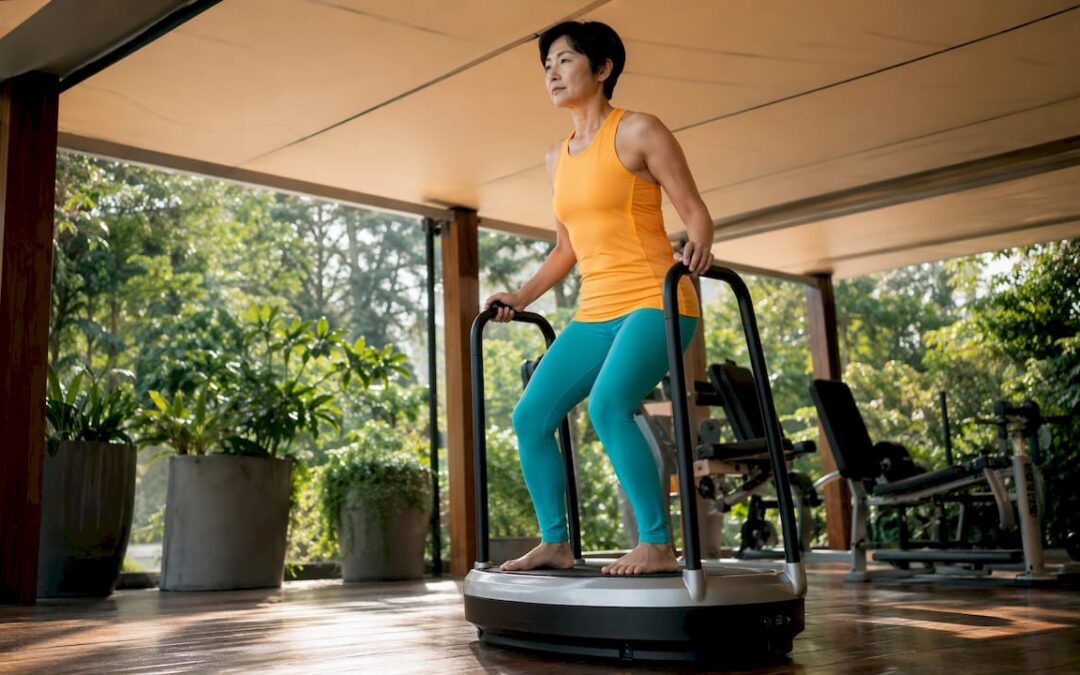
Whole body vibration (WBV) delivers measurable benefits for bone preservation, muscle activation, balance, and circulation when used with the right protocol. The Mayo Clinic confirms it may reduce bone loss, improve strength, and enhance balance in older adults, while being clear that it is not a proven replacement for active exercise. For most people, it works best as a targeted complement to resistance training or weight-bearing activity.
Quick verdict:
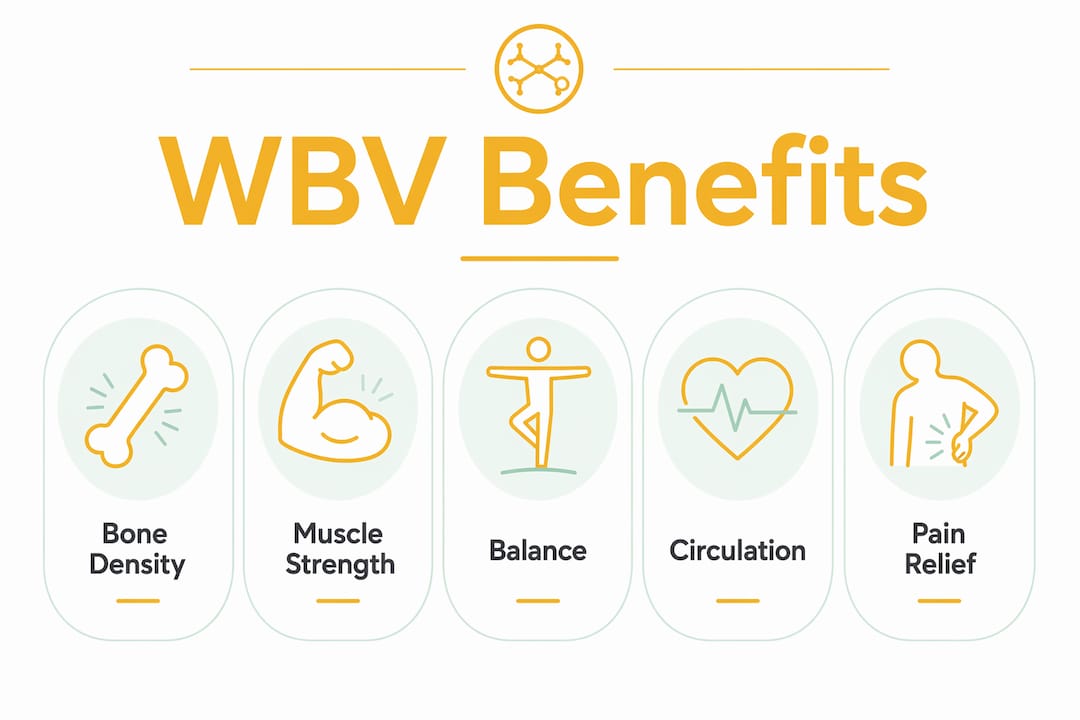
- Bone and muscle: Strongest evidence supports bone mineral density preservation and lower-body muscle activation, especially in older adults and people with low mobility.
- Balance and falls: Consistent improvements in postural control and gait speed across multiple populations.
- Metabolic markers: Meta-analyses show significant reductions in TNF-α, hs-CRP, and triglycerides following regular WBV training.
- Who gains most: Older adults, people with osteoporosis or sarcopenia, rehabilitation patients, and athletes using WBV for warm-up.
- Osteostrong uses vibration plates alongside osteogenic loading, red light therapy, PEMF mats, and other modalities as part of a structured bone and functional health program.
Table of Contents
- How whole body vibration stimulates your muscles, bones, and circulation
- What the research actually shows about vibration therapy
- Benefits broken down by outcome
- What 10 minutes on a vibration plate actually does
- Risks, side effects, and who needs medical clearance first
- Home vibration plates vs. supervised programs: what you actually get
- How Osteostrong integrates WBV with osteogenic loading
- Key Takeaways
- A clinician’s honest perspective on what WBV delivers
- Start with a supervised session at Osteostrong
- Useful sources
How whole body vibration stimulates your muscles, bones, and circulation
WBV works by transmitting rapid mechanical oscillations through the body while you stand, sit, or perform exercises on a vibrating platform. Those oscillations trigger an involuntary stretch reflex in muscle spindles, forcing muscle fibers to contract repeatedly without deliberate effort. Electromyography studies confirm that neuromuscular activation during WBV exceeds what voluntary muscle activity alone produces at rest.
Three variables control the stimulus:
- Frequency (Hz): Below 20 Hz targets bone mineral density; above 20 Hz is more effective for muscle strength. Frequencies above 100 Hz risk vascular and sensorineural stress.
- Amplitude/magnitude: Determines how far the platform moves. Low amplitude (under 0.5 mm) is safer for fracture-risk populations; higher amplitude increases power output.
- Platform mode: Vertical/linear platforms move straight up and down, transmitting more energy to the spine. Side-alternating (oscillating) platforms tilt like a seesaw, reducing vibration transmission to the head while still activating neuromuscular systems effectively.
Bone responds to the mechanical load through osteoblast activation and reduced osteoclast activity. Blood flow increases from the rhythmic muscular pumping action, which supports circulation and lymphatic movement, though the lymphatic drainage claim is less robustly studied than the bone and muscle effects.
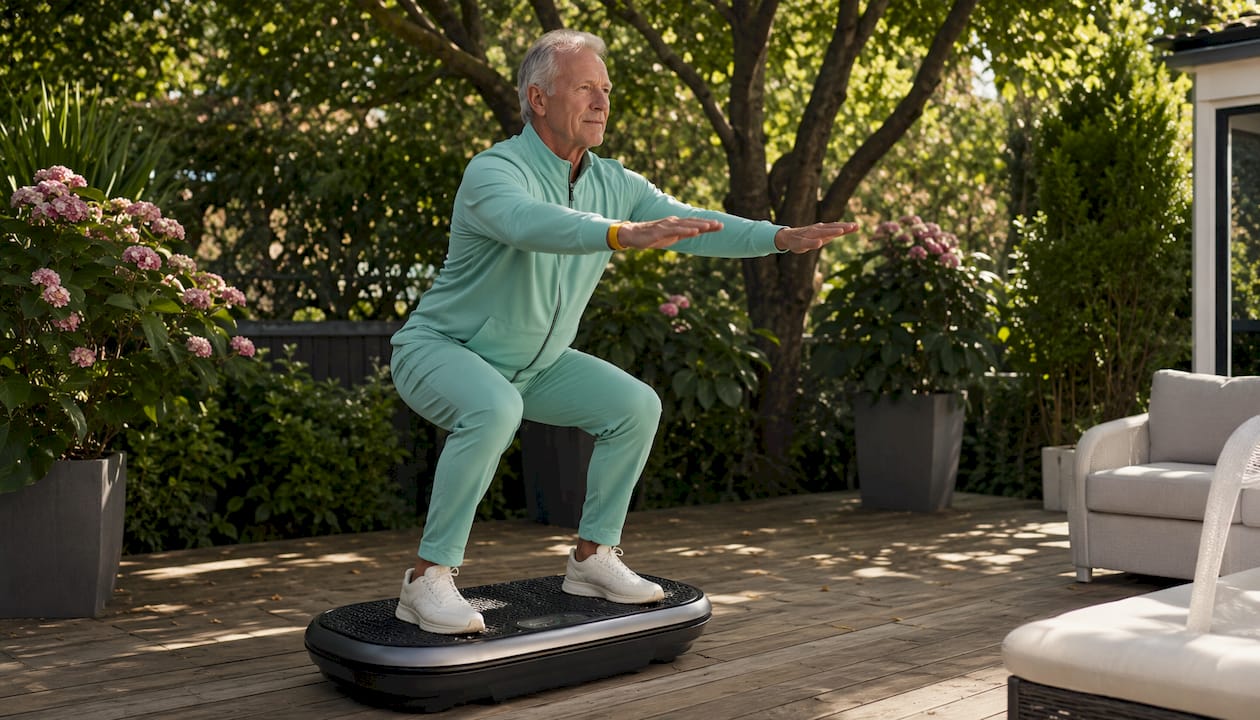
Pro Tip: Stand with knees slightly bent (around 30 degrees) during WBV sessions. Locked knees transmit vibration directly to the spine and head, increasing discomfort and injury risk. Bent knees act as a natural shock absorber.
What the research actually shows about vibration therapy
The evidence base for WBV is real but uneven. Clinical dosing literature is clear: protocol heterogeneity across studies makes direct comparisons difficult, and no universal standard protocol exists. That said, several consistent signals emerge from the higher-quality reviews.
What the evidence supports:
- Bone mineral density preservation in postmenopausal women and older adults, particularly at frequencies below 20 Hz
- Lower-body muscle strength gains in deconditioned and neurological populations
- Improved postural balance and gait speed across musculoskeletal and metabolic patient groups
- Reductions in inflammatory markers (TNF-α, hs-CRP) and triglycerides in adults who train consistently
Where it gets complicated:
- Small sample sizes in many trials limit generalizability
- Short intervention durations (under 12 weeks) make long-term conclusions tentative
- Effects on healthy, fit young adults are minimal to negligible
- Fat loss results are inconsistent and depend heavily on diet and concurrent exercise
Evidence note: MD Anderson’s medical director frames WBV as a valuable non-drug, non-invasive adjunct most strongly supported for bone preservation and muscle health, not a standalone treatment.
The strongest takeaway from the research: WBV works best for people who cannot safely perform high-impact loading, making it particularly valuable for older adults, rehabilitation patients, and those with osteoporosis or sarcopenia.
Benefits broken down by outcome
Muscle strength and activation
WBV increases lower-body strength and neuromuscular activation, particularly in deconditioned adults and people with neurological conditions. Healthline’s review notes the clearest muscular improvements appear in the lower body. Fit, young adults see minimal gains. Pairing WBV with resistance training amplifies results.
Bone density
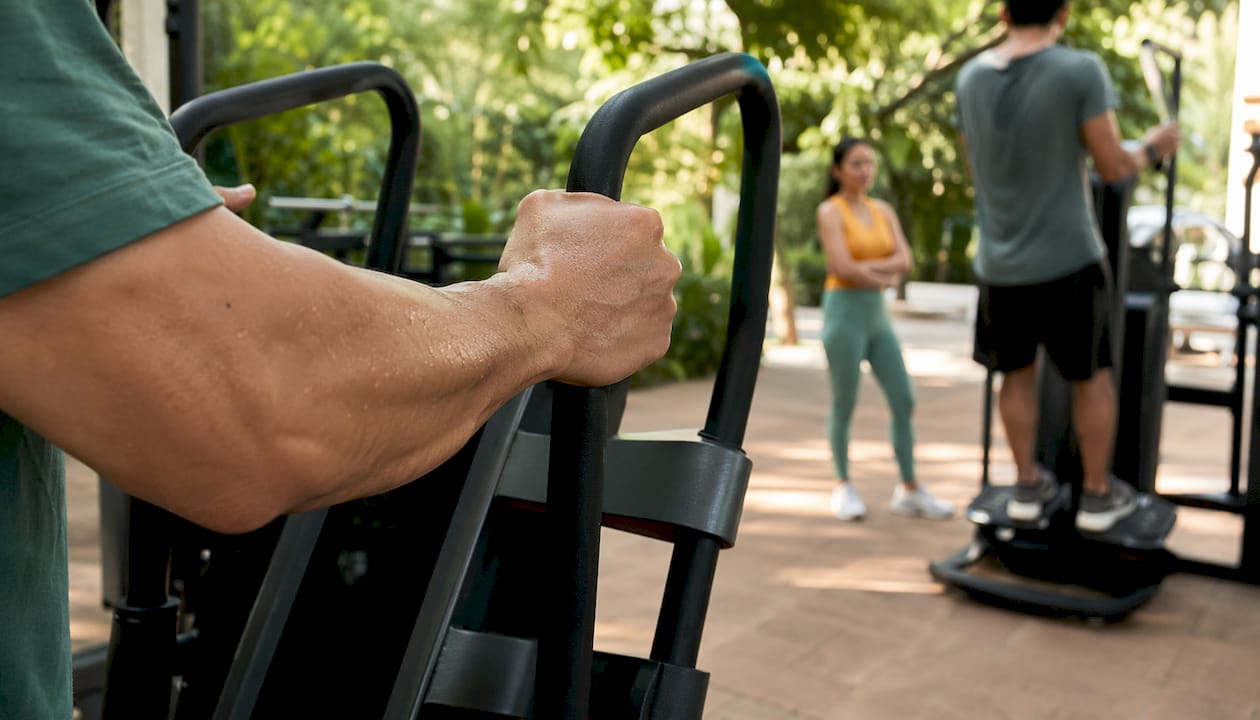
Vibration mechanically stimulates osteoblasts and suppresses osteoclast activity. Research on osteoporosis management supports vibration plates as part of a bone-preservation strategy, particularly for postmenopausal women and older adults who cannot tolerate high-impact exercise. Results vary by protocol; frequencies below 20 Hz with low magnitude appear safest for fracture-risk individuals.
Balance and fall reduction
Postural control and gait speed improve consistently across musculoskeletal and metabolic populations in WBV trials. Older adults and people recovering from stroke or fibromyalgia show the most reliable gains. Training two to three times per week produces better balance outcomes than single weekly sessions.
Circulation and metabolic markers
The rhythmic muscle contractions during WBV increase local blood flow. At the systemic level, meta-analyses document significant reductions in TNF-α, hs-CRP, and triglycerides, suggesting a meaningful anti-inflammatory and metabolic effect in adults who train regularly.
Pain and recovery
WBV activates large-diameter nerve fibers that modulate pain perception via the gate control mechanism. Studies on chronic low back pain, fibromyalgia, and multiple sclerosis report reduced pain scores and spasm frequency. A 12-week WBV program showed significant pain reduction in chronic low back pain patients compared to no treatment.
Cognitive function
An emerging and genuinely surprising finding: WBV appears to increase neuronal activity and synaptic plasticity, with signals suggesting a protective role against age-related cognitive decline. This is early-stage research, but it adds another dimension to WBV’s value for older adults.
What 10 minutes on a vibration plate actually does
Ten minutes of WBV is not a full workout. It is a meaningful neuromuscular stimulus. Short sessions activate muscle spindles, increase local blood flow, and prime the nervous system, which is why experts recommend WBV as a warm-up tool that activates muscles faster than cycling or jogging at lower energy cost.
Practical protocols by goal:
- Bone preservation: 3–10 sets of 60 seconds at under 20 Hz, low amplitude (around 4 mm), 2–3 times per week. Supervised sessions are strongly recommended for fracture-risk individuals.
- Muscle activation and warm-up: Five 30–60 second bouts at 20–40 Hz before resistance training. Side-alternating platforms reduce head transmission and are preferred for this use.
- Rehabilitation and low mobility: Lower frequencies (12–20 Hz), shorter bouts, always supervised. Progress duration before increasing amplitude.
Progression rule: Start at 10–15 Hz for 30-second intervals. Add duration before adding amplitude. Combine with weight-bearing or resistance exercise as tolerance builds. Research indicates at least six weeks of consistent training are needed to see meaningful muscle strength changes.
Pro Tip: Use WBV as a warm-up before resistance training, not as a finisher. Neuromuscular priming before lifting produces better activation than fatigued post-workout vibration.
Risks, side effects, and who needs medical clearance first
WBV is generally safe when dosed correctly, but it is not appropriate for everyone without screening.
Contraindications requiring medical clearance or avoidance:
- Pregnancy
- Recent surgery or acute fractures
- Active deep vein thrombosis
- Uncontrolled cardiovascular conditions
- Certain retinal conditions or inner-ear disorders
- Implanted devices (pacemakers, metal implants near vibration sites)
Common side effects include transient dizziness and mild muscle soreness, especially in the first few sessions. These typically resolve as the body adapts. Rare adverse events, including ocular stress, have been reported when posture is incorrect and vibration transmits directly to the head.
For people with neurological conditions, complex musculoskeletal injuries, or osteoporosis with high fracture risk, clinician supervision is not optional. It is the difference between a therapeutic dose and an injurious one.
Home vibration plates vs. supervised programs: what you actually get
Device mode, dosing range, and supervision level matter far more than brand. A consumer-grade vibration plate priced in the $200–$400 range (such as those from Lifepro) offers limited frequency and amplitude adjustment, which restricts therapeutic precision. Professional clinical platforms offer wider amplitude and frequency ranges, better calibration, and the ability to tailor protocols to specific health goals.
What to look for when choosing:
- Verified frequency range (not just “high frequency” marketing claims)
- Adjustable amplitude settings
- Side-alternating vs. vertical mode options
- Safety handrails for balance-impaired users
- Access to a supervised protocol, especially for bone or rehab goals
In-center programs add something a home plate cannot: professional assessment, protocol tailoring, and outcome tracking. For bone density goals specifically, clinical guidance consistently recommends individualized, supervised protocols because the therapeutic window between effective and harmful dosing is narrower than most people realize.
How Osteostrong integrates WBV with osteogenic loading
At Osteostrong, vibration plates are one component of a broader, evidence-informed program, not the centerpiece. The primary modality is osteogenic loading, a supervised technique that applies forces multiples of body weight to stimulate bone growth. WBV complements this by supporting neuromuscular activation, circulation, and recovery between loading sessions.
The full modality lineup at Osteostrong includes:
- Osteogenic loading (primary bone-density intervention)
- Vibration plates
- Red light therapy
- PEMF mats
- BioCharger sessions
- PureWave VEMI lounge
- Compression therapy
- Hydromassage lounges
A typical client experience follows a structured path: initial assessment, a tailored protocol matching modalities to individual health goals, short supervised sessions (most under 20 minutes), and ongoing outcome tracking. Introductory sessions are available for new clients who want to experience the program before committing. The Rancho Cordova East center serves the greater El Dorado Hills area and offers this full modality suite.
Key Takeaways
Whole body vibration therapy produces its strongest, most consistent results for bone preservation and lower-body muscle activation in older adults and people with low mobility, but only when the protocol matches the goal.
| Point | Details |
|---|---|
| Bone and muscle evidence | Strongest support for bone mineral density preservation and lower-body strength in older and deconditioned adults. |
| Metabolic benefits | Meta-analyses show significant reductions in TNF-α, hs-CRP, and triglycerides with consistent WBV training. |
| Protocol precision matters | Frequency below 20 Hz targets bone; above 20 Hz targets muscle. No universal protocol fits all goals. |
| Safety first | Contraindications include pregnancy, active DVT, and uncontrolled cardiovascular conditions; medical clearance is required. |
| Osteostrong approach | Osteostrong pairs vibration plates with osteogenic loading and other modalities for a supervised, outcome-tracked bone health program near El Dorado Hills. |
A clinician’s honest perspective on what WBV delivers
The hype around vibration plates often runs ahead of the evidence, and the skepticism sometimes dismisses real therapeutic value. The truth sits between those poles. WBV is not a passive shortcut to fitness. For a healthy 30-year-old, it will not replace lifting. But for a 68-year-old with osteopenia who cannot safely do high-impact exercise, a properly dosed vibration protocol can be a meaningful intervention for bone signaling and balance, and that matters enormously for fall prevention and long-term independence.
What gets underestimated is the supervision variable. The difference between a therapeutic dose and an ineffective or harmful one is narrower than most people expect. Frequency, amplitude, posture, and session length all interact. A home plate used incorrectly delivers noise, not signal. The clients who see the clearest results are those whose protocols are matched to their physiology and adjusted over time. That is what a supervised program provides that a consumer device cannot.
Start with a supervised session at Osteostrong
If you are serious about using vibration therapy for bone density, muscle health, or recovery, the protocol matters as much as the platform. Osteostrong in the El Dorado Hills area offers supervised vibration plate sessions as part of a comprehensive bone health program that includes osteogenic loading, red light therapy, PEMF, and more.
New clients can schedule an introductory session to experience the full program and get a professional assessment before committing. Book your first session at the Rancho Cordova East center and find out which protocols fit your specific health goals.
Useful sources
- Intervention Hypothesis for Training with WBV to Improve Physical Fitness — PMC
- Whole Body Vibration: A Valid Alternative Strategy to Exercise? — PMC
- WBV Therapy for Senile and Postmenopausal Osteoporosis — PMC
- WBV and Rehabilitation of Chronic Diseases — PMC
- WBV Metabolic and Inflammatory Markers — PMC
- Clinical Dosing and Protocol Variability in WBV — PMC
- Whole-body vibration: An effective workout? — Mayo Clinic
- Whole-body vibration: Are there health benefits? — MD Anderson Cancer Center
- What Are Vibration Plates, and Do They Really Work? — Time
- Vibration plates: Benefits, costs, how to use, and more — Healthline
- Vibration plate and osteoporosis: What the evidence shows — BoneHealthSacramento