
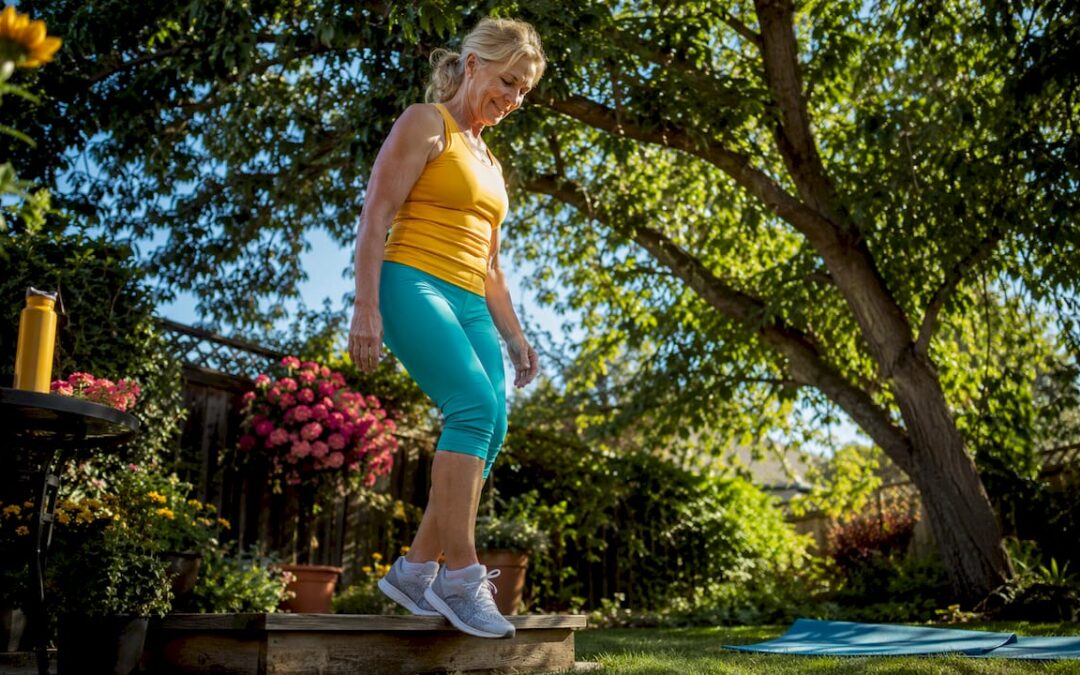
High-impact exercise combined with resistance training is the most effective method to improve bone density for people diagnosed with osteoporosis. The clinical term for this approach is osteogenic loading, which describes any mechanical force applied to bone that stimulates new bone formation. Research from 2026 confirms that combining high-impact and resistance training for 6 to 9 months produces measurable gains in lumbar spine bone mineral density and vertebral compressive strength. If you live in Granite Bay and you have been told your bones are thinning, this guide gives you a clear, evidence-based plan to act on.
What high-impact exercise does for osteoporosis
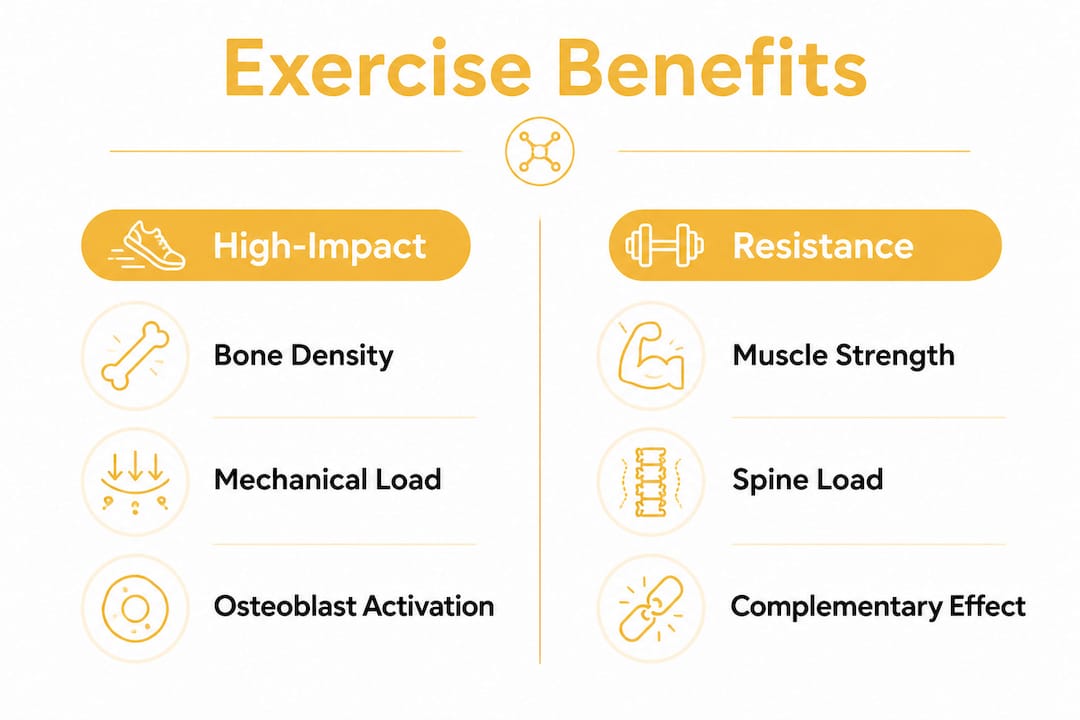
High-impact exercise for osteoporosis works by sending mechanical signals through bone tissue that trigger osteoblasts, the cells responsible for building new bone. Ground reaction forces from jumping, heel drops, and plyometric movements create the kind of sharp, brief loading that bone cells respond to most strongly. The key word is brief. Bone cells respond best to short, sharp impacts rather than continuous repetitive movement, and rest periods between sets are not optional. They are part of the stimulus.
The numbers back this up. A 2026 clinical trial found that lumbar spine bone mineral density increased by 0.020 g/cm² and ultimate compressive strength improved by 4.58% in participants who combined high-impact and resistance training for 6 months. That is a meaningful structural change, not just a number on a scan. It means the spine becomes harder to fracture under real-world loads.
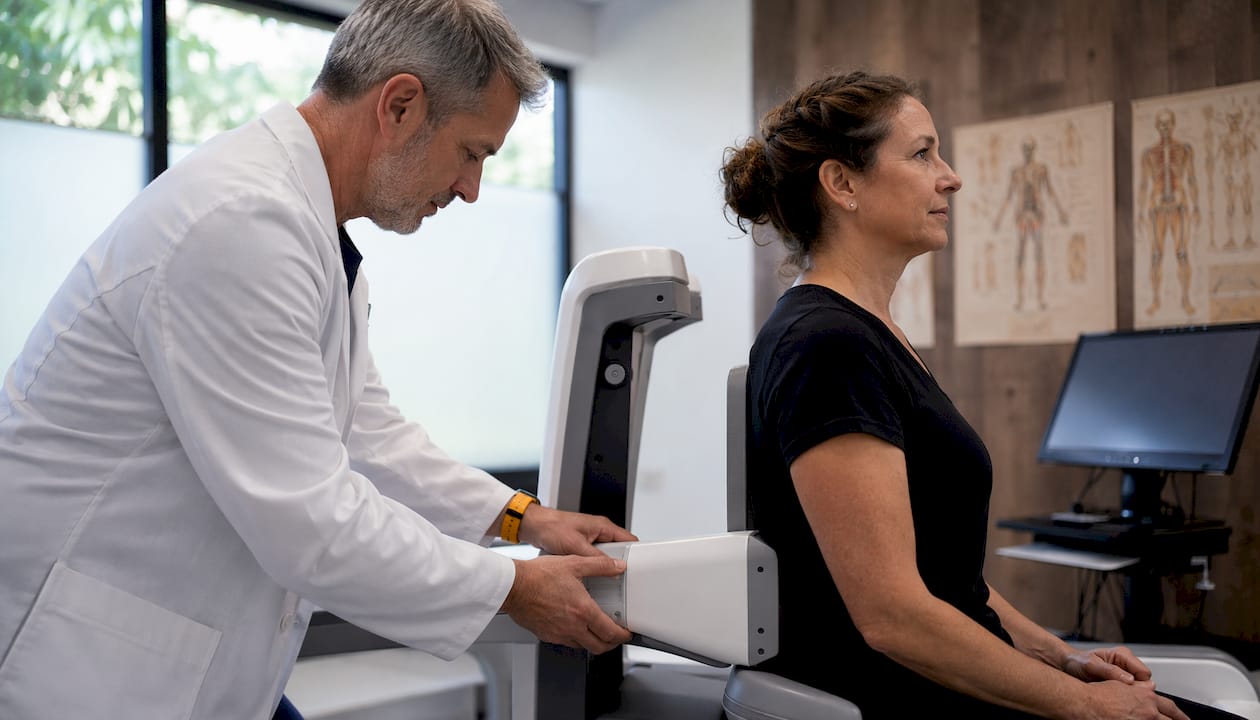
Current osteoporosis exercise guidelines from the DVO, the German osteology umbrella association, recommend at least two weekly sessions of high-impact loading combined with dynamic strength training. These guidelines represent the clinical consensus as of 2026 and reflect the strongest available evidence on fracture prevention through exercise.
Which high-impact exercises are best for people with osteoporosis?
The best exercises for osteoporosis target the bones most at risk: the lumbar spine, the hip, and the femoral neck. Not every high-impact activity is appropriate for every person, but the following movements have strong clinical support and a clear safety record when performed with proper technique.
- Heel drops: Stand flat, rise onto your toes, then let your heels drop firmly to the floor. This delivers vertical impact to osteocytes without requiring jumping ability. Start here if you are new to impact training.
- Bilateral hopping: Both feet leave the ground simultaneously for a small, controlled hop. This increases ground reaction force compared to heel drops while keeping impact manageable.
- Jump squats: A squat followed by a jump, landing softly with knees bent. This targets the hip and lumbar spine simultaneously and adds a resistance component through the squat phase.
- Box step-downs: Stepping off a low box onto one foot trains single-leg landing mechanics and loads the femoral neck directly.
- Plyometric skipping: Skipping with an exaggerated knee drive increases impact rate and engages the hip flexors and extensors, which pull on the femur during movement.
Jump-training protocols using 10–20 jumps twice daily or 20–30 minutes three times weekly produced 1.5% hip bone density improvements after 6 months in clinical trials. That frequency is achievable for most people and does not require a gym.
Pro Tip: Focus on landing force, not jump height. Research shows that peak landing force explains 21%–32% of variance in femoral neck bone density improvements, which means how you land matters far more than how high you jump.
How to safely progress in high-impact exercises with osteoporosis
Safe progression is not about going slow for the sake of caution. It is about building the physical prerequisites that make higher-impact work effective rather than dangerous. Three things must be in place before you increase intensity: adequate lower-body strength, reliable balance, and correct landing mechanics.
A structured progression follows three phases:
- Phase 1: Heel drops and balance work (weeks 1–4). Perform 10 heel drops per set, three sets per session, twice per week. Add single-leg balance holds to build ankle and hip stability. This phase prepares the osteocytes for higher loads without injury risk.
- Phase 2: Bilateral hopping and low-level plyometrics (weeks 5–10). Introduce small two-footed hops, 10–15 repetitions per set with 30-second rest periods between sets. The rest is not recovery from fatigue. It is required for bone cell responsiveness.
- Phase 3: Jump squats and directional plyometrics (weeks 11 onward). Add jump squats, lateral hops, and box step-downs. Keep sessions to 20–30 minutes and maintain rest intervals. Supervised progressive strength training during this phase amplifies the bone stimulus significantly.
Lack of supervised progression is the single greatest barrier to safe and effective high-impact exercise for bone health. People who skip Phase 1 and Phase 2 are far more likely to drop out due to injury than those who build systematically. The bone adaptations you want take months, not weeks, and the foundation you build in the early phases determines whether you reach Phase 3 at all.
Pro Tip: Master the landing before you increase the jump. Bend your knees on contact, land through the ball of your foot first, and absorb the force over 0.5–1 second. A soft, controlled landing distributes impact safely and actually increases the osteogenic signal compared to a stiff, jarring one.
What are common mistakes in high-impact exercise for osteoporosis?
The most common mistake is equating effort with height. Jumping higher does not produce better bone outcomes. Loading rate, meaning how quickly force is applied through proper landing mechanics, is more critical than the distance traveled. A person who jumps two inches and lands correctly stimulates more bone growth than someone who jumps twelve inches and lands stiff-legged.
Other frequent errors include:
- Skipping rest intervals. Continuous repetitive jumping without breaks reduces the osteogenic response and increases the risk of shin splints and stress fractures. Take 30–60 seconds between sets.
- Progressing too fast. Moving from heel drops to jump squats in two weeks bypasses the conditioning phase. Tendons, ligaments, and joint cartilage adapt more slowly than muscle. Give them time.
- Ignoring pain signals. Muscle soreness is normal. Joint pain, shin pain, or sharp localized discomfort is not. Stop the session and reassess before continuing.
- Training without supervision early on. The first 4–6 weeks of any new impact program carry the highest injury risk. A qualified trainer or physical therapist who understands individualized supervised progression reduces that risk substantially.
- Neglecting resistance training. Impact exercise alone produces results, but the combination with resistance training is the clinical gold standard. Dropping one half of the protocol cuts your outcomes significantly.
Consistency matters more than intensity. Two well-executed sessions per week, maintained over 6–9 months, produce the bone density changes that show up on a DEXA scan.
Understanding the synergy between high-impact and resistance training
High-impact exercise and resistance training stimulate bone through two different mechanisms, and that is exactly why combining them works better than either alone. Impact loading creates ground reaction forces that travel up through the skeleton. Resistance training creates muscular pull forces that tug directly on bone at attachment points. Both stimuli together produce a dual mechanical signal that triggers a stronger osteoblast response than a single stimulus can.
The resistance exercises that complement impact training most effectively are compound movements that load the spine and hips directly. Deadlifts, squats, and Romanian deadlifts place the lumbar spine and femoral neck under the kind of compressive and tensile load that drives bone remodeling. A 9-month supervised program combining heavy strength training with impact work improved 1RM strength by 12.6%–30.5% and lumbar spine bone mineral density by 0.020 g/cm² compared to a control group.
| Approach | Primary stimulus | Bone regions targeted | Evidence strength |
|---|---|---|---|
| Impact only | Ground reaction forces | Hip, femoral neck | Moderate |
| Resistance only | Muscular pull forces | Spine, hip | Moderate |
| Combined impact and resistance | Dual mechanical stimulus | Spine, hip, femoral neck | Strong (2026 gold standard) |
Pro Tip: Schedule impact training and resistance training in the same session when possible. The mechanical signals from both modalities interact at the cellular level, and performing them together appears to amplify the total osteogenic response compared to splitting them across separate days.
Key Takeaways
Combining high-impact exercise with resistance training is the most evidence-based strategy for improving bone density and reducing fracture risk in people with osteoporosis.
| Point | Details |
|---|---|
| Start with heel drops | Heel drops deliver safe vertical impact and prepare bone cells for higher-intensity plyometrics. |
| Land correctly, not high | Peak landing force drives femoral neck density gains more than jump height does. |
| Rest between sets | Short rest intervals between jumps maintain bone cell responsiveness and prevent overuse injury. |
| Combine both training types | Impact plus resistance training is the 2026 clinical gold standard for bone density improvement. |
| Progress over months | Consistent twice-weekly sessions over 6–9 months produce measurable DEXA scan improvements. |
What I’ve learned from watching people build bone the right way
Working in bone health long enough, you start to notice a pattern. The people who make the most progress are rarely the ones who train the hardest in the first month. They are the ones who show up consistently for the sixth and seventh month, still doing the fundamentals correctly.
The biggest misconception I see is that high-impact exercise is inherently dangerous for people with osteoporosis. The research does not support that fear. What is dangerous is unsupervised, unstructured impact training with no attention to landing mechanics or progression. A properly designed program is not just safe. It is one of the most powerful tools available for reversing bone loss.
The other thing I would push back on is the idea that you need to feel the workout to know it is working. Bone adaptation is invisible and slow. You will not feel your osteoblasts responding to a heel drop. But six months from now, your DEXA scan will tell the story. Patience and consistency are the actual variables that determine outcomes, not intensity.
If you are in Granite Bay and you are managing osteoporosis, the combination of impact training and resistance work is worth pursuing seriously. Get supervision early, master the landing, and do not skip the rest intervals. The biology is on your side if you give it time.
— Aaron
Osteostrong’s approach to bone health in Granite Bay
Osteostrong is built around the same principle that drives the research: mechanical loading stimulates bone growth, and the right kind of loading produces results that diet and medication alone cannot match.
At Osteostrong, clients use osteogenic loading technology once per week to apply forces to the skeleton that exceed what most conventional exercise can produce. The program is supervised, progressive, and designed specifically for people who want measurable bone density improvements. Complementary services including red light therapy, PEMF mats, vibration plates, and compression therapy support recovery and overall bone health between sessions. If you are ready to take a structured approach to your bone health, find your nearest Osteostrong center and book an assessment.
FAQ
Can high-impact exercise strengthen bones with osteoporosis?
Yes. Clinical trials confirm that high-impact exercise combined with resistance training increases lumbar spine bone mineral density and vertebral compressive strength in people with osteoporosis when performed consistently over 6–9 months.
How many times per week should I do impact exercise for bone health?
Current osteoporosis exercise guidelines recommend at least two sessions per week of high-impact loading combined with strength training. Jump protocols of 10–20 jumps twice daily have also shown 1.5% hip bone density improvements after 6 months.
Is jumping safe for people with osteoporosis?
Jumping is safe when introduced progressively, starting with heel drops and bilateral hops before advancing to plyometrics. The greatest risk comes from poor landing mechanics and skipping the conditioning phases, not from jumping itself.
What is the best starting exercise for someone new to impact training?
Heel drops are the recommended starting point. They deliver vertical impact to osteocytes, require no jumping ability, and carry a low injury risk, making them the ideal first step before progressing to more demanding plyometric movements.
Does jump height matter for bone density improvements?
Jump height is not the key variable. Loading rate and landing mechanics explain 21%–32% of variance in femoral neck bone density gains, which means a controlled low jump with proper landing technique produces better bone outcomes than a high jump with poor form.
Trackbacks/Pingbacks