
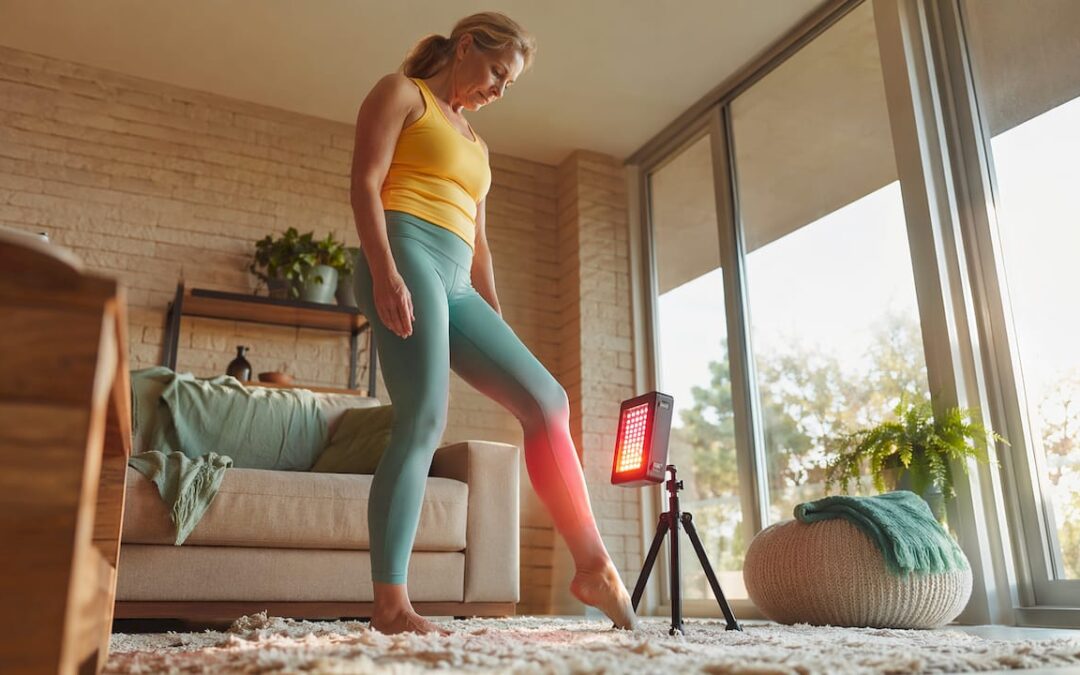
Red light therapy dosage is defined as fluence, measured in joules per square centimeter (J/cm²), and it determines how much light energy your tissue actually receives during a session. Getting this number right is the difference between meaningful bone and collagen support and wasted time under the lamp. For bone health specifically, therapeutic fluence targets fall in the 10–30+ J/cm² range per session. The formula is straightforward: Fluence (J/cm²) = [Irradiance (mW/cm²) × Time (seconds)] ÷ 1000. Rancho Cordova residents exploring red light therapy at Osteostrong or at home need to understand this metric before anything else.
What is the role of fluence and irradiance in red light therapy dosage?
Two physical measures govern every red light therapy session: irradiance and fluence. Irradiance is the power density your device delivers, expressed in milliwatts per square centimeter (mW/cm²). Fluence is the total energy delivered over time, expressed in J/cm². You cannot know your actual dose without knowing both.
The dosing formula ties them together cleanly:
- Fluence (J/cm²) = [Irradiance (mW/cm²) × Time (seconds)] ÷ 1000
- A device delivering 100 mW/cm² for 10 minutes (600 seconds) produces 60 J/cm²
- A device delivering 30 mW/cm² for the same 10 minutes produces only 18 J/cm²
That gap matters enormously for bone health targets. A session that feels identical in duration can deliver three times the energy depending on device output. This is why session time alone is a poor proxy for dose.
Irradiance also changes with distance. The inverse square law states that doubling your distance from a light source reduces irradiance to one quarter of its original value. A panel rated at 100 mW/cm² at 6 inches may deliver only 25 mW/cm² at 12 inches. That reduction directly cuts your fluence and can push a session below the therapeutic threshold for bone tissue.
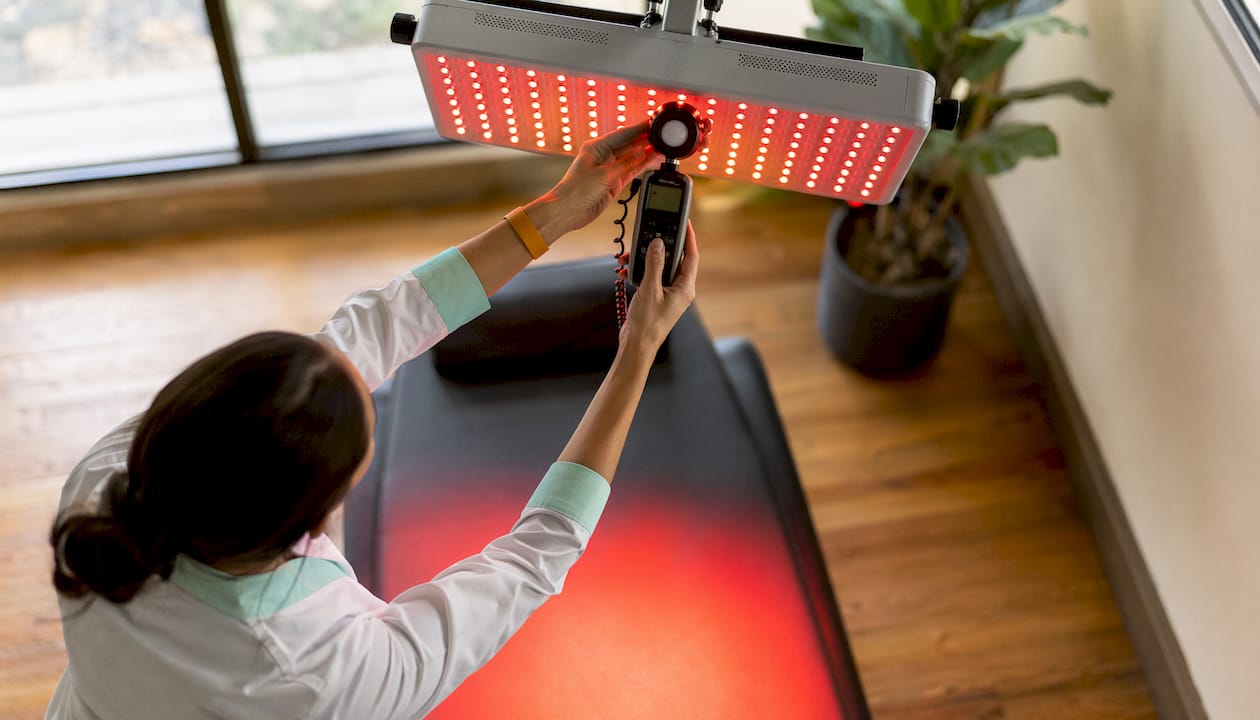
Pro Tip: Never rely solely on a manufacturer’s stated irradiance figure. Measure your device’s actual output at your treatment distance using a calibrated light meter, then recalculate your session time accordingly.
What are the optimal dosage and session frequency guidelines for bone health?
Therapeutic fluence ranges differ by treatment goal. Skin applications typically require 3–10 J/cm², muscle recovery targets 6–12 J/cm², and bone and joint support requires 10–30+ J/cm² per session. Bone tissue sits deeper in the body, so higher fluence is necessary to drive meaningful mitochondrial stimulation at that depth.
| Treatment Goal | Fluence Target | Typical Session Time | Frequency |
|---|---|---|---|
| Skin health | 3–10 J/cm² | 5–10 min | 3–5x/week |
| Muscle recovery | 6–12 J/cm² | 8–12 min | 3–5x/week |
| Bone and joint support | 10–30+ J/cm² | 10–20 min | 3–5x/week |
| Maintenance (all goals) | 10–20 J/cm² | 10–15 min | 1–2x/week |
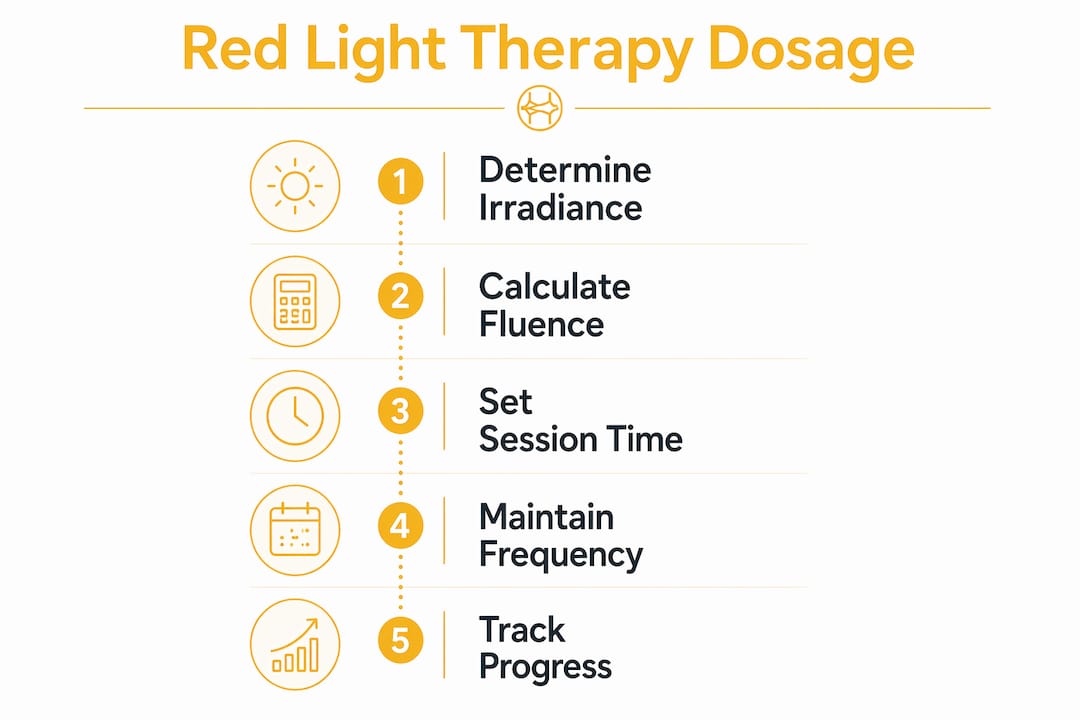
Session time depends entirely on your device’s irradiance at your treatment distance. A panel delivering 50 mW/cm² needs 6.7 minutes to reach 20 J/cm². A weaker panel at 20 mW/cm² needs 16.7 minutes for the same dose. Calculate your time. Do not guess.
Frequency recommendations for bone health sit at 3–5 sessions per week during an initial treatment course of 8–16 weeks. After that, most people taper to 1–2 sessions per week for maintenance. Daily use can benefit acute pain management, but structural bone improvements require weeks of consistent, moderate application.
Red light therapy works through cumulative mitochondrial stimulation. Mitochondrial cytochrome c oxidase absorbs the light energy and increases ATP production. That cellular energy boost drives tissue repair and remodeling over time. You will not feel bone density change in a week. The biology simply does not work that fast.
Pro Tip: Track your sessions in a simple log. Note the device, distance, session time, and calculated fluence. After 8 weeks, you have real data to review rather than a vague sense of whether you have been consistent.
How does device positioning impact red light therapy dosage effectiveness?
Positioning is where most people lose their dose without realizing it. The inverse square law is not a minor correction. It is a fundamental physical relationship that can cut your effective irradiance by 75% or more if you stand too far from the panel.
The recommended treatment distance for most red light panels is 6–12 inches from the skin surface. Within that range, irradiance remains high enough to reach the fluence targets needed for bone and deep tissue effects. Beyond 12 inches, intensity drops significantly and the dose may fall below the therapeutic threshold entirely.
Practical positioning guidelines:
- Measure your distance with a ruler or tape measure before every session, not by feel
- Mark a spot on the floor or use a chair at a fixed distance to remove guesswork
- Aim the panel directly at the target area, not at an angle, since angled exposure reduces effective irradiance
- For spinal or hip bone targets, position the panel at the back or side of the body at the correct distance
- Recheck your distance if you shift position during a session
Home-use devices often deliver 30–40% less irradiance than manufacturer claims at the stated treatment distance. That means a device labeled at 100 mW/cm² may actually deliver 60–70 mW/cm² in real conditions. If you calculate your session time based on the labeled value, you are already underdosing before distance variability even enters the picture.
Consistent positioning removes one of the biggest variables in your protocol. It is the single easiest thing to control and the most commonly ignored.
What are common red light therapy dosing mistakes and how can you avoid them?
The most dangerous assumption in red light therapy is that more is better. Biological systems follow the Arndt-Schulz Law, a biphasic dose-response principle where too much energy can inhibit the same cellular processes you are trying to stimulate. Overdosing does not accelerate results. It reverses them.
Common dosing mistakes include:
- Relying on session time alone without calculating fluence based on actual device irradiance
- Positioning the device too far away, which drops irradiance below therapeutic levels
- Skipping sessions and then doubling up, which disrupts the cumulative adaptation process
- Assuming daily sessions always outperform a 3–5 times per week schedule for structural goals
- Trusting manufacturer irradiance claims without independent measurement at your treatment distance
“Consistency in red light therapy sessions outperforms aggressive dosing. A moderate schedule of 3–5 sessions weekly over several months yields meaningful bone and collagen support improvements. Long-term adherence is more important than session intensity for biological adaptation.”
Red light therapy is a cumulative biological process, not a quick fix. People who push daily high-intensity sessions in the first two weeks often plateau or regress, then abandon the protocol before the 8–16 week window where structural changes begin to appear. The biology rewards patience and regularity, not aggression.
Structural improvements in bone density and collagen require a minimum of 3–6 months of consistent application. That timeline reflects the actual pace of mitochondrial stimulation translating into tissue remodeling. Setting that expectation from day one prevents the most common reason people quit: expecting results before the biology can deliver them.
Pro Tip: If you are unsure whether your device is performing as labeled, contact the manufacturer for third-party test data or use a light meter app as a rough check. Even approximate measurements are better than assuming the label is accurate.
Key Takeaways
Effective red light therapy dosage for bone health requires calculating fluence in J/cm², maintaining consistent device positioning at 6–12 inches, and committing to 3–5 sessions per week for a minimum of 8–16 weeks before expecting structural results.
| Point | Details |
|---|---|
| Fluence is the key metric | Calculate J/cm² using irradiance and time, not session duration alone. |
| Bone health needs higher doses | Target 10–30+ J/cm² per session to reach deep tissue and support bone remodeling. |
| Distance controls your dose | Stay within 6–12 inches of the panel to maintain therapeutic irradiance levels. |
| Consistency beats intensity | Three to five sessions per week over months outperforms aggressive daily overdosing. |
| Results take time | Structural bone and collagen improvements require 3–6 months of regular application. |
What I have learned from watching people dose red light therapy wrong
Most people who walk into Osteostrong asking about red light therapy have already tried it at home and felt underwhelmed. When I ask how they used it, the pattern is almost always the same: they sat too far from the device, used it sporadically for a few weeks, and expected to feel a difference in bone strength within a month. None of those conditions match what the science actually requires.
The part that surprises people most is the biphasic dose response. They assume that if 15 minutes is good, 30 minutes must be better. That logic works for exercise volume up to a point, but red light therapy does not follow the same curve. Beyond the therapeutic window, you are not building more benefit. You are actively reducing it. I have seen people burn through motivation and money chasing intensity when moderate consistency would have served them far better.
My honest recommendation is to treat red light therapy the way you treat any long-term bone health strategy: as a protocol, not a product. Pair it with osteogenic loading and other evidence-based approaches. Monitor your sessions. Adjust your distance and time based on real measurements, not assumptions. And give it the full 8–16 weeks before drawing conclusions. The people who do that consistently are the ones who come back with results worth talking about.
— Aaron
Osteostrong’s approach to red light therapy and bone health in Rancho Cordova
Osteostrong in Rancho Cordova integrates red light therapy into a broader, evidence-based bone health program that includes osteogenic loading, PEMF mats, BioCharger, PureWave VEMI lounge, compression therapy, vibration plates, and hydromassage lounges. Every modality is applied with the same attention to protocol and dosing that this article describes.
Red light therapy works best when it is part of a structured plan, not a standalone experiment. The team at Osteostrong Rancho Cordova East can help you build a session schedule matched to your bone health goals, with proper device positioning and fluence targets built in from the start. If you are ready to move from guessing to a real protocol, connect with your local Osteostrong center and get a plan grounded in current clinical standards.
FAQ
What is the correct red light therapy dosage for bone health?
The target fluence for bone and joint support is 10–30+ J/cm² per session, calculated using your device’s actual irradiance at your treatment distance. Session time varies based on device output, typically 10–20 minutes.
How often should I use red light therapy for bone health?
Three to five sessions per week for an initial course of 8–16 weeks is the standard recommendation for bone health. After that, most people maintain results with 1–2 sessions per week.
How far should I stand from a red light therapy panel?
The recommended treatment distance is 6–12 inches from the skin surface. Beyond 12 inches, irradiance drops sharply due to the inverse square law, which reduces your effective dose below therapeutic levels for deep tissue.
Can I overdose on red light therapy?
Yes. Biological systems follow the Arndt-Schulz Law, meaning too much light energy can inhibit cellular processes rather than stimulate them. Staying within the 10–30 J/cm² range and avoiding daily high-intensity sessions prevents this.
How long before I see results from red light therapy for bone health?
Structural improvements in bone density and collagen require a minimum of 3–6 months of consistent application. Mitochondrial stimulation must accumulate over time before tissue remodeling becomes measurable.